Seeing the unseen
is my working philosophy for how I design, lead, and build.
It is not a narrative about my career.
It is the method I use inside it.
It is how I notice what is not yet visible.
How I translate complexity into something people can see and respond to.
And how I turn observation into action inside organisations and everyday life.
It sits across everything I do — from large-scale systems thinking in global design teams to small human gestures that shape how people connect, behave, and understand each other.
It is not a fixed framework.
It is a way of staying alert to the world and choosing how to respond.
—
Choosing to respond
is the practical expression of this philosophy.
It is where curiosity becomes attention.
Where attention becomes care.
And where care becomes small, deliberate acts that change how people experience the world around them.
These are not exceptional moments.
They are often quiet, ordinary, and easy to miss.
A conversation.
A drawing.
A bench.
A workshop.
A question asked at the right moment.
A way of making something visible so others can enter it.
This is where my work becomes human.
People often ask me how I have moved between so many different disciplines — from silversmithing to global design leadership to ethnographic research to organisational strategy.
But I don’t experience it as movement between disciplines.
I experience it as a continuous practice of learning how to see, and how to respond.
The tools change.
The environments change.
The scale changes.
But the intention stays the same:
To make things visible enough that people can think together, and act together.
Small Acts
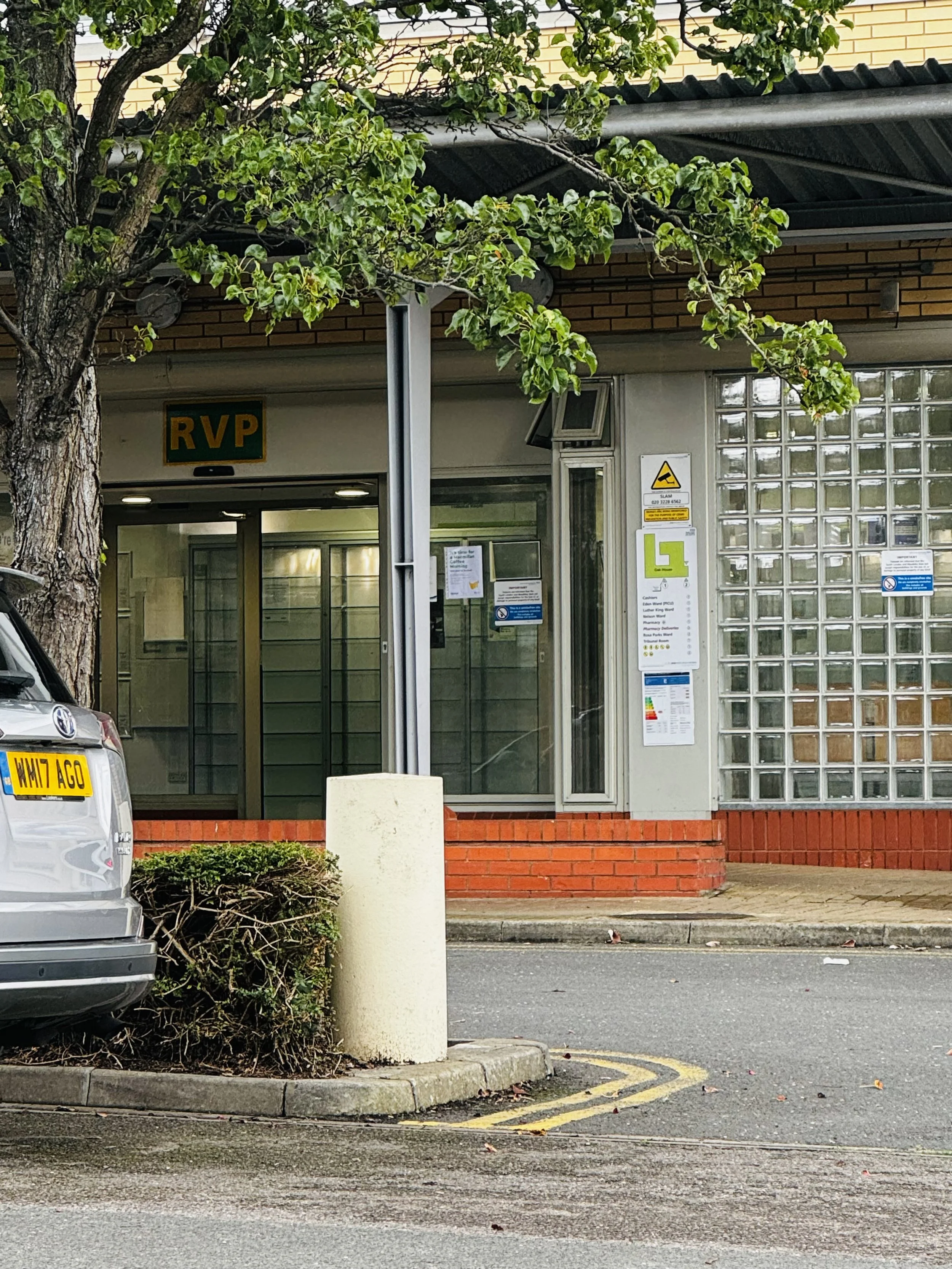
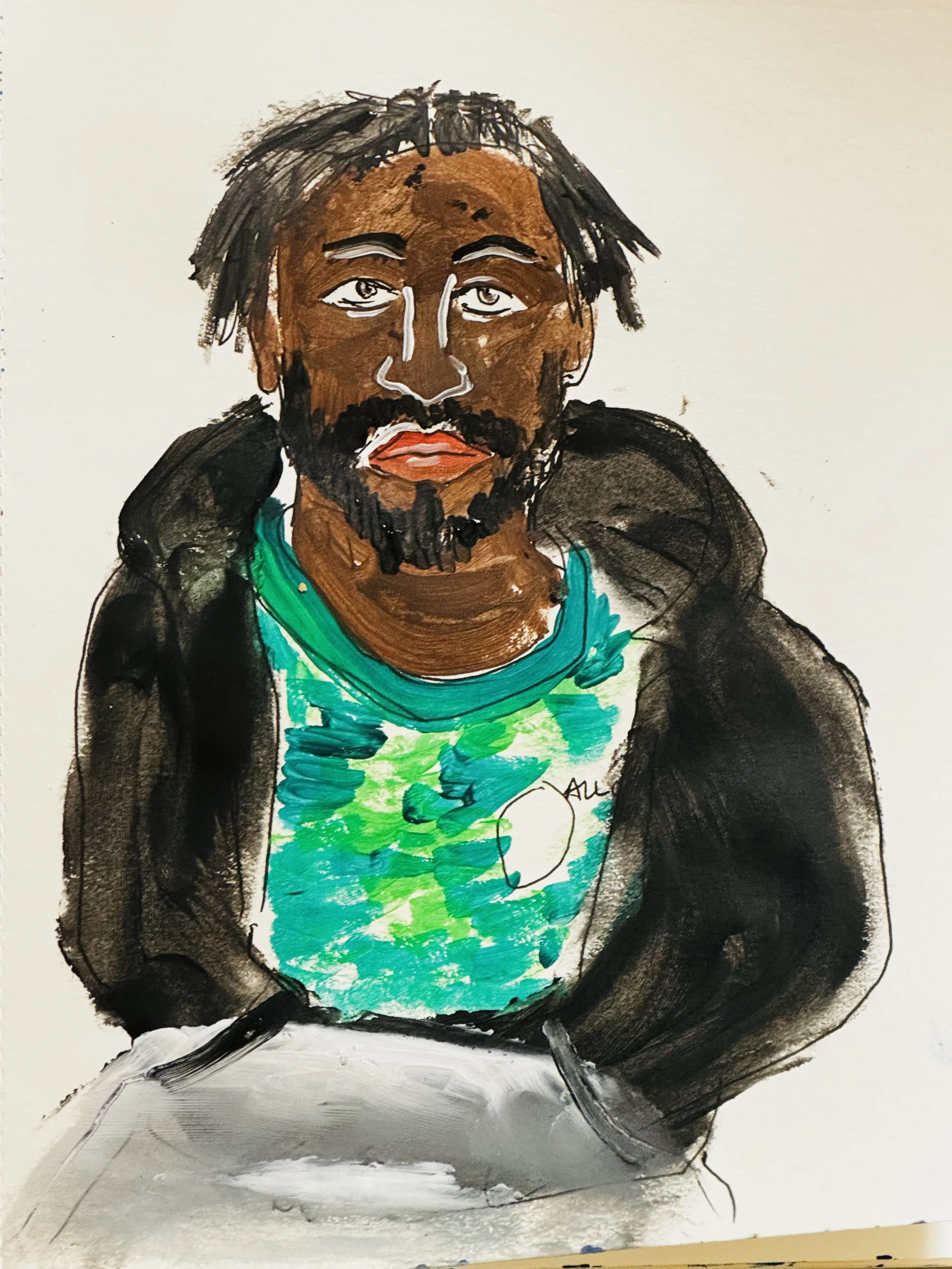
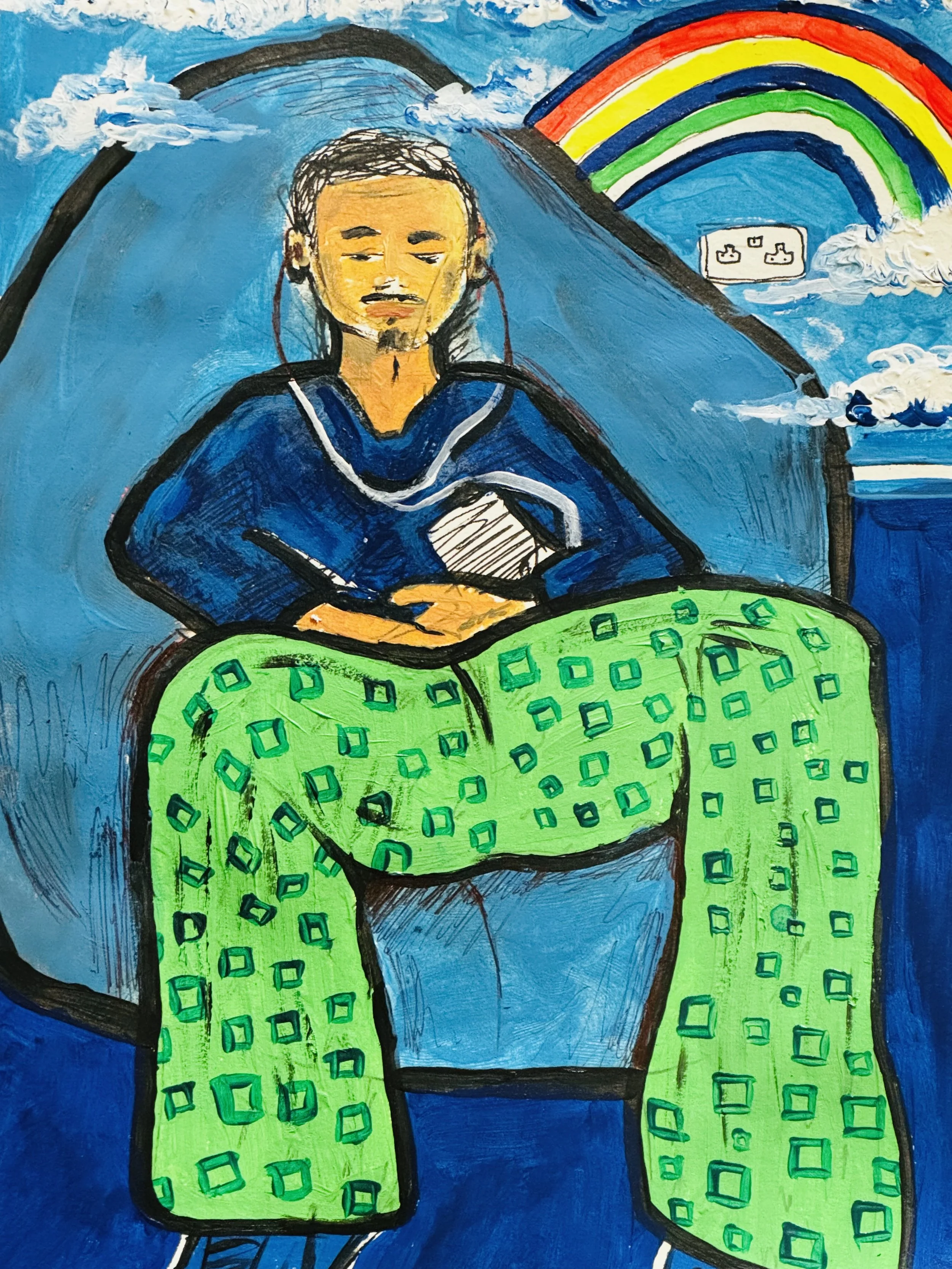
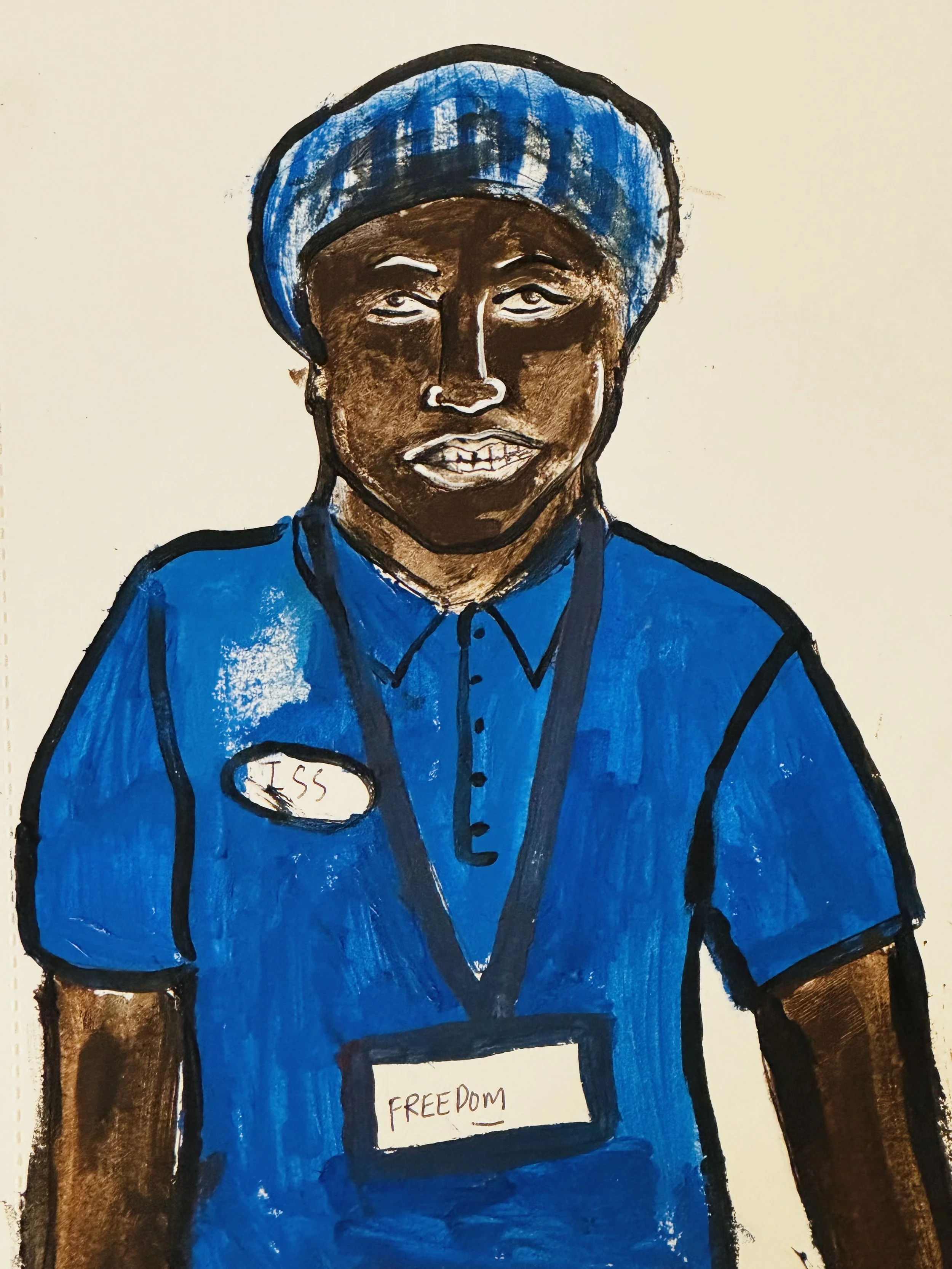
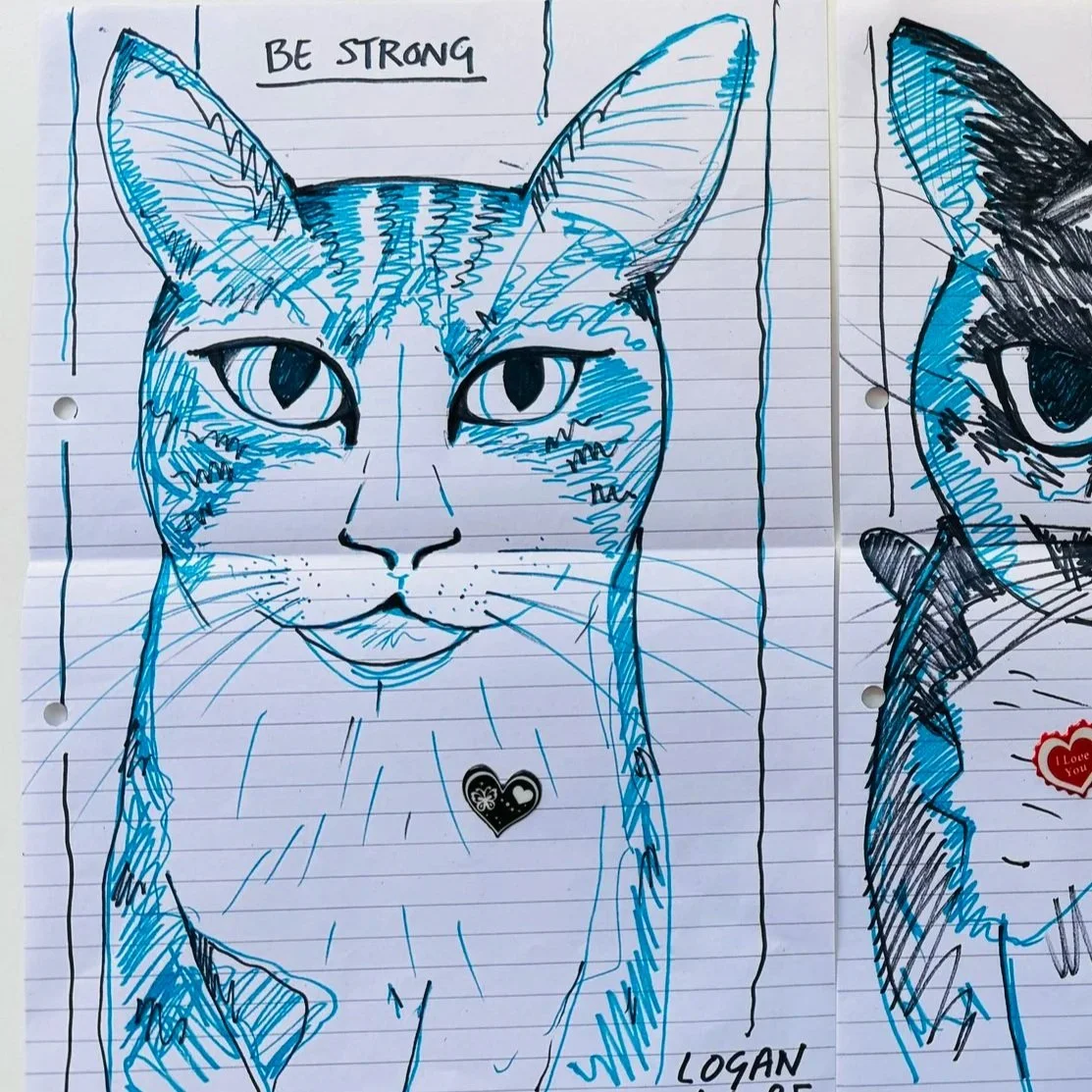
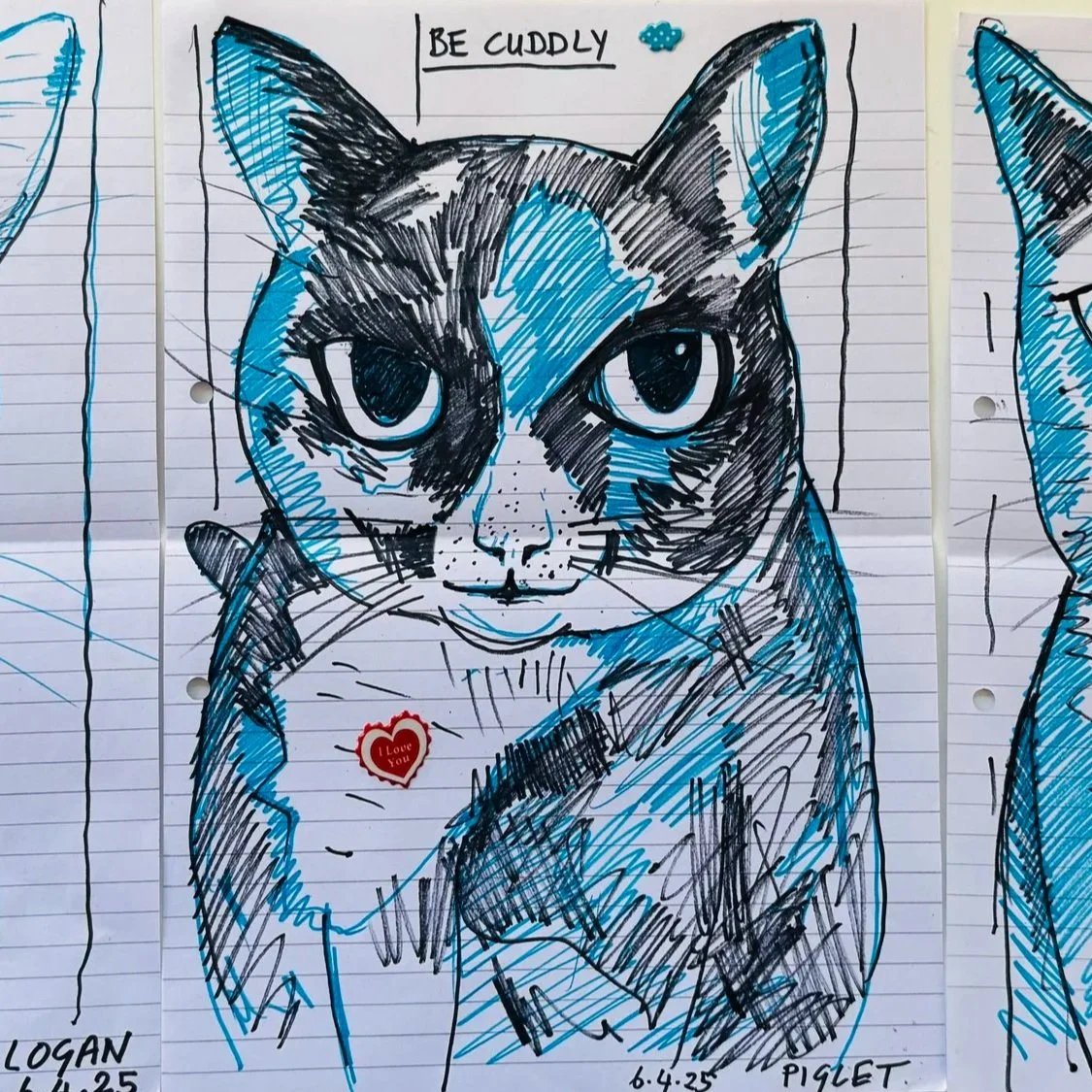
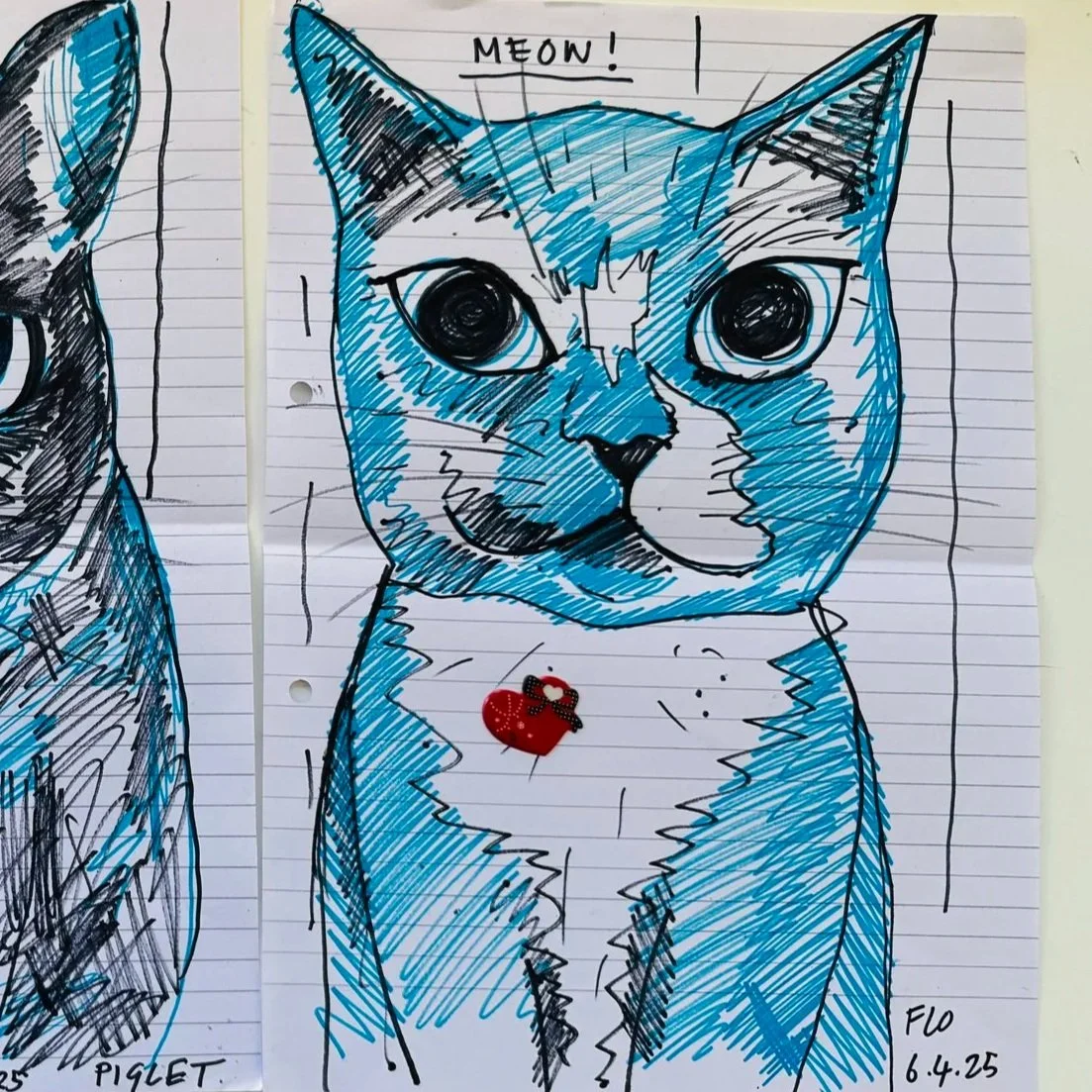
A few years ago, I spent many months visiting an NHS mental health ward almost every day.
Someone I love was there.
The staff worked with extraordinary dedication, often in difficult circumstances, caring for people through some of the hardest moments of their lives.
What struck me wasn’t what the hospital lacked.
It was how much difference the smallest gestures could make.
The building couldn’t change overnight.
The funding couldn’t suddenly appear.
But perhaps someone’s day could.
So I stopped asking, “What would fix this?”
Instead, I asked, “What can I do today?”
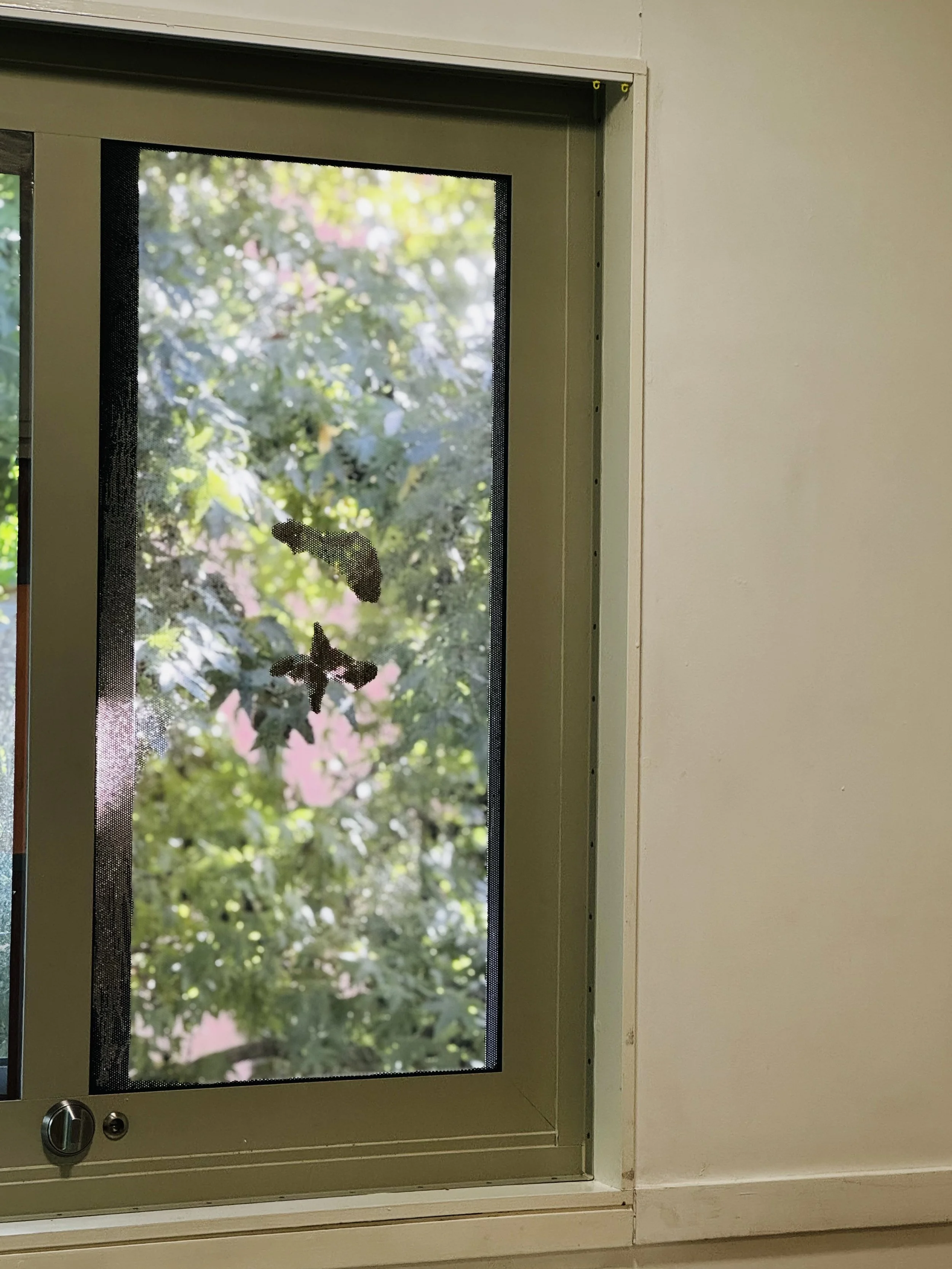
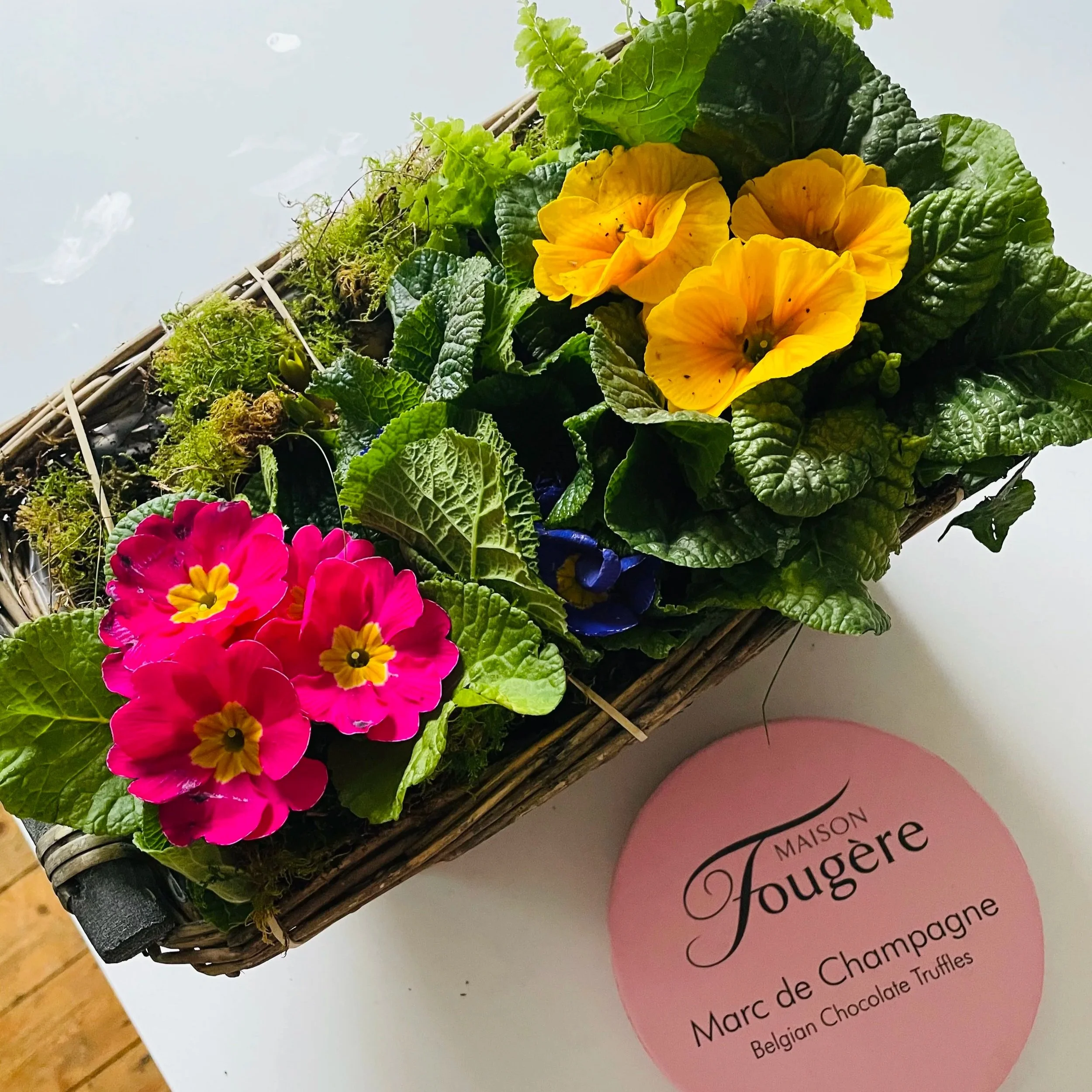
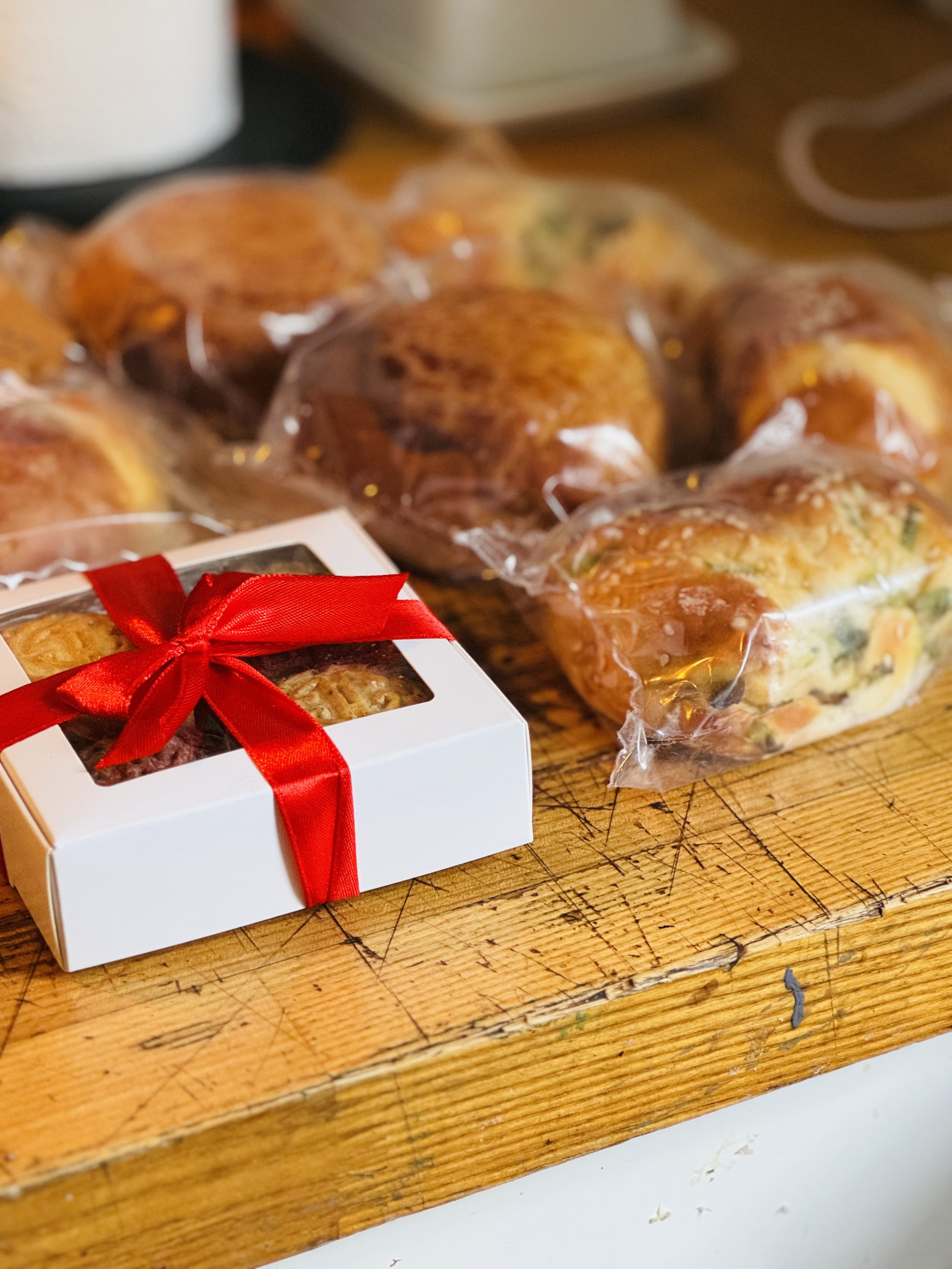
Sometimes it was arriving with fresh strawberries or cherries to share.
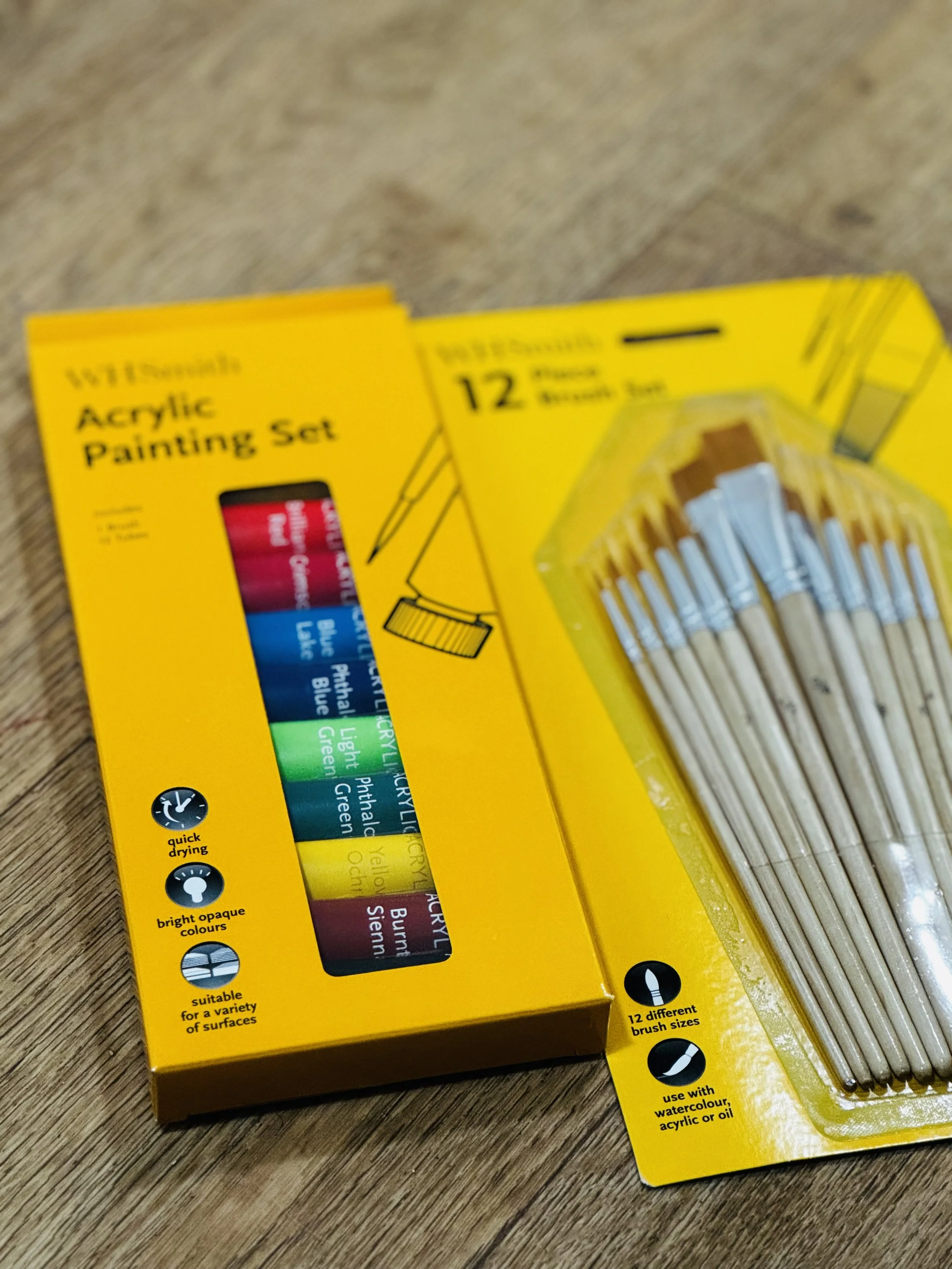
Sometimes it was a pack of cards that encouraged people to sit together rather than alone.
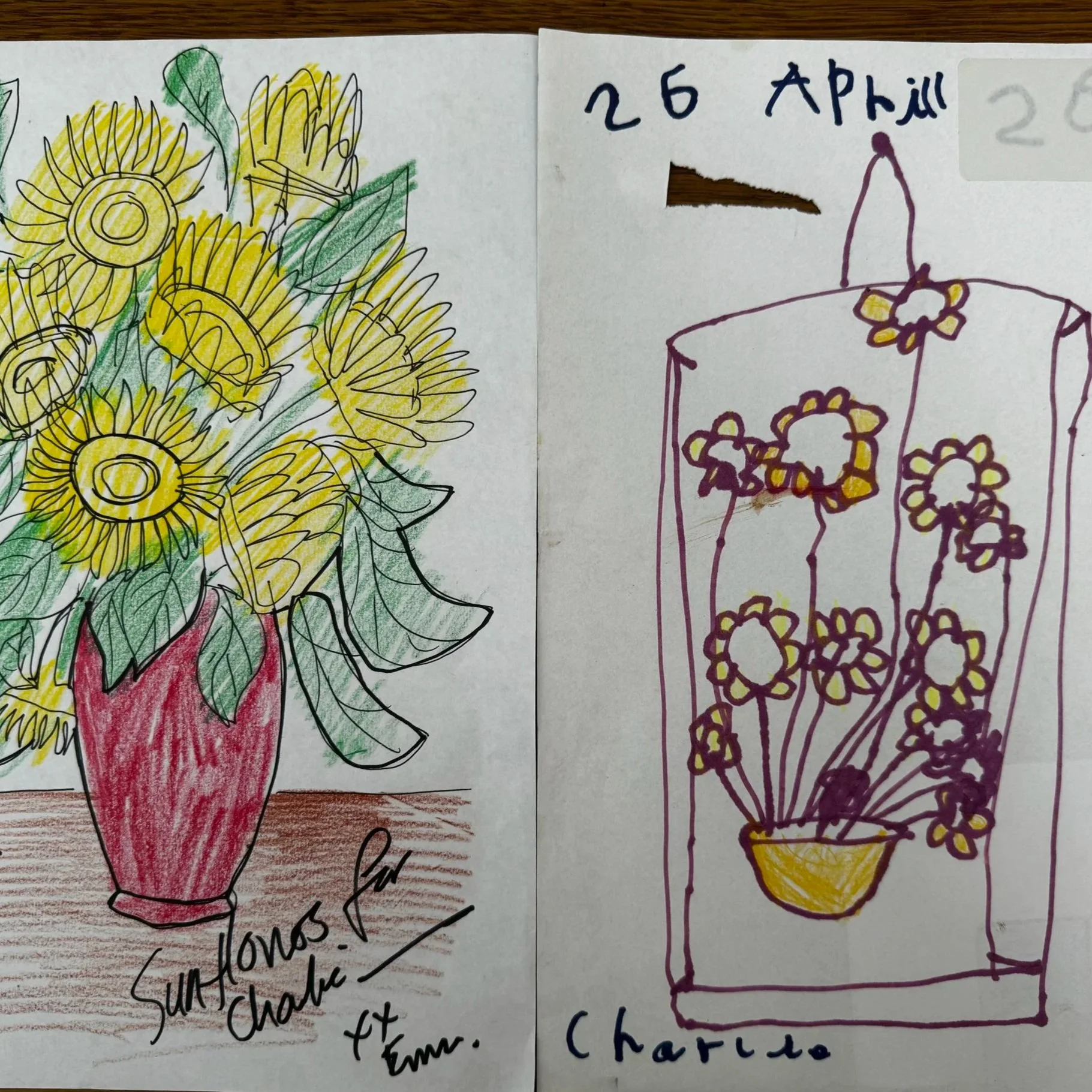
Sometimes it was planting sunflowers in a small garden so that there was something growing, something hopeful to look towards.
Every day I wrote a handwritten letter on good paper.
I sealed it with wax.
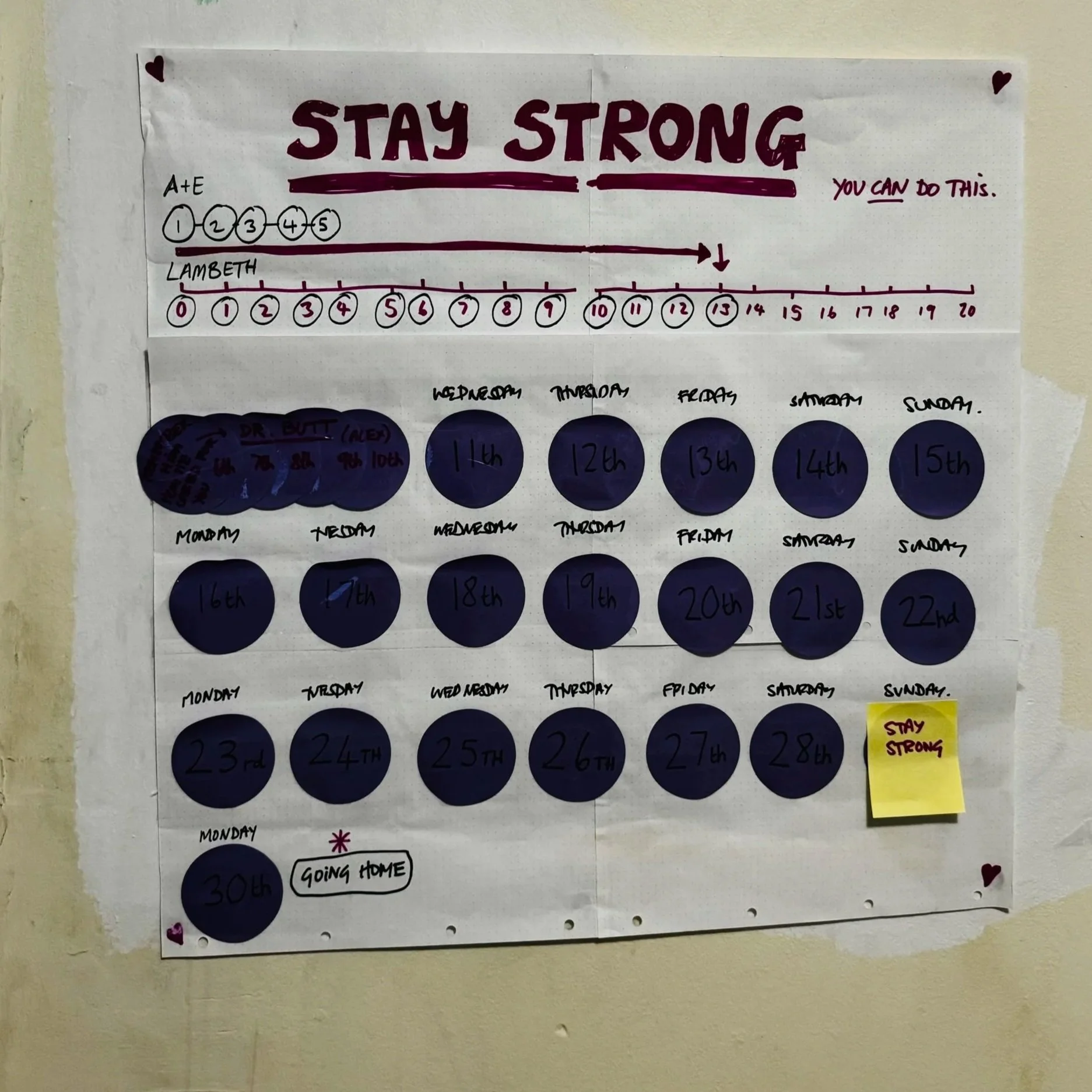
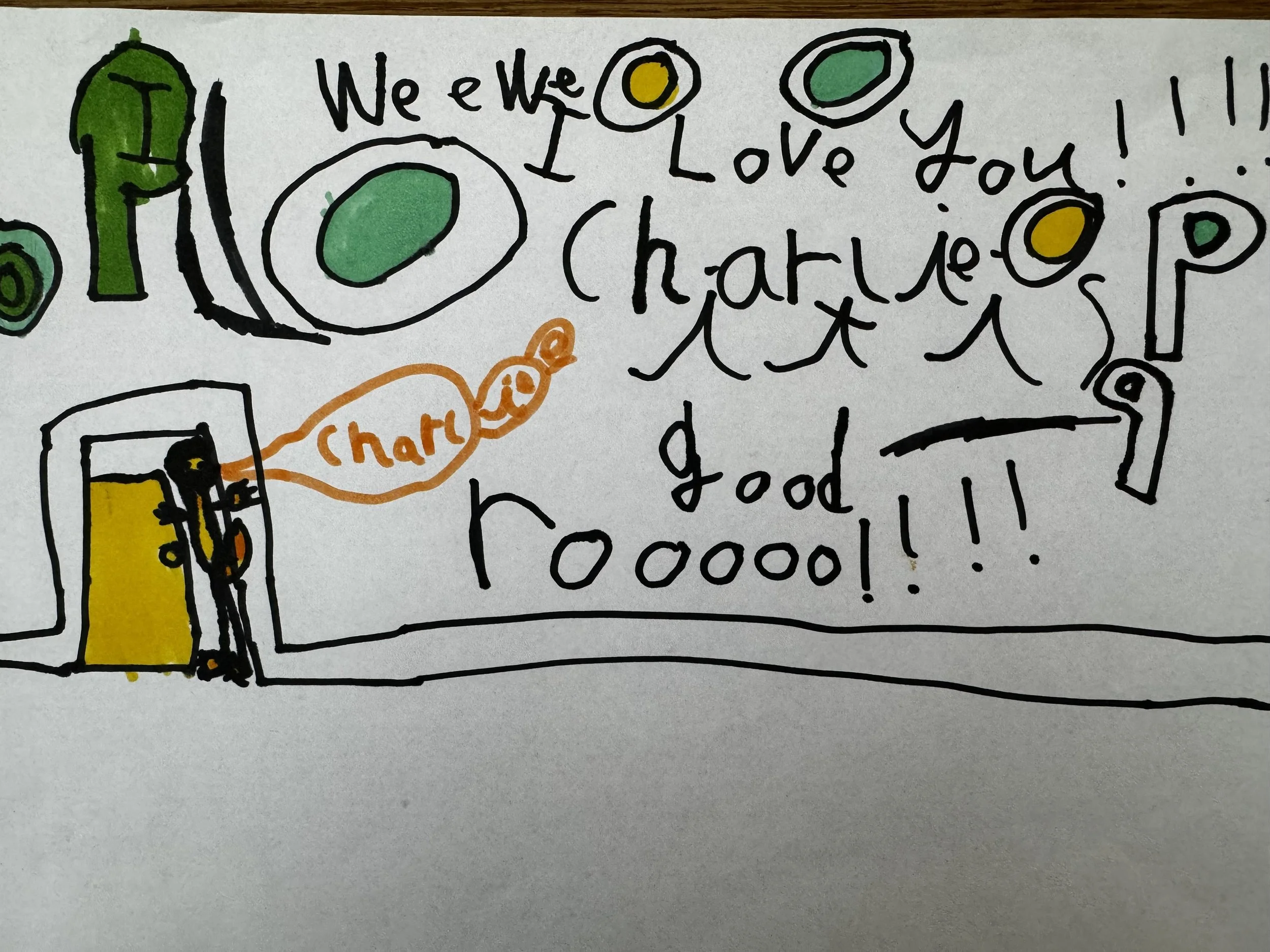
I made posters that counted down the days, not because they changed reality, but because they made hope visible.
None of these things solved the bigger problem.
They weren’t meant to.
They simply reminded people that someone cared.
I’ve come to believe that we often underestimate the power of small acts.
We wait until we have more money.
More authority.
More time.
A bigger budget.
But change doesn’t always begin with scale.
Sometimes it begins with a handwritten letter.
A conversation.
A sunflower.
A shared bowl of strawberries.
As a designer, I’ve spent my career making ideas tangible.
As a human being, I’ve realised the same principle applies to kindness.
When care becomes visible, people feel it.
And sometimes that’s enough to help someone take one more step forward.
Shared Imagination
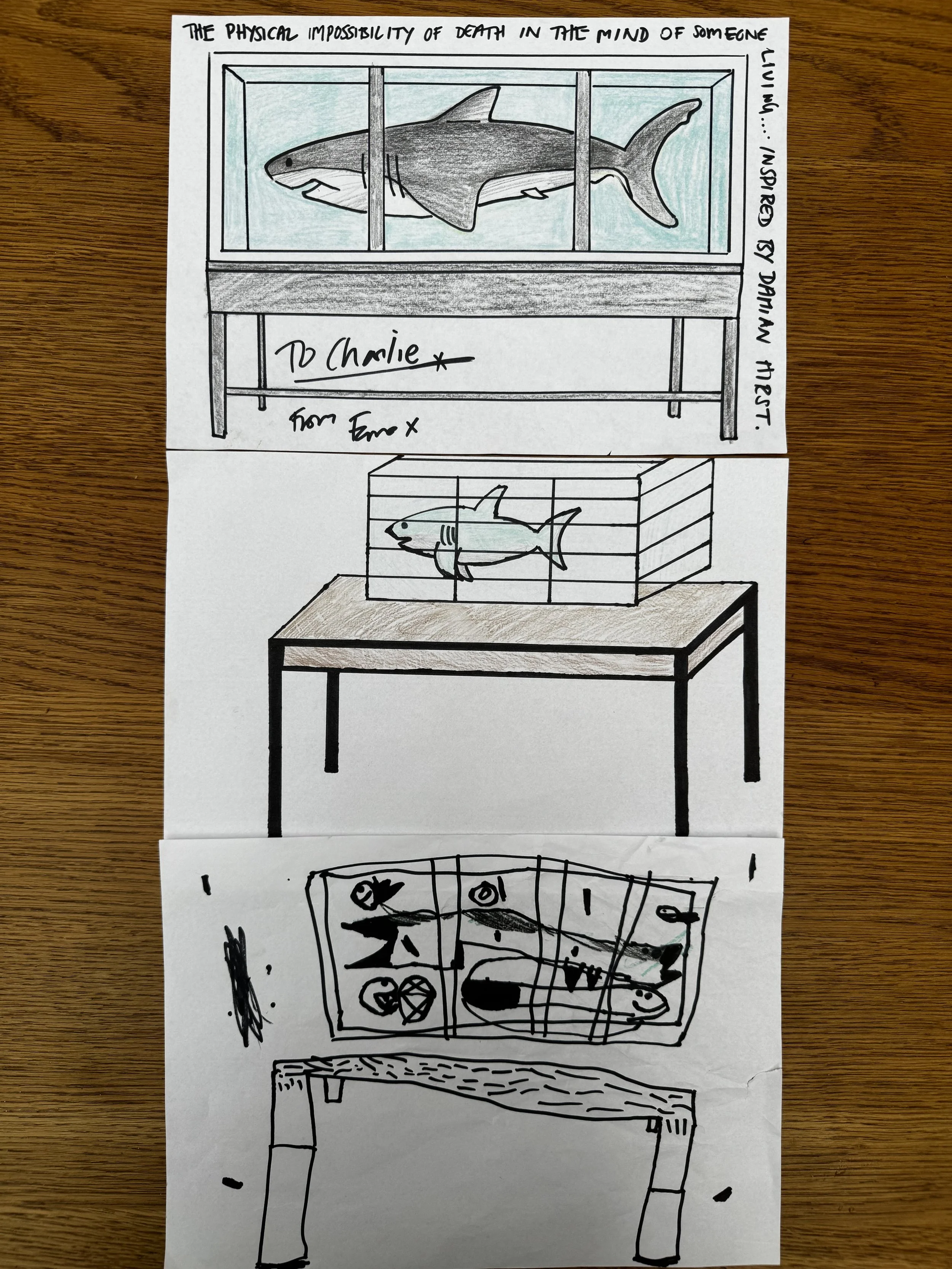
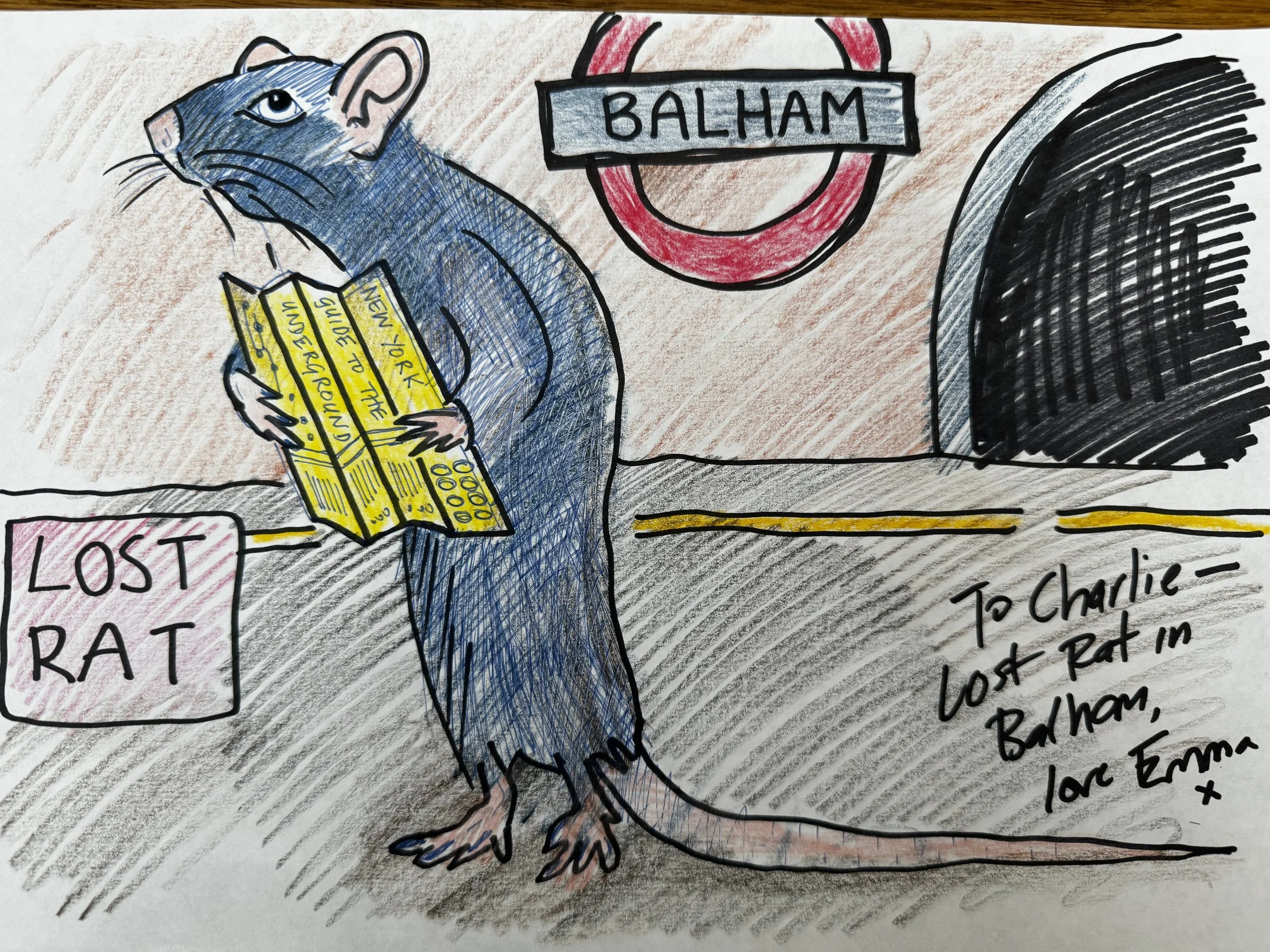
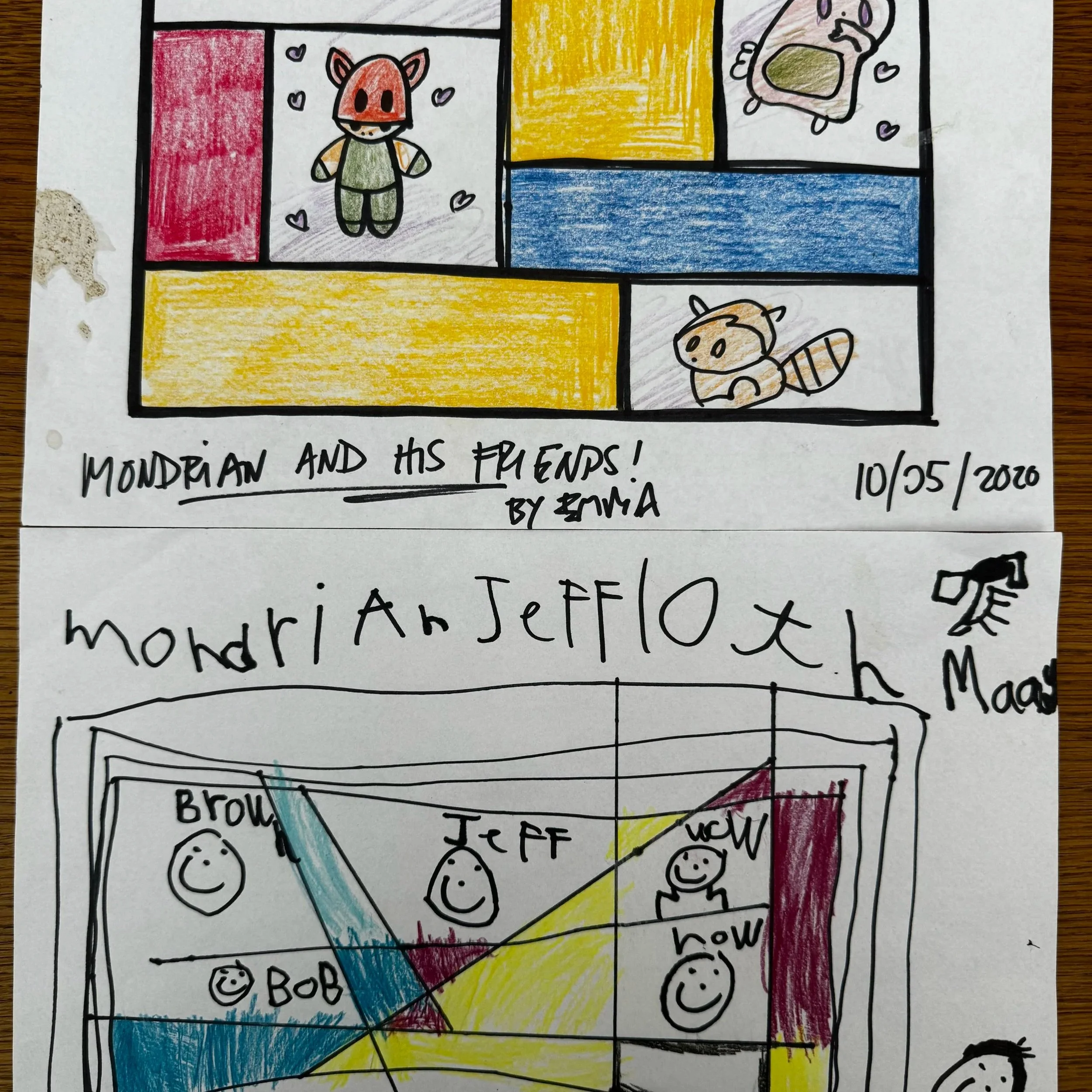
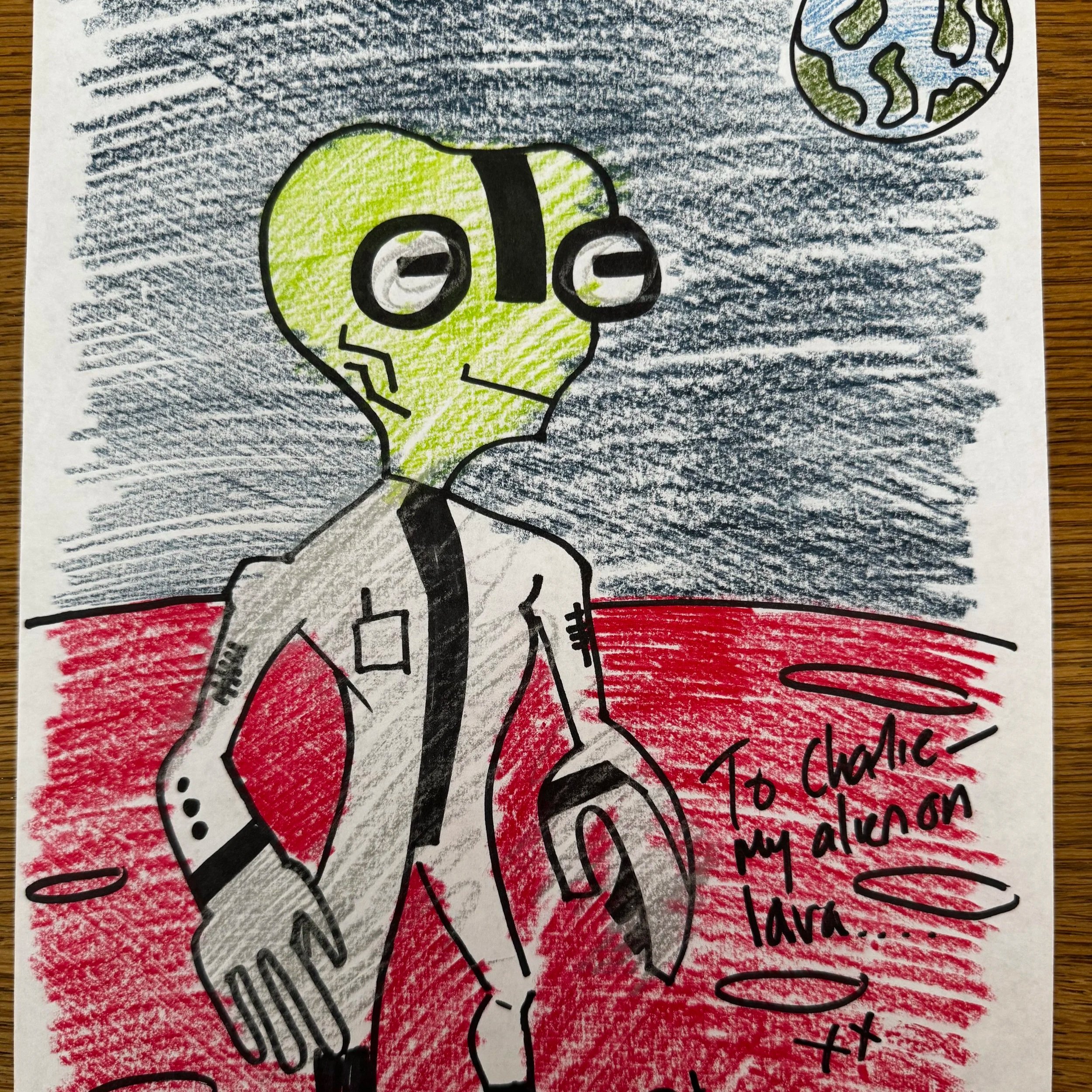
During COVID, a friend’s young son was struggling at home, as many children were. Attention was fractured. Days felt long. Everything felt uncertain.
So we started something very simple.
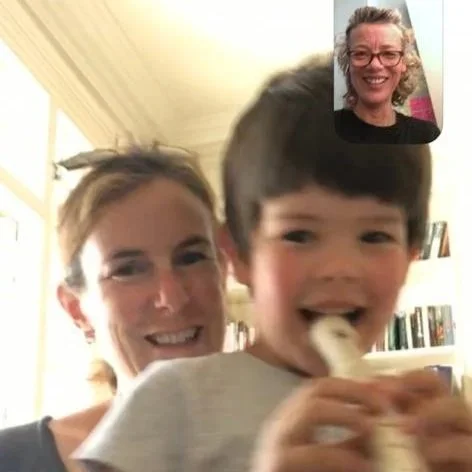
Once a week, we met online for an hour.
There was no plan beyond that.
I would ask him a question.
What’s in your mind today?
What are you noticing around you?
What are you thinking about?
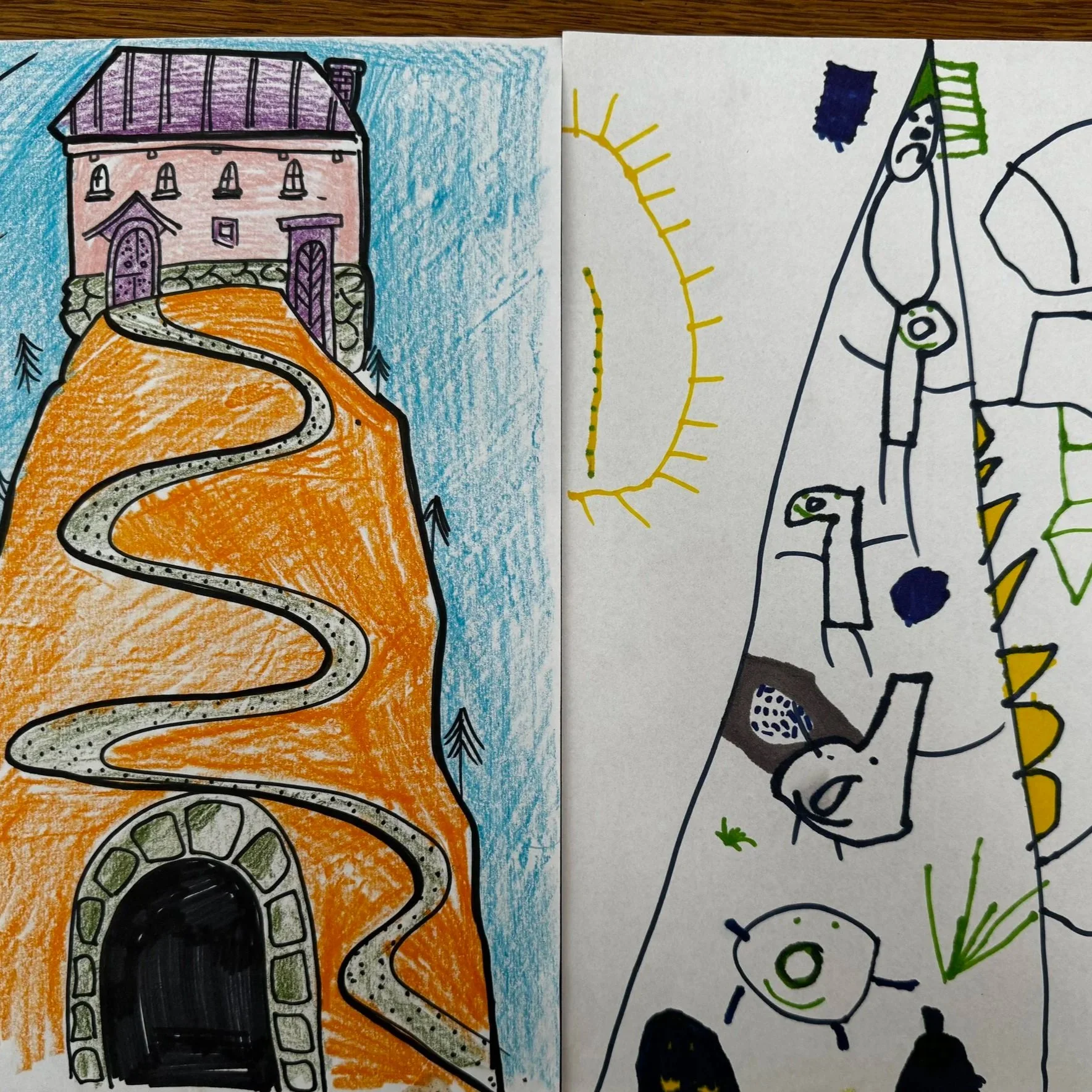
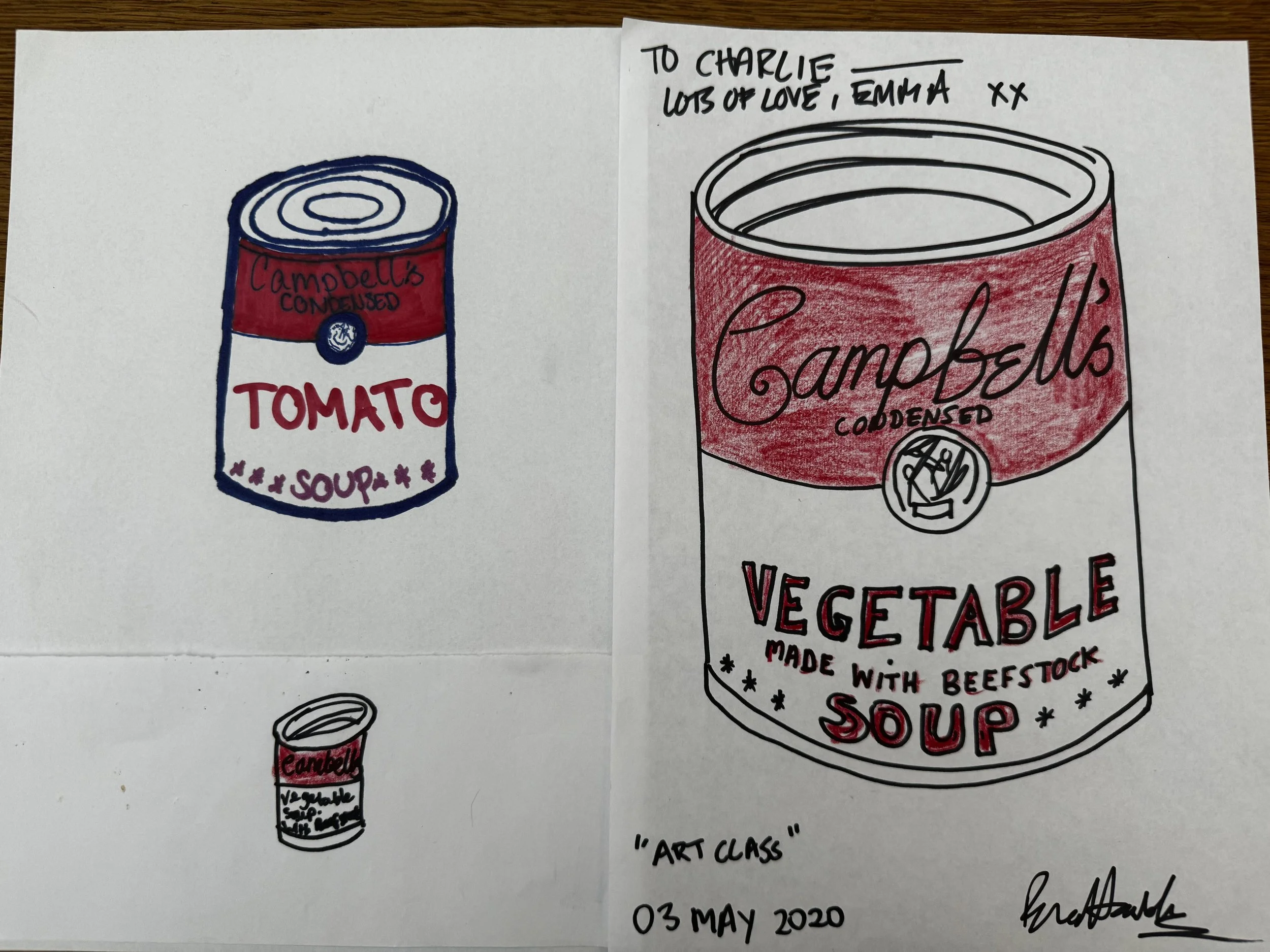
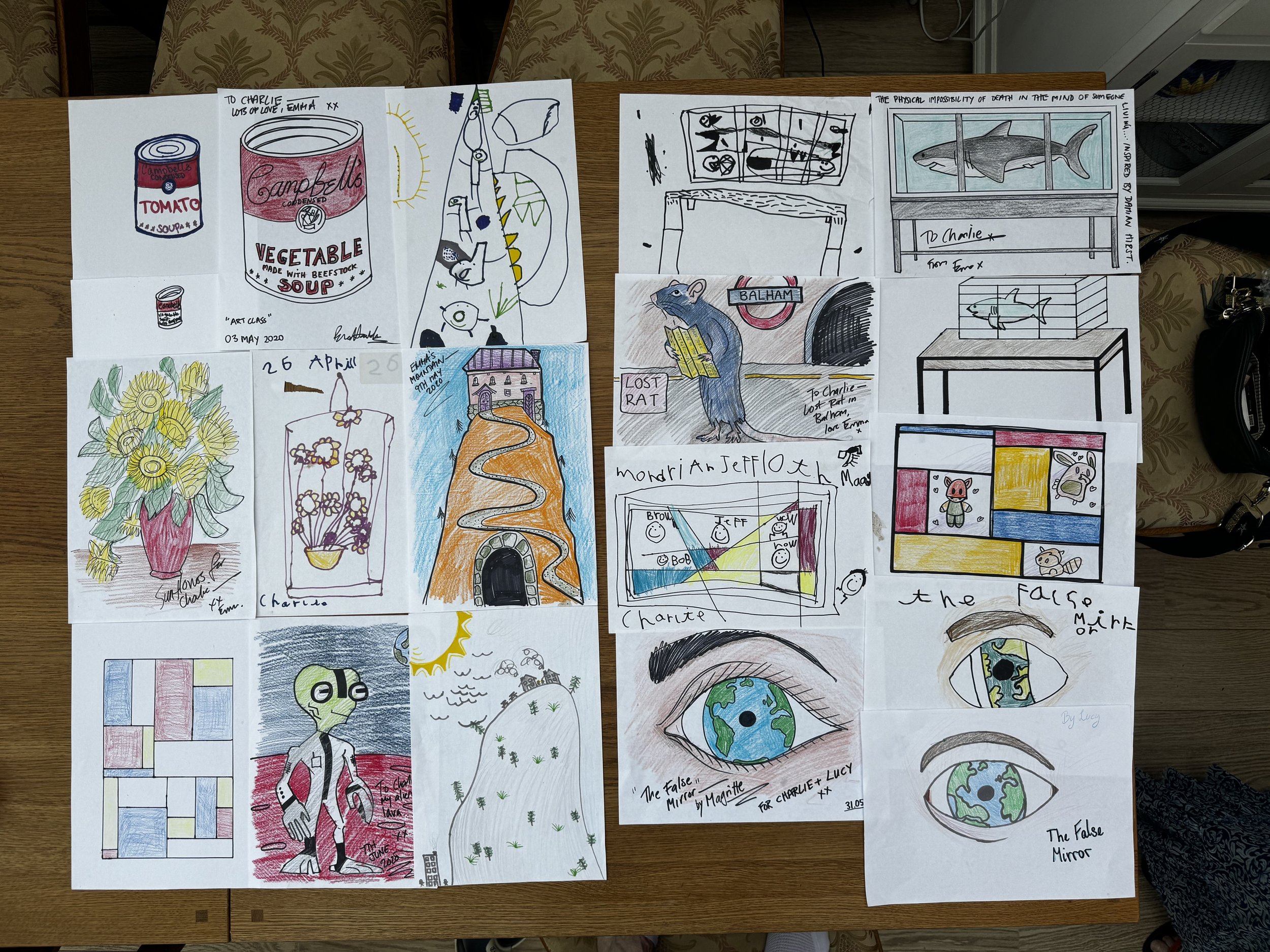
And then we would draw.
Not to produce finished artwork.
Not to be correct.
But to make his thoughts visible.
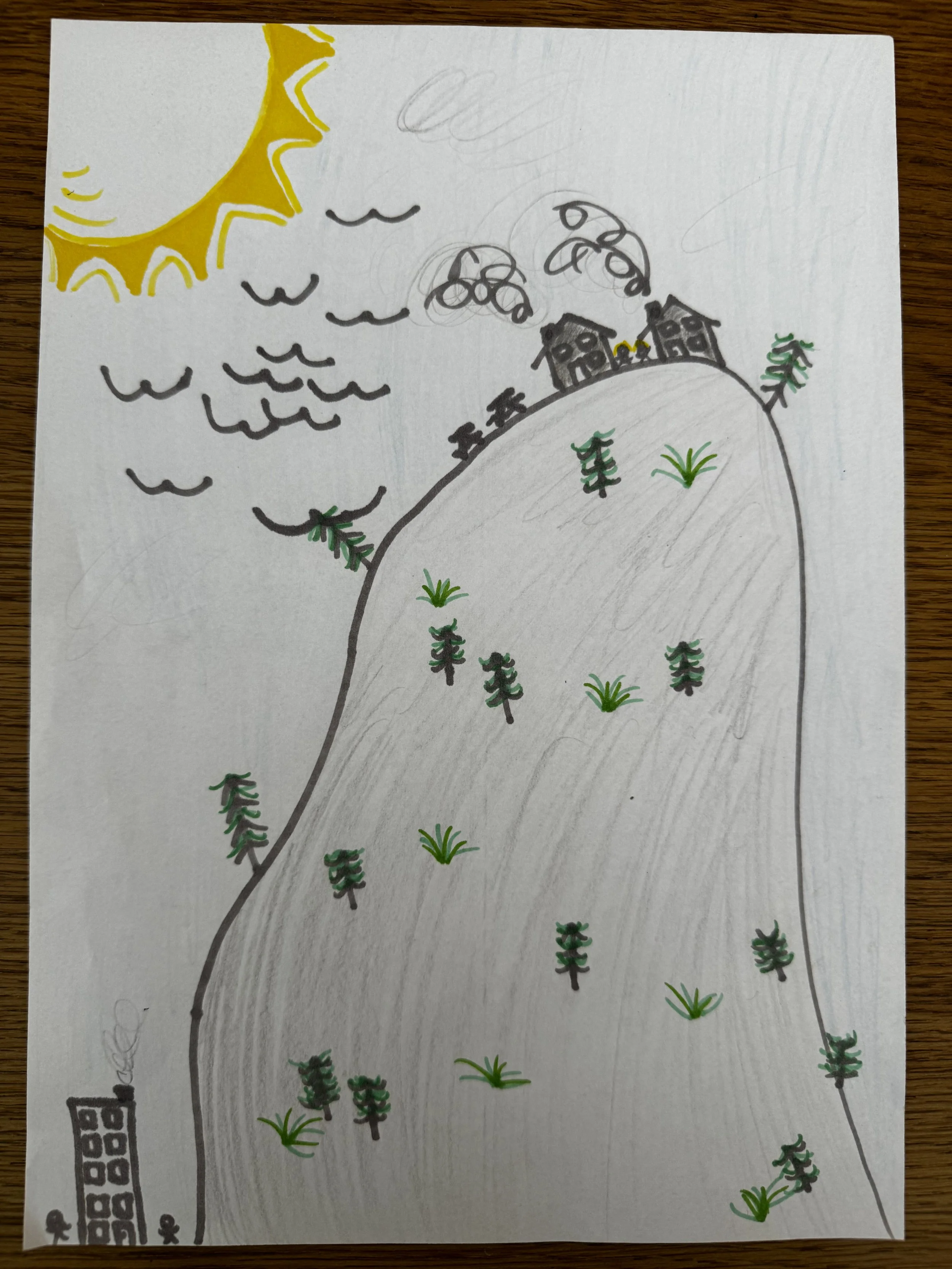
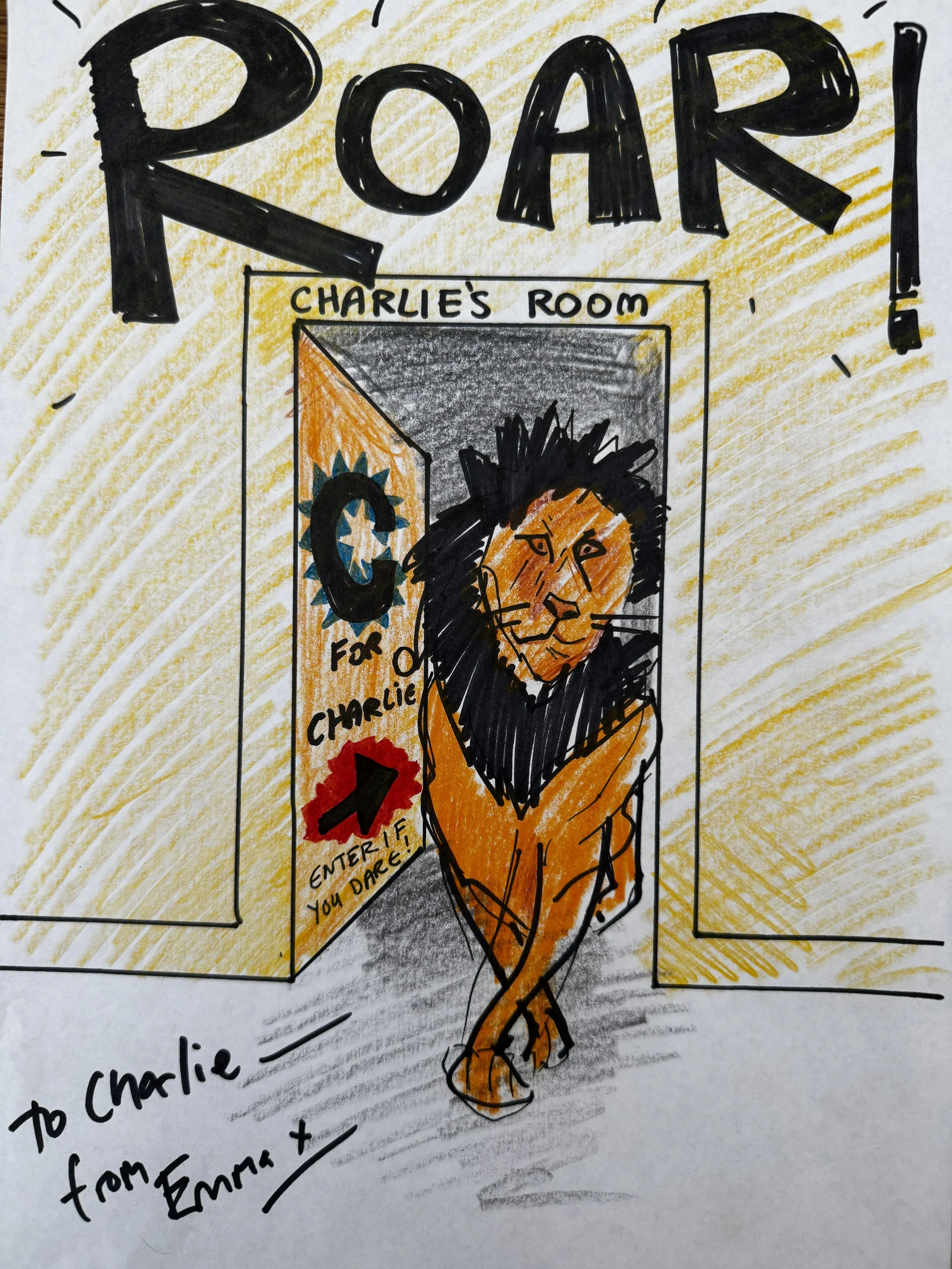
As he described what he saw in his imagination, I would draw alongside him. Slowly, a shared world began to form between us. His ideas, spoken aloud, became images. And those images became something we could both see at the same time.
What surprised me most was how expansive his imagination was.
At that age, there is no hesitation about whether something is right or wrong. There is only curiosity. Possibility. Movement. Story.
He wasn’t drawing what things looked like.
He was drawing what things felt like.
After lockdown, I gave them all the drawings.
My friend has framed them in her home.
They are not just drawings of a moment in time.
They are records of how we helped each other stay connected through it.
Looking back, I realise this was not really about drawing at all.
It was about creating a shared space where imagination could exist between two people.
A space where thoughts didn’t have to stay private.
Where ideas could be seen, responded to, and extended.
I’ve come to believe that this is another form of care.
Not the care of fixing something.
But the care of staying present with someone’s thinking long enough for it to become something they can see.
We often assume connection requires proximity.
But sometimes it only requires attention.
And a pencil.
if emma understands…
Someone once said something to me that has stayed with me throughout my career.
“If Emma understands it, everyone will understand it.”
It was meant as a compliment.
At first, I laughed.
But over the years, I’ve realised there was something much deeper behind it.
Throughout my career, I have found myself working between different worlds.
Designers and engineers.
Creative teams and business leaders.
Researchers and marketers.
People who are all working towards the same goal, but often speaking completely different languages.
I’ve learned that most ideas don’t fail because they are bad ideas.
They fail because people never arrive at the same understanding of them.
That’s where my work begins.
I don’t think of myself as someone who creates presentations or communicates strategy.
I think of myself as someone who helps people see the same thing.
Sometimes that means drawing an idea.
Sometimes it means building a prototype instead of another presentation.
Sometimes it means bringing people into a workshop so they can experience an idea rather than simply hear about it.
Whatever the medium, the purpose is always the same.
To make something clear enough that people can understand it together.
I’ve never believed that complexity is a sign of intelligence.
In fact, I think the opposite is often true.
The hardest work is sitting with something long enough to discover its simplest, clearest form without losing its meaning.
That isn’t simplification.
It’s translation.
Not translating words.
Translating understanding.
Because once people can see the same thing, something happens.
The conversation changes.
People stop protecting their own perspective.
They begin building a shared one.
Over the years I’ve come to realise that this isn’t something separate from design.
For me, it is design.
Design is simply the way I help organisations articulate their vision, align people around it, and make it tangible enough to act on.
If Emma understands, everyone understands.
I still smile every time I think about those words.
Because they remind me that my job has never been to have all the answers.
My job is to help people see things together.
Project Metallica
Ideas often fail not because they are wrong, but because they remain abstract for too long.
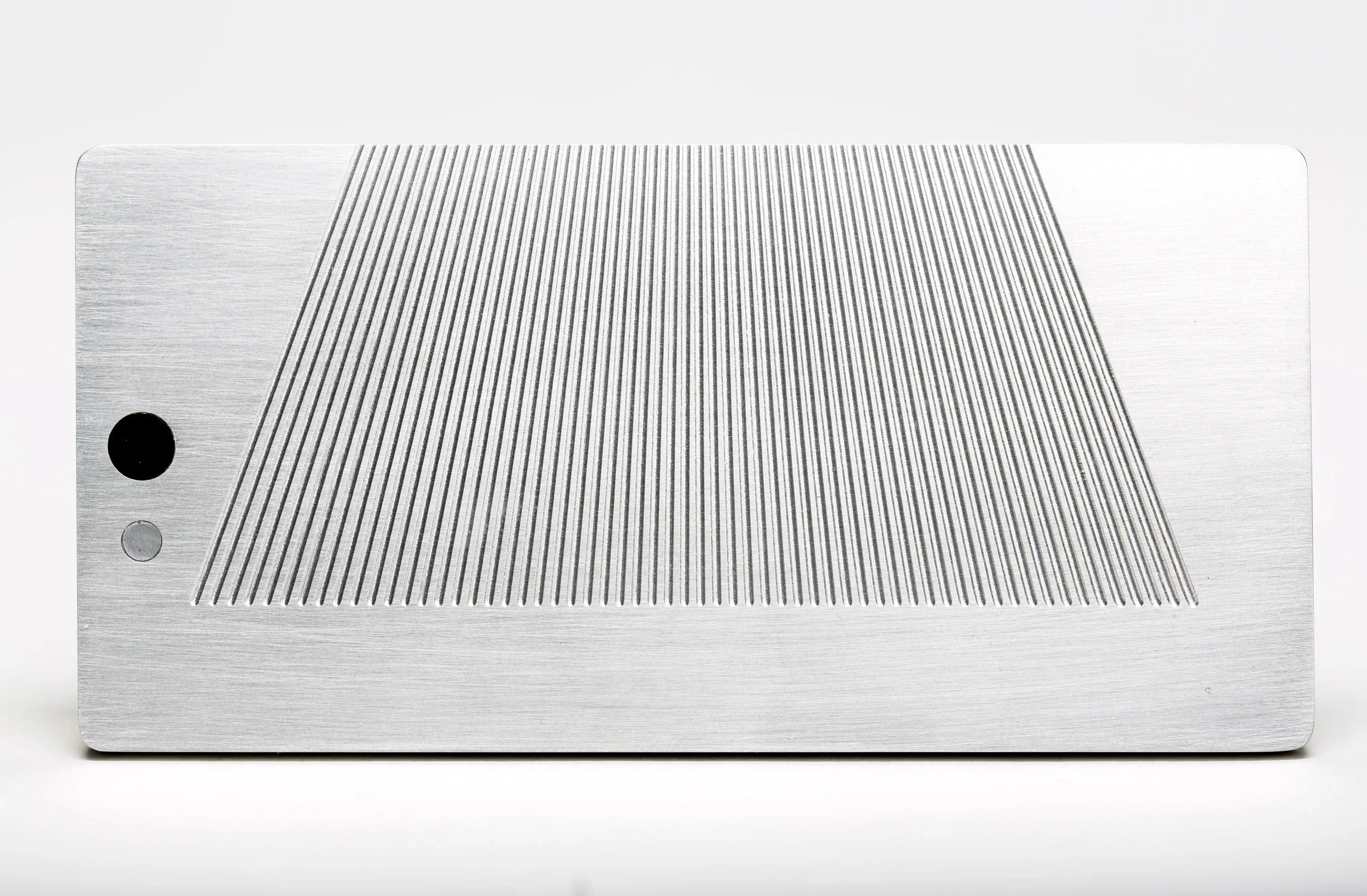
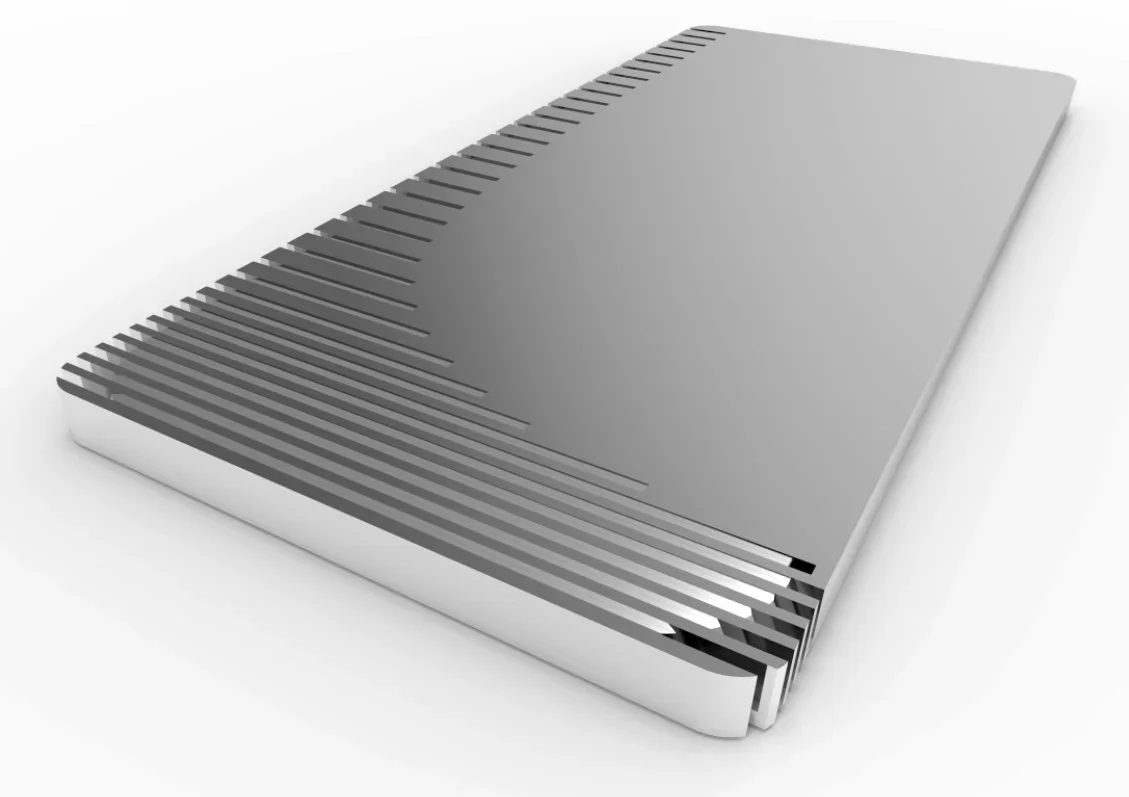
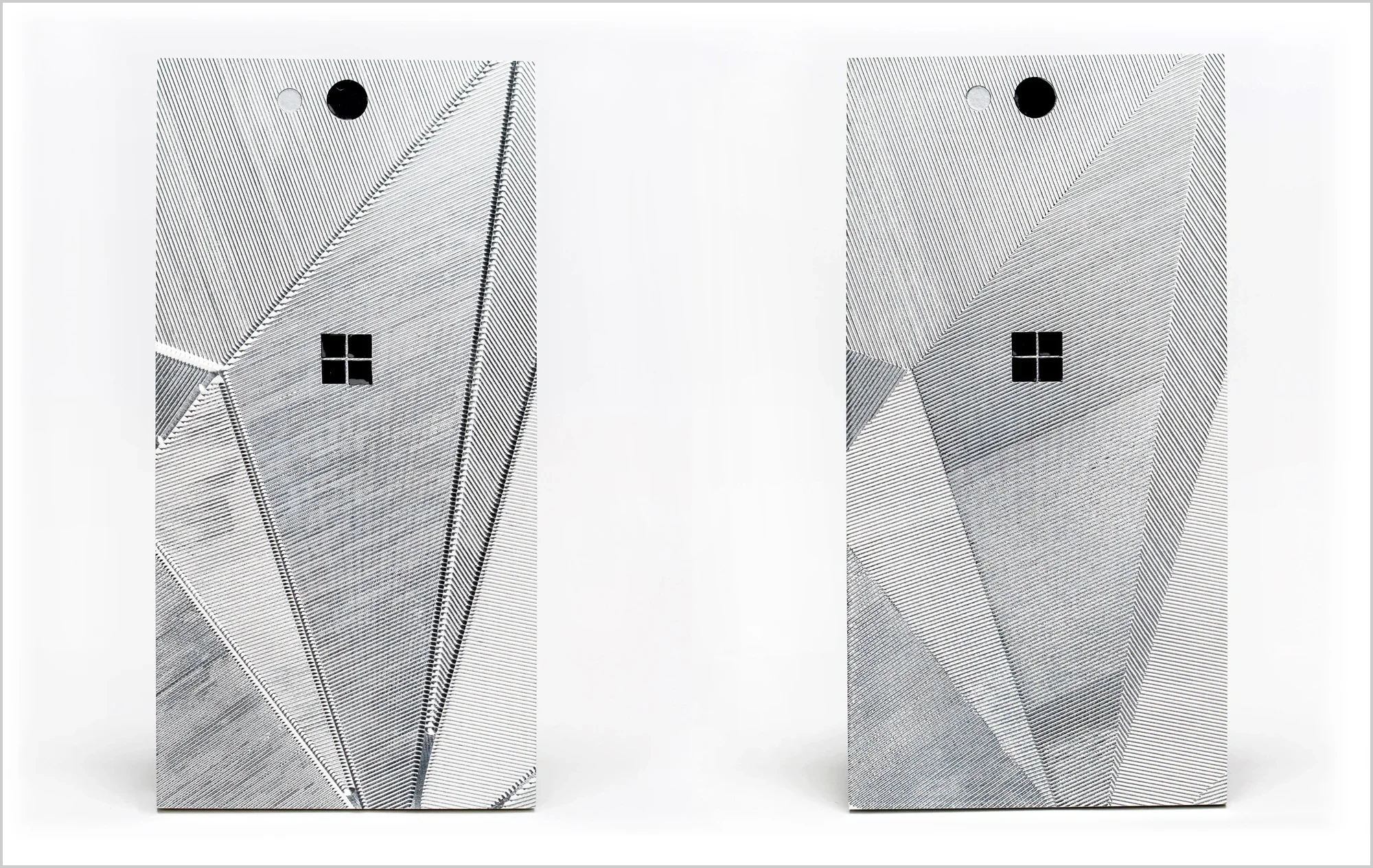
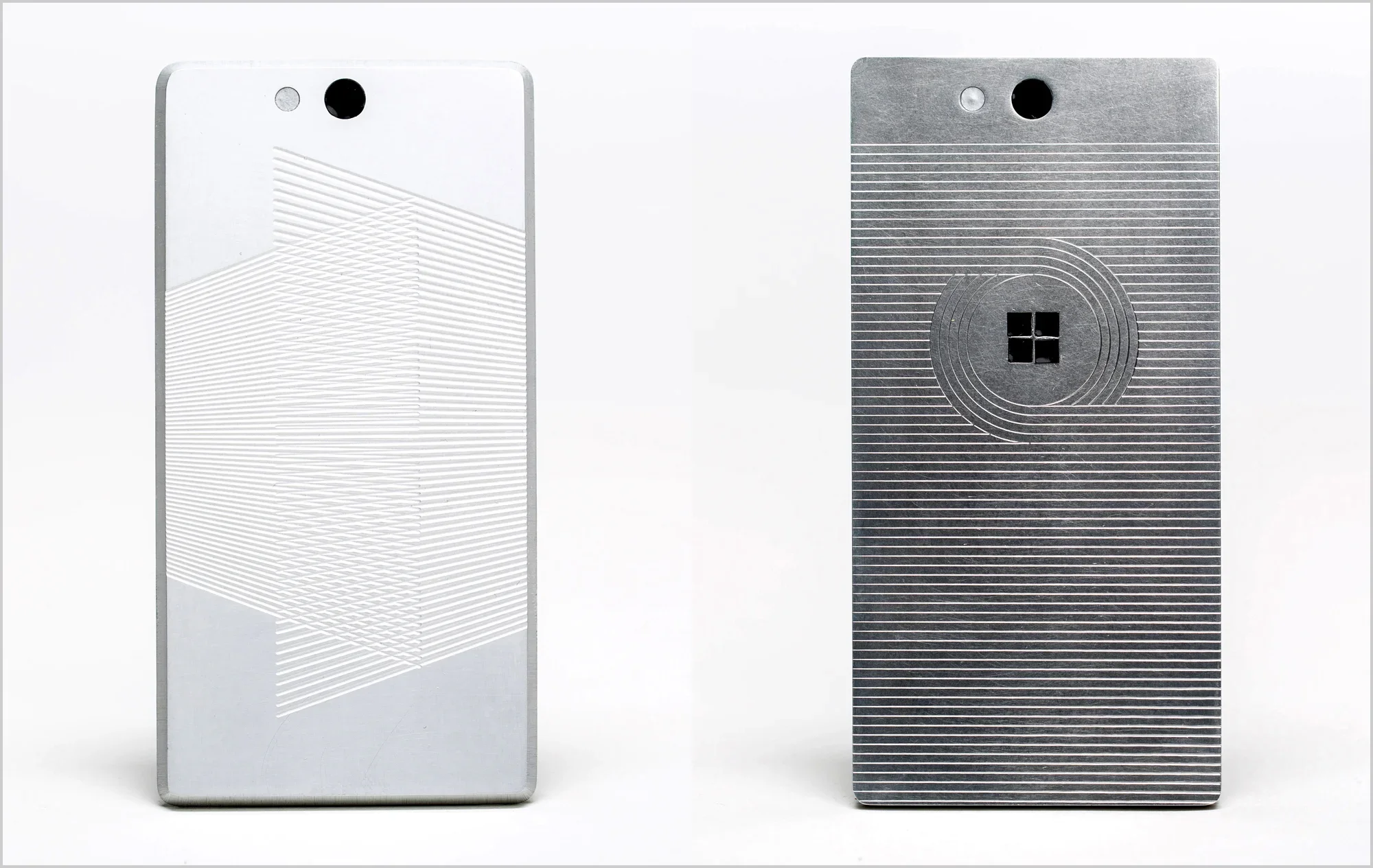
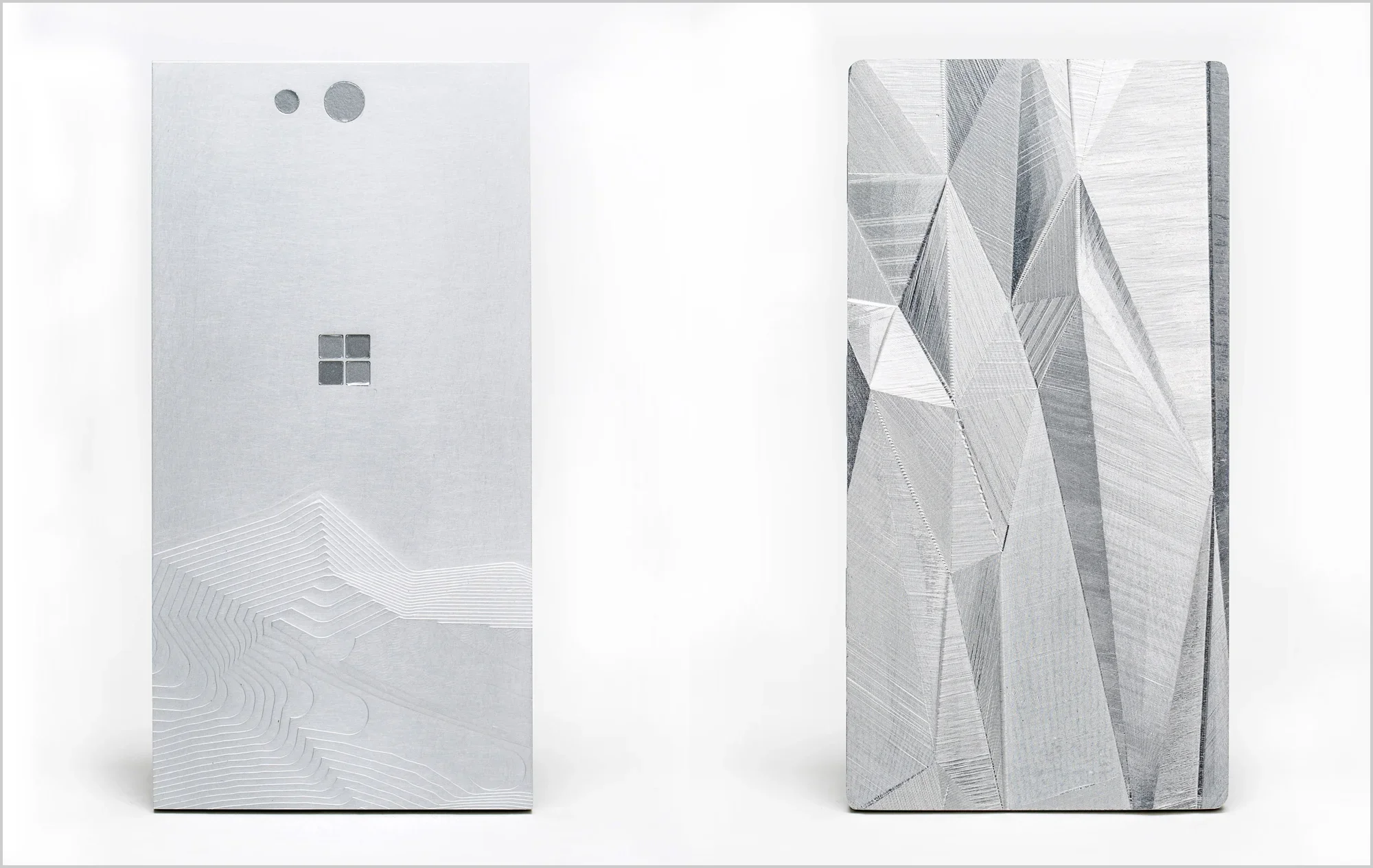
When i was working at Microsoft, I began to notice a shift in mobile phone design. The industry was moving from plastic towards metal. It wasn’t just an aesthetic change — it represented a deeper evolution in how products were being understood, engineered and experienced.
At the time, I was working in design strategy and communication, and I felt strongly that we needed to explore what this shift could really mean — not just visually, but physically and functionally.
So I wrote a proposal.
I called it Project Metallica.
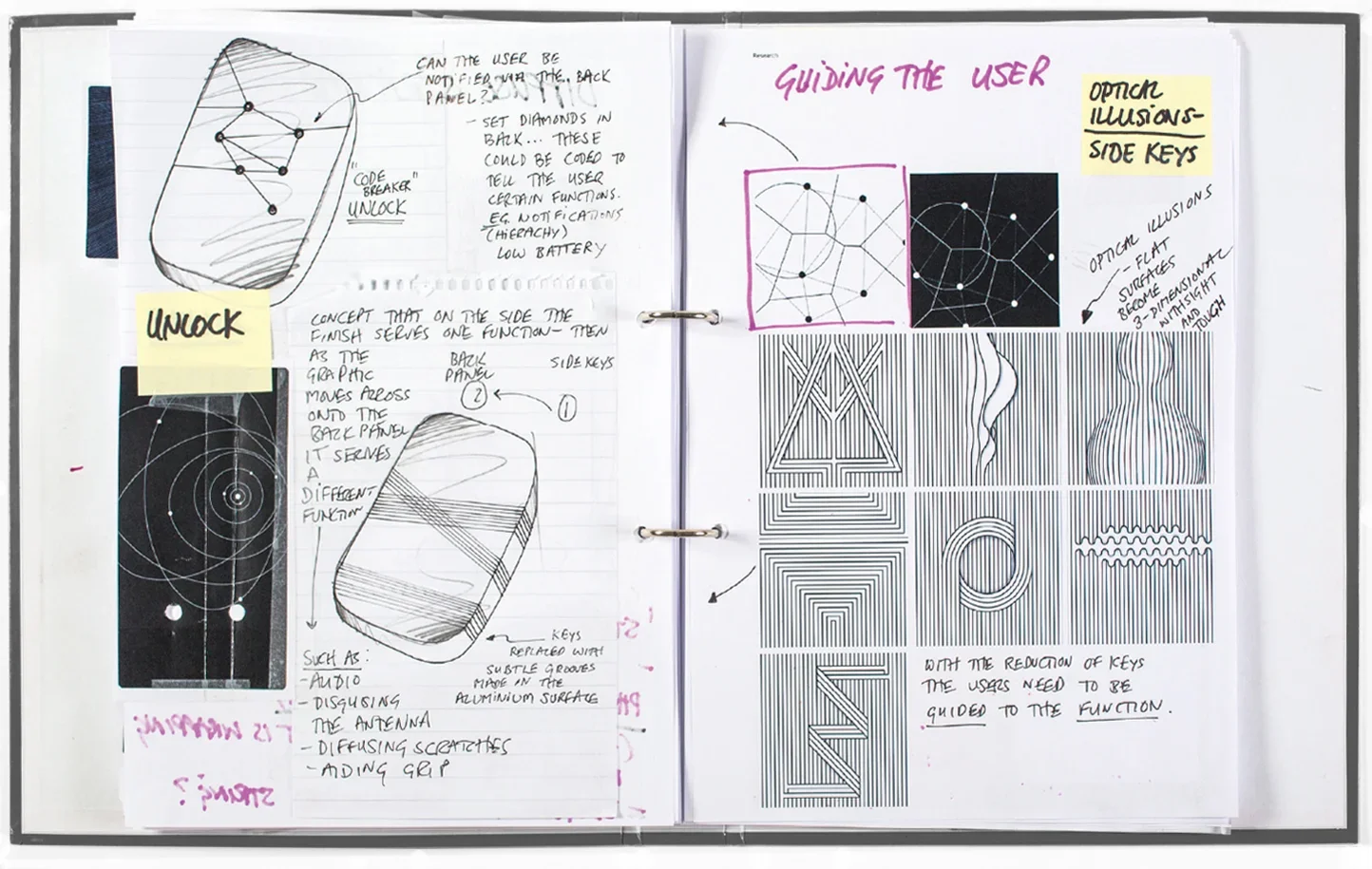
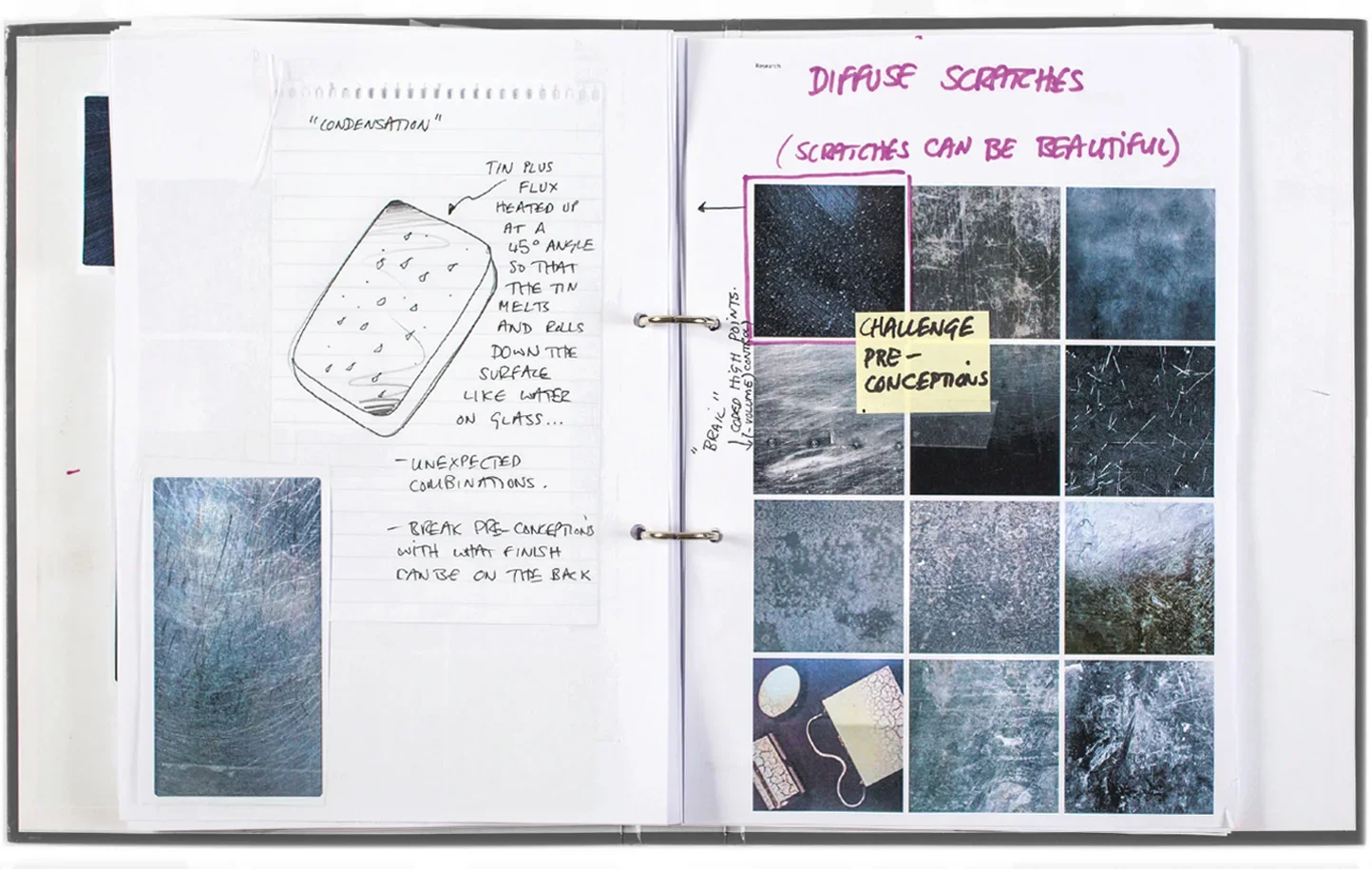
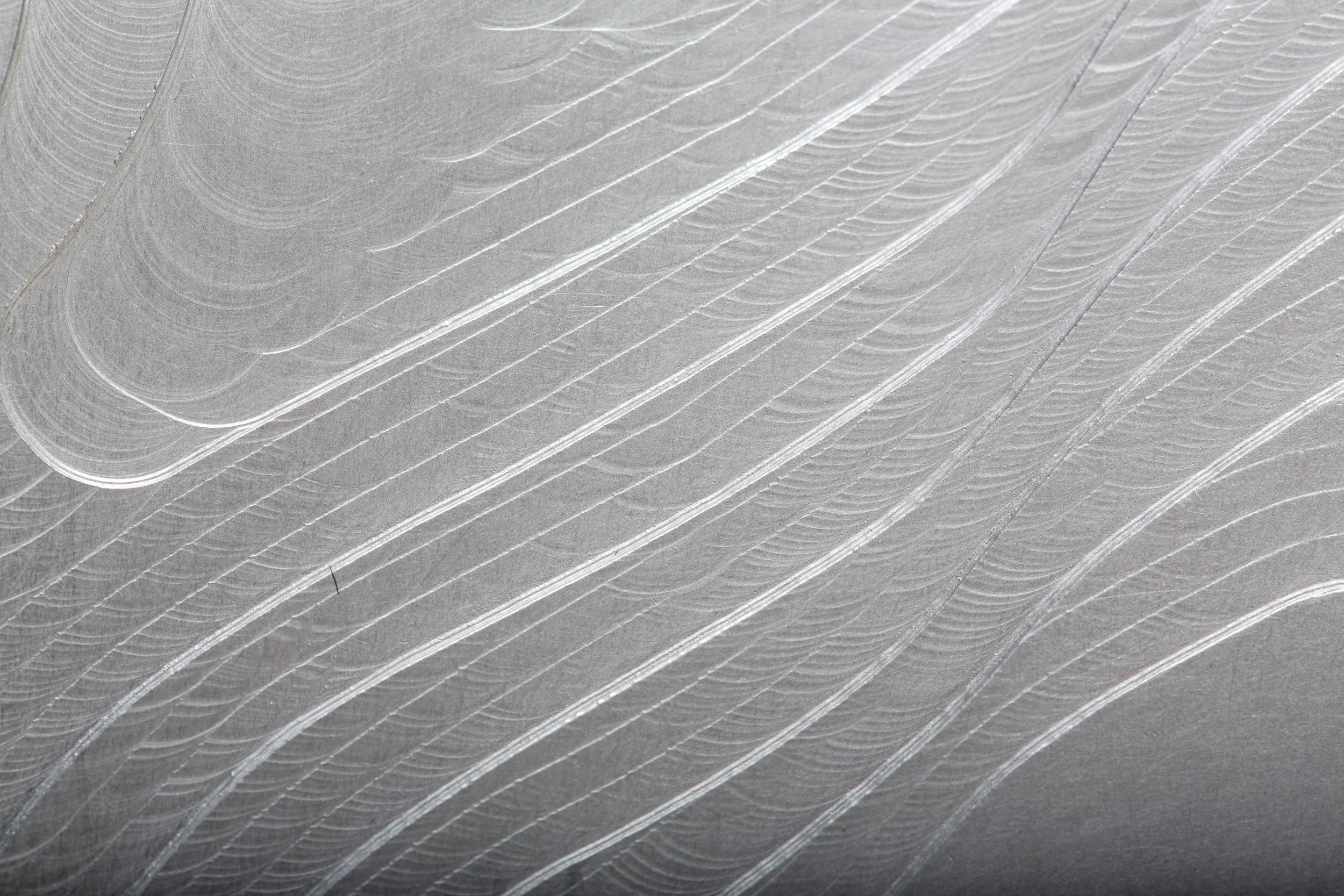
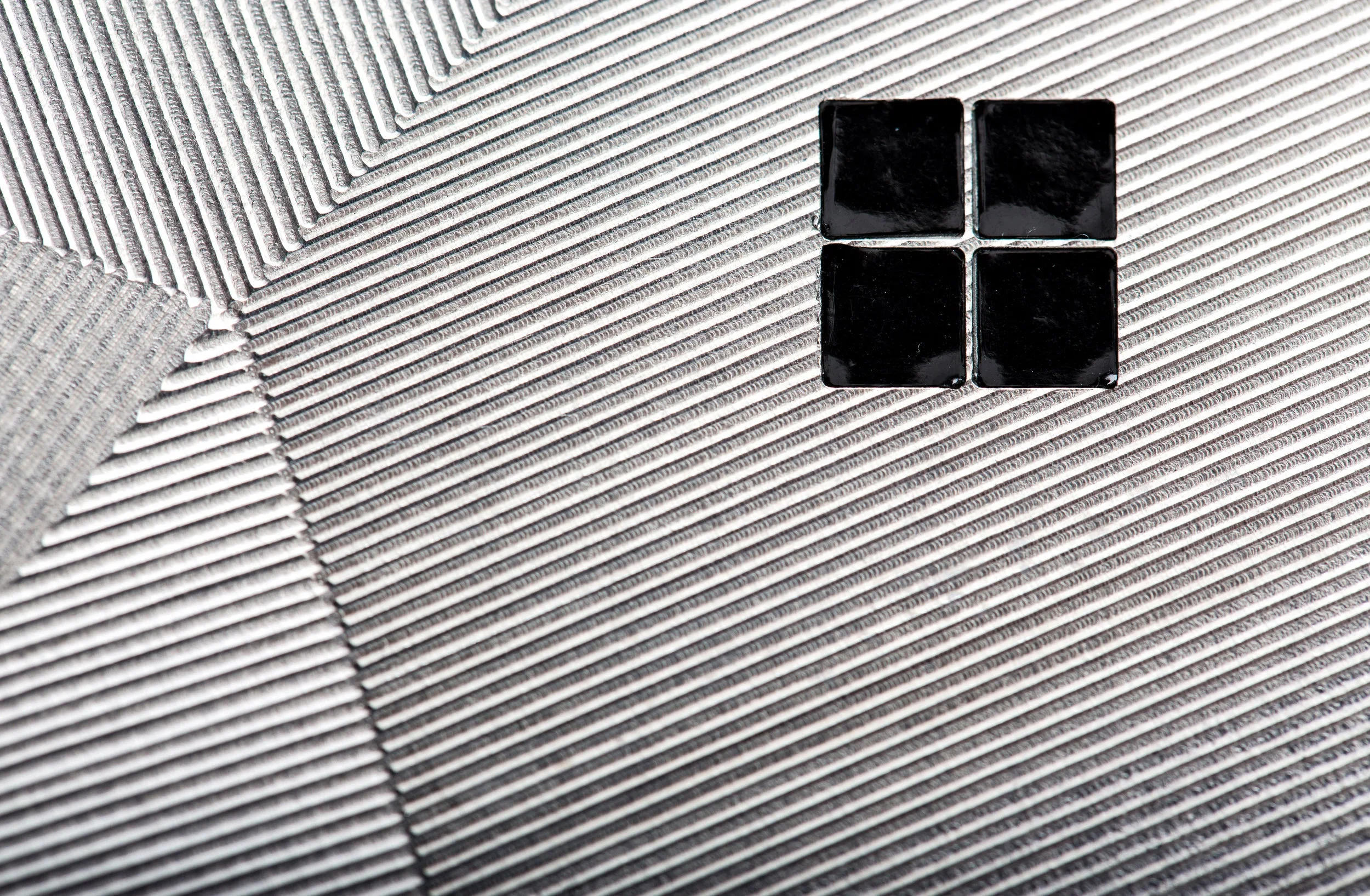
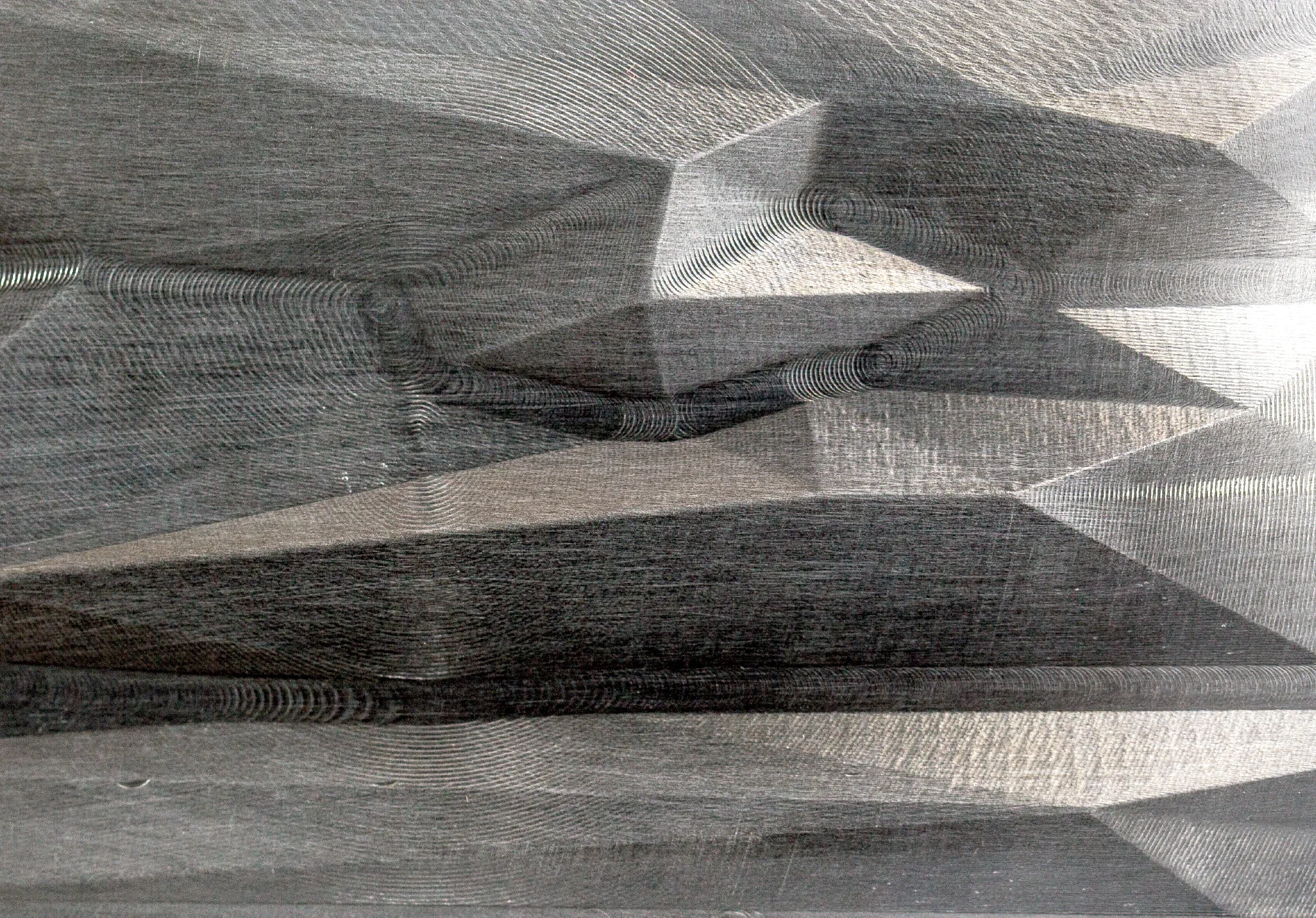
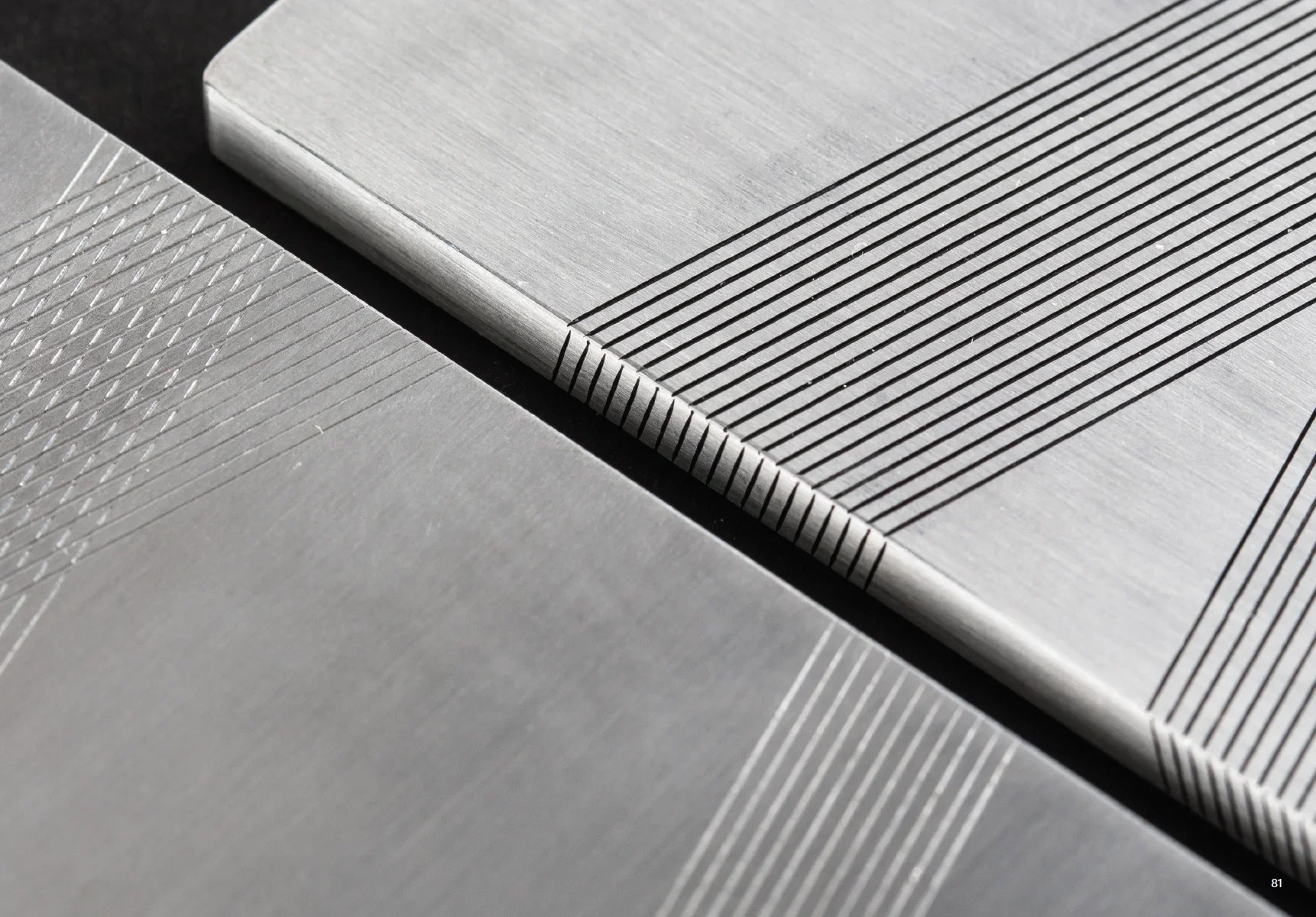
The idea was simple. Instead of debating what metal might mean for design, we would work with it directly.
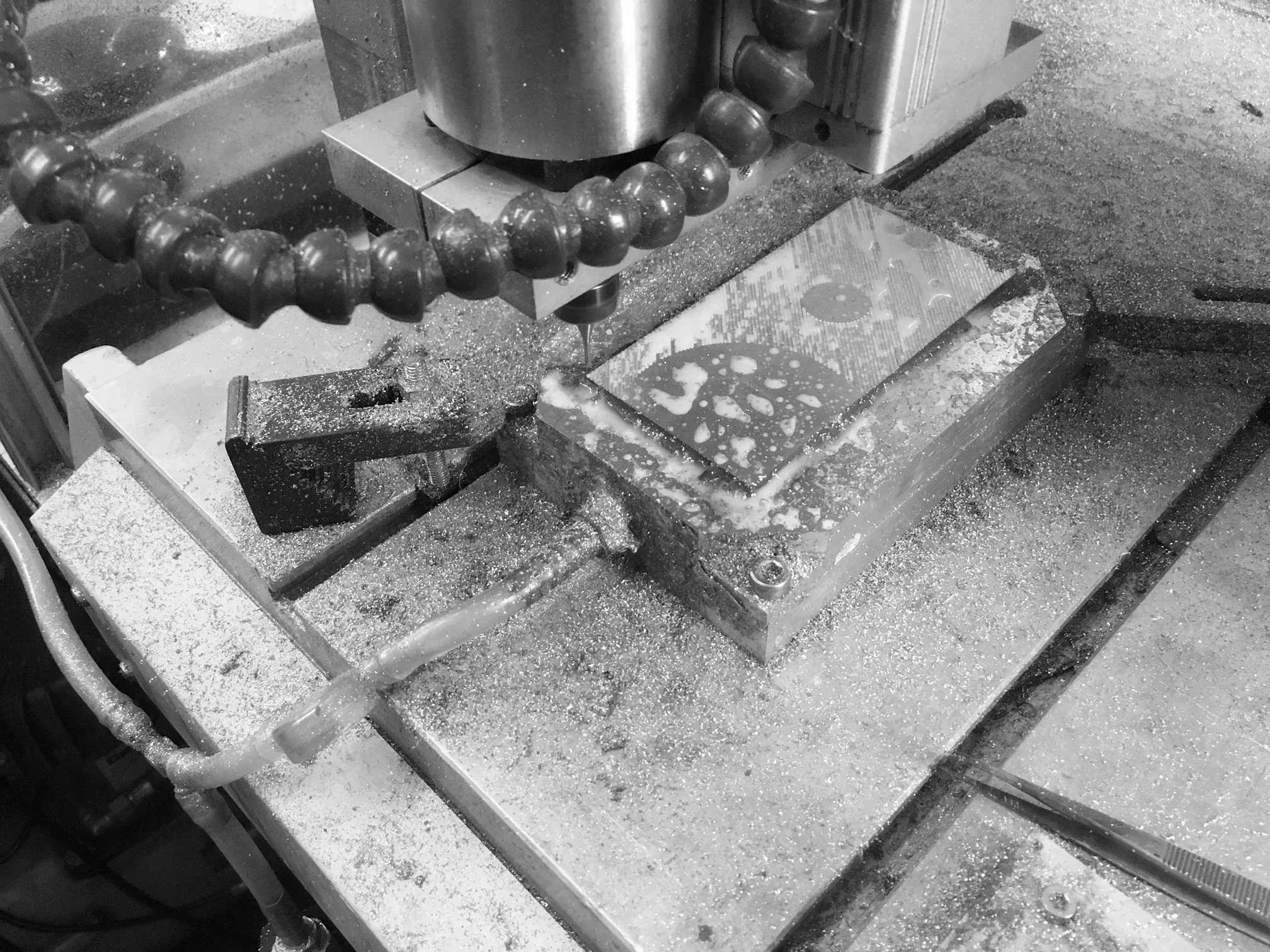
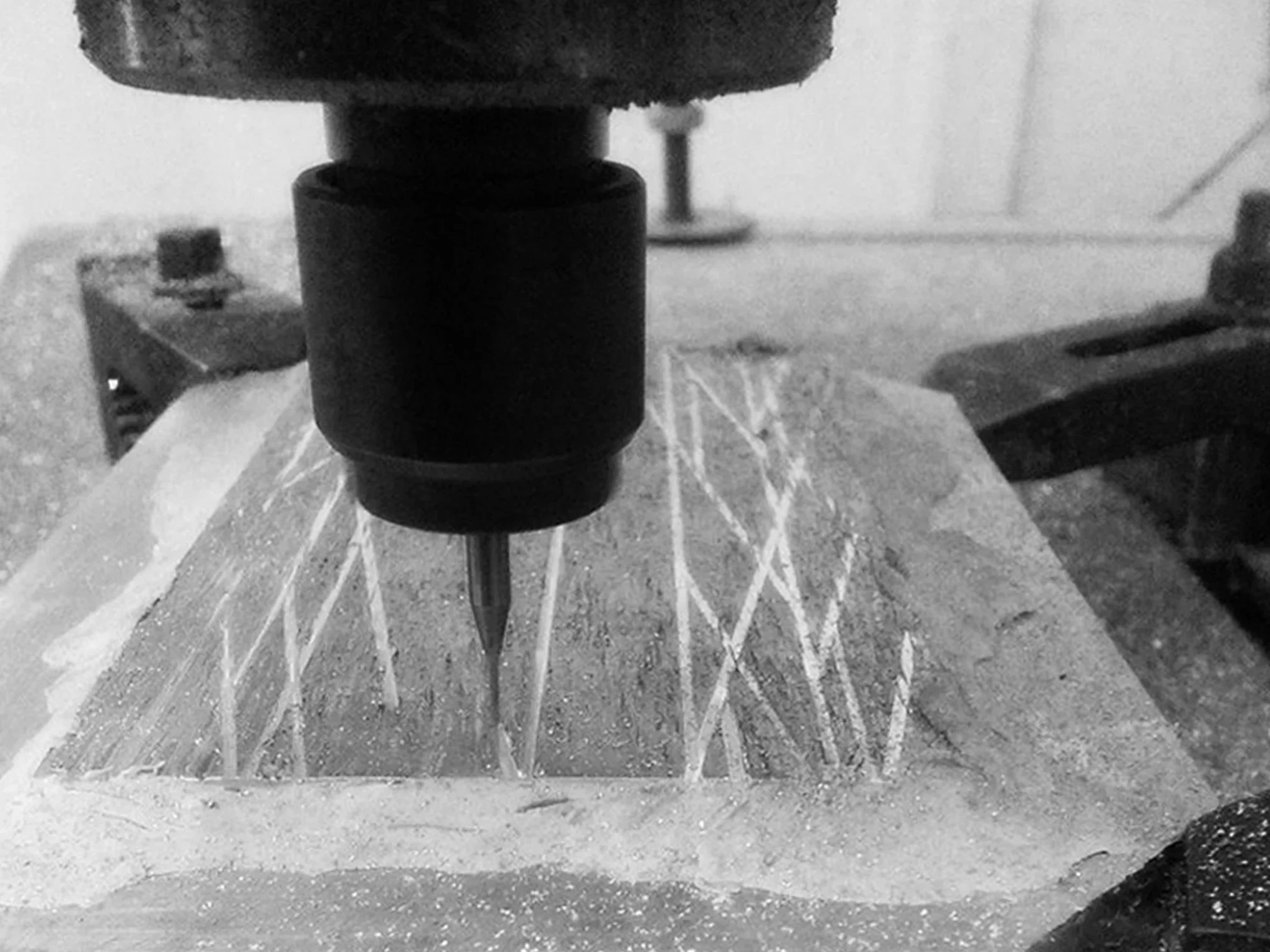
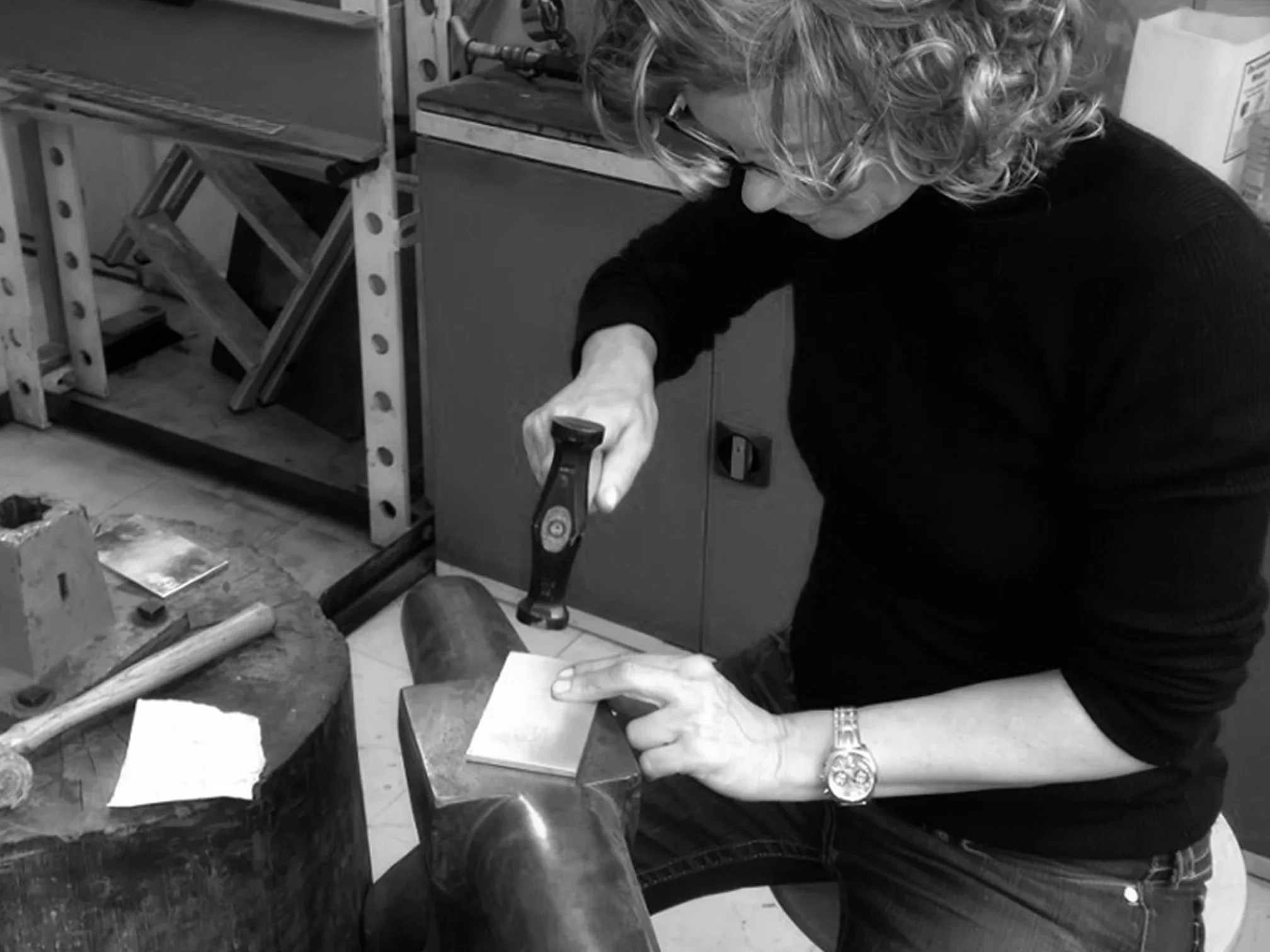
I proposed going back to the Royal College of Art, where I had trained as a silversmith, and collaborating with practitioners I trusted deeply: people who understood material at a fundamental level.
With a modest budget approved by my head of design, we began working every Friday in the workshop.
We didn’t start with answers.
We started with questions:
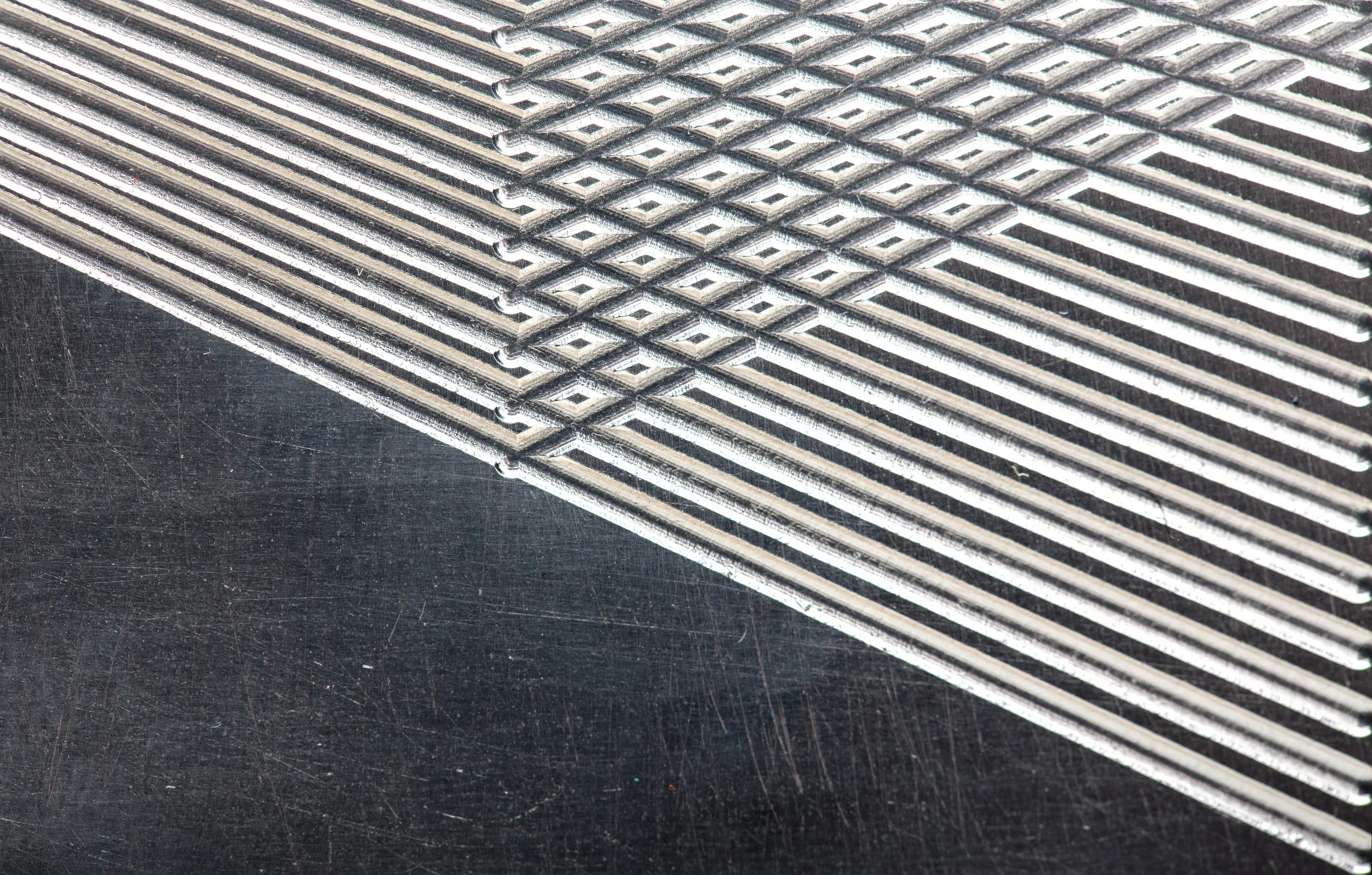
How could metal improve grip?
How could it manage heat?
How could it support internal components?
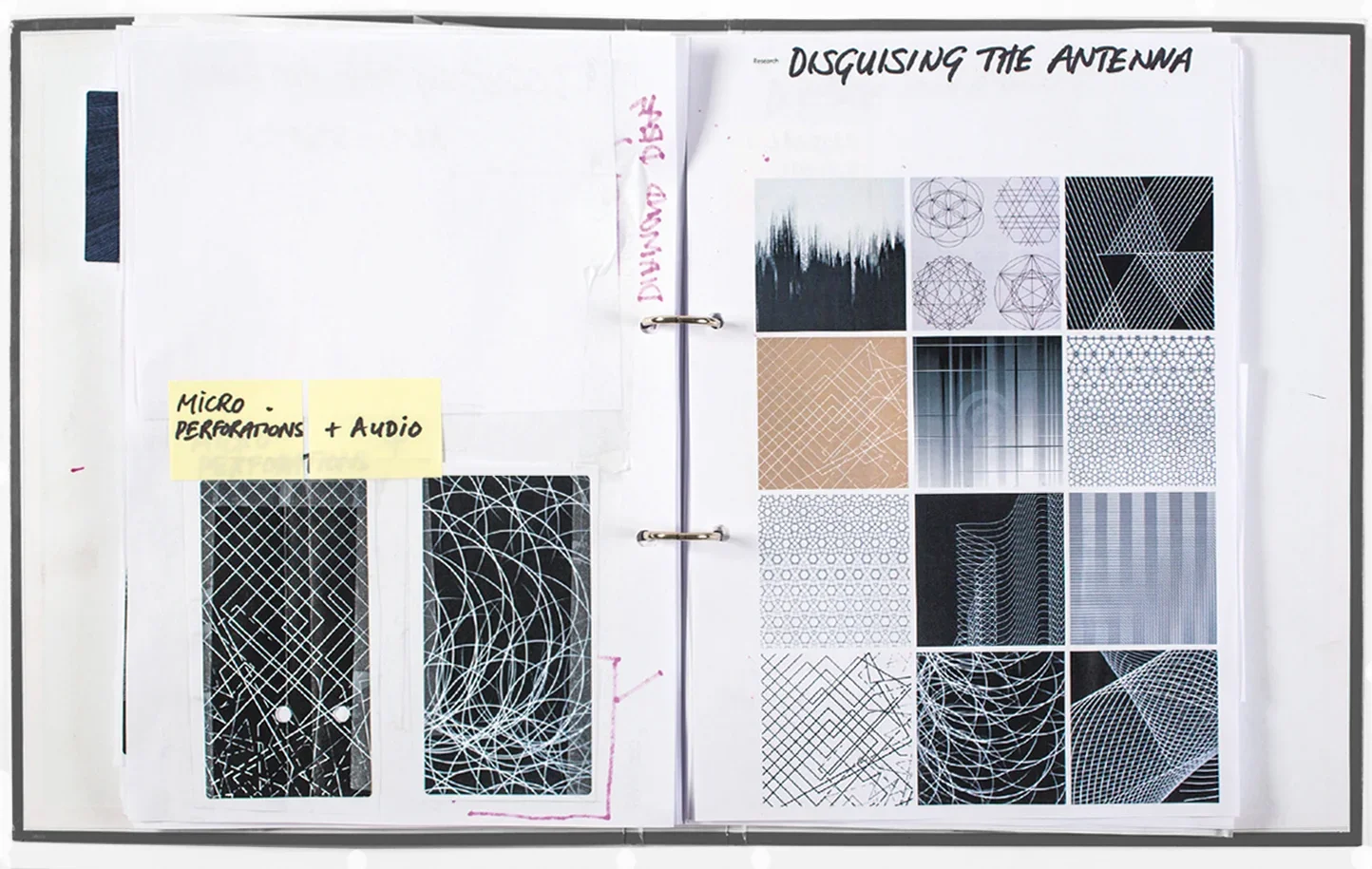
How could it shape antenna performance?
How could it allow for a more pure, unified form?
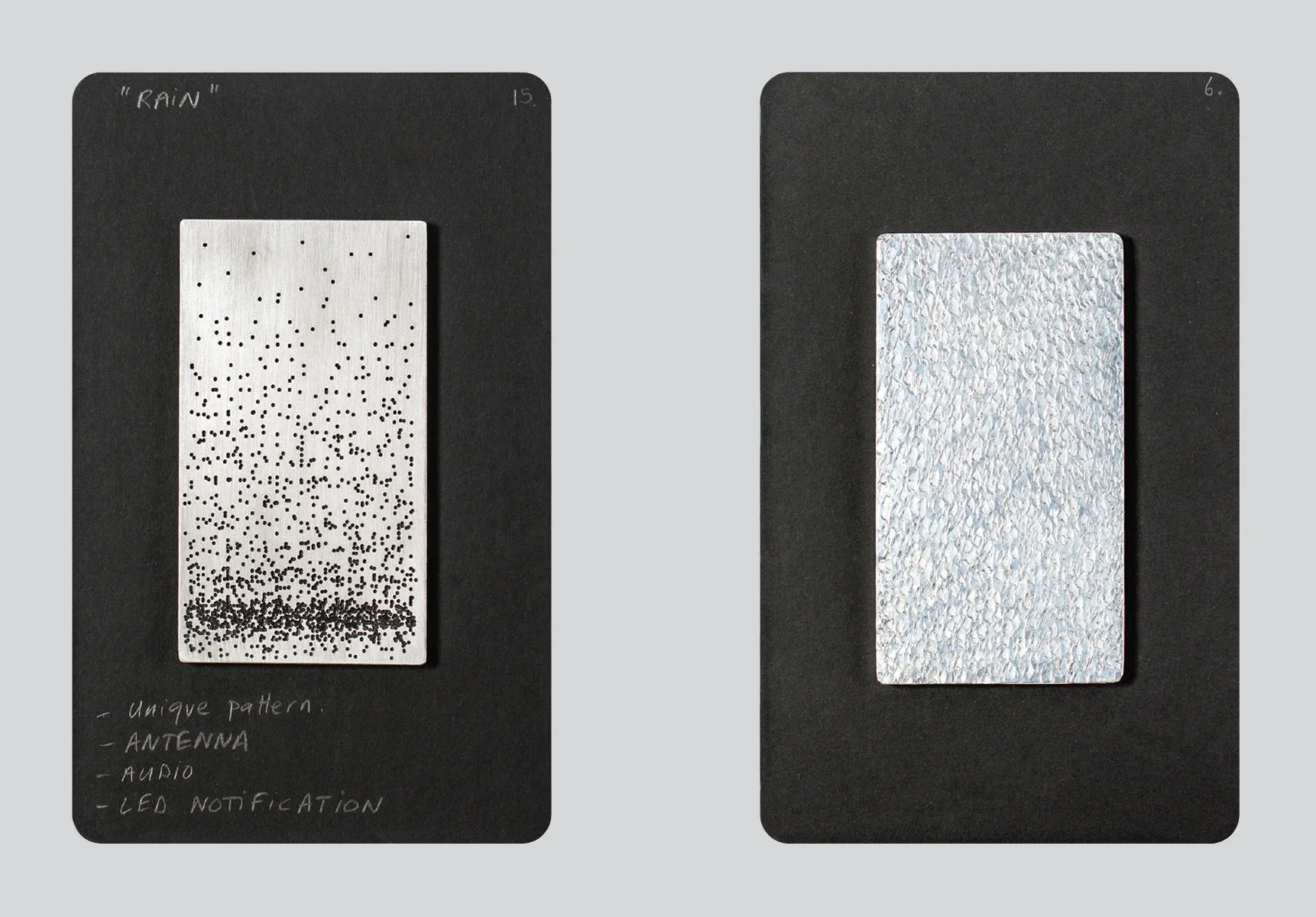
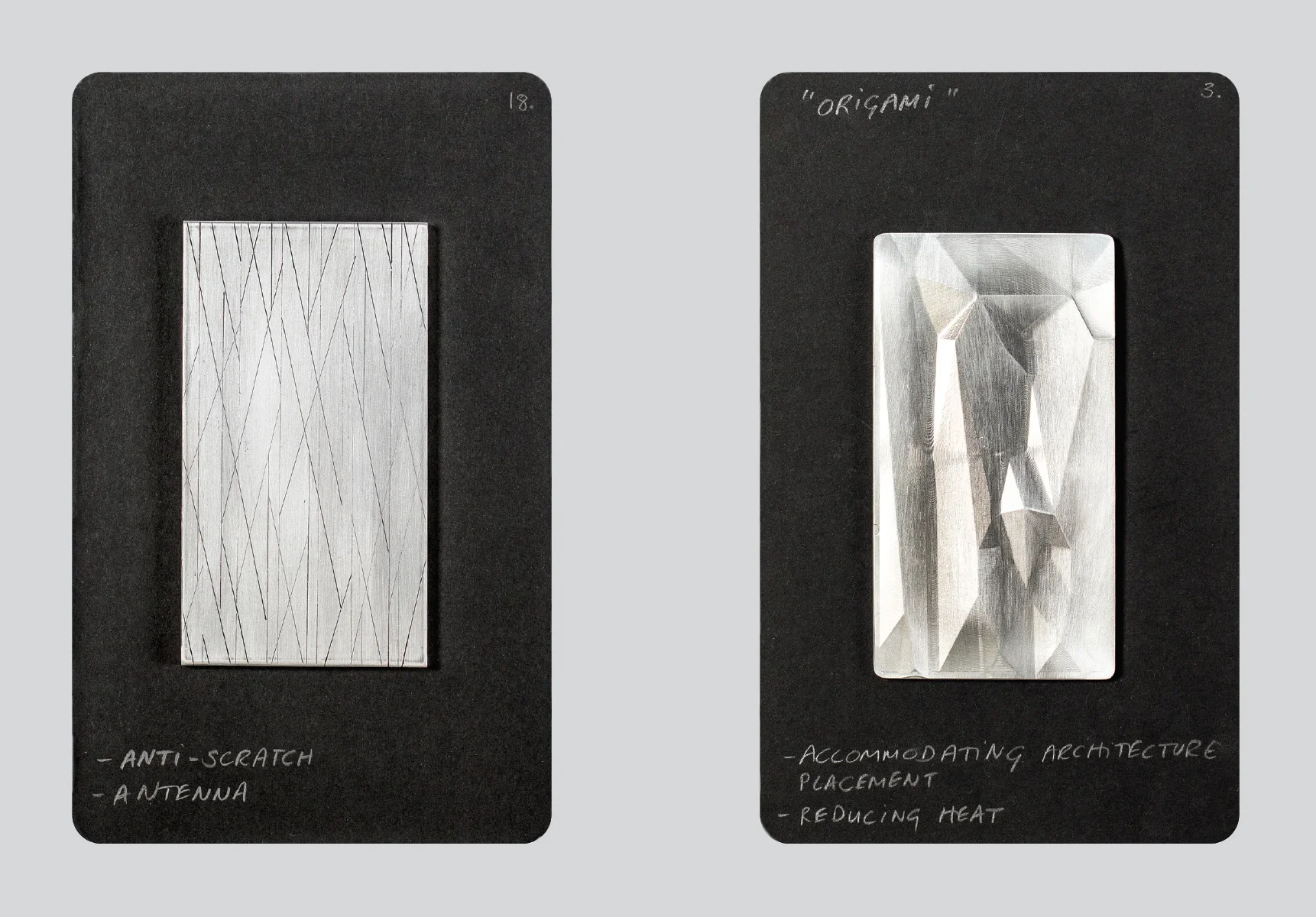
We explored, tested, made and remade.
The work was not theoretical — it was physical. We were holding ideas in our hands.
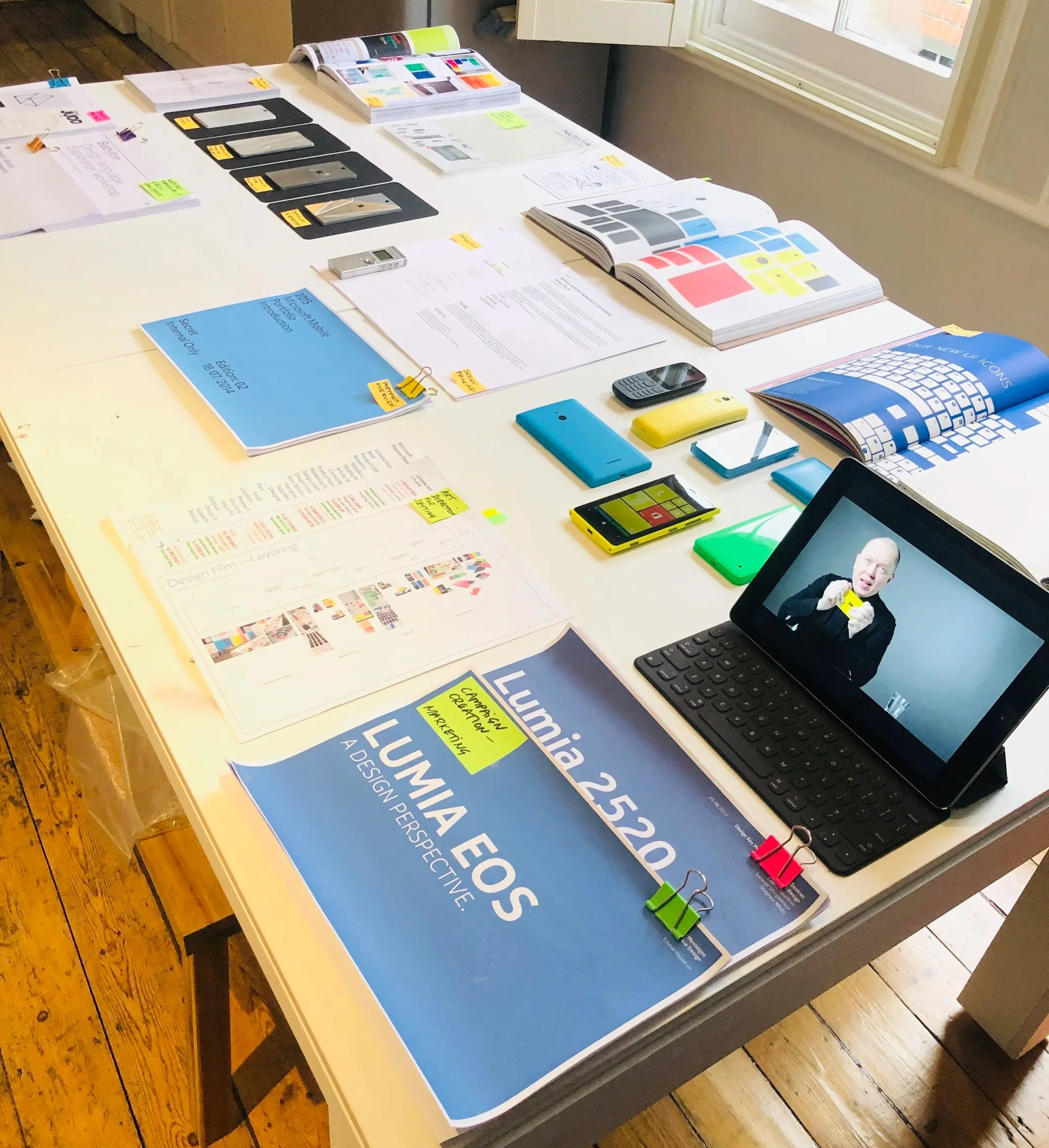
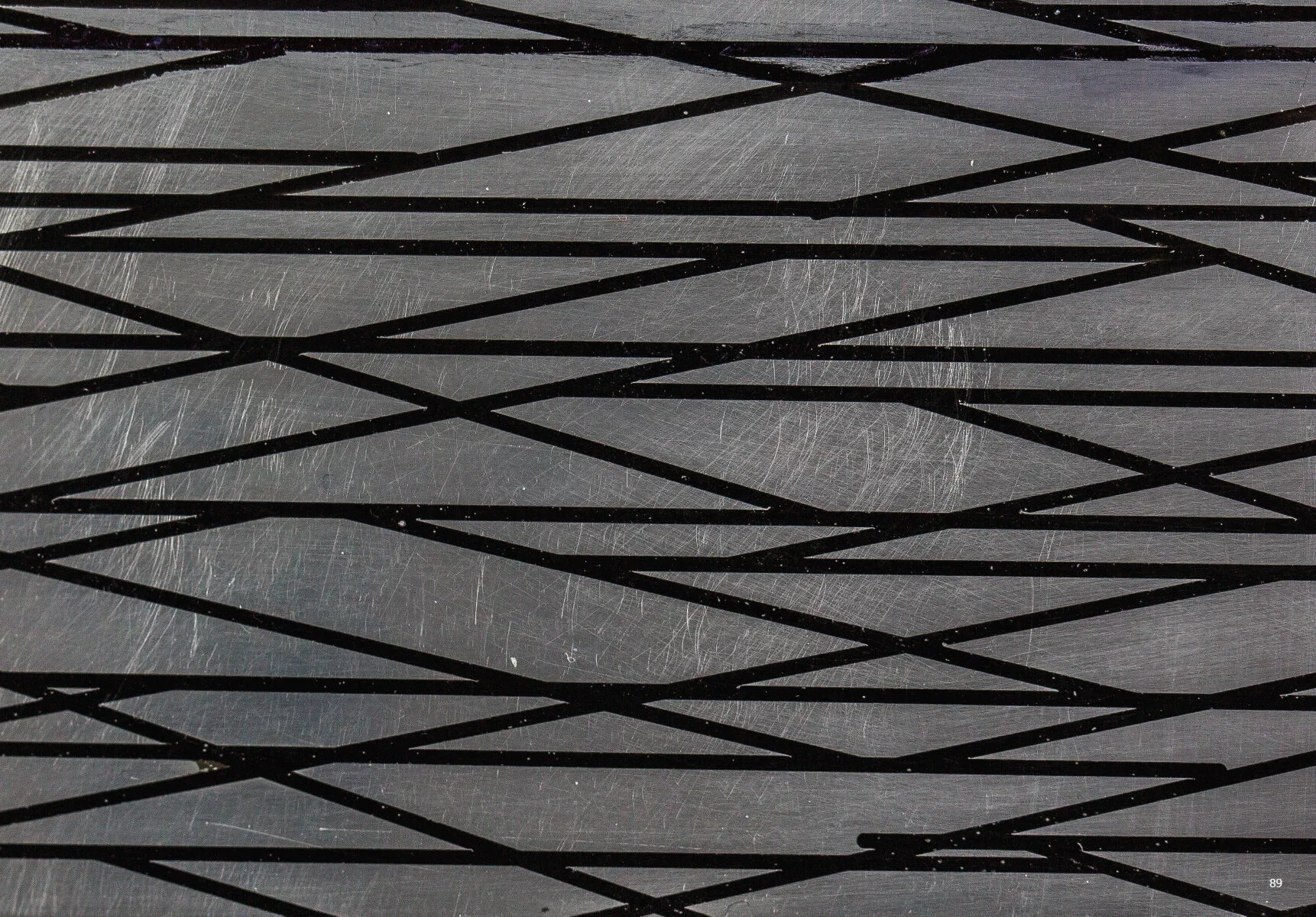
Over time, those experiments began to form a body of work. Objects, drawings, material studies, prototypes.
After three months, I brought everything back into the design studio.
I placed it all on a large table.
Not as a presentation.
But as evidence.
People didn’t need a lengthy explanation.
They could see it. Touch it. Understand it immediately.
The response was instant. The work unlocked conversations that had previously been difficult to have. It gave designers and engineers a shared starting point — a way of thinking differently about what metal could do, beyond surface and casing.
What followed was unexpected.
My line manager suggested we turn the work into a publication.
A designer in the team worked with me to document the drawings, research and artefacts.
Project Metallica became a book.
A record of a moment where exploration turned into shared understanding.
Looking back, I realise this project was never really about metal.
It was about what happens when ideas are allowed to become real early.
When proposals are not just discussed, but built.
When leaders are willing to say:
“Show me.”
And when designers are willing to respond:
“I already have.”
Make It Your Own
There are moments in a career that quietly redefine how you show up in the world.
For me, one of those moments happened shortly after returning to work following maternity leave.
I had been away from the project, but when an opportunity came up to present work in China, I said yes.
It felt like an adventure. I had never been to China before. I didn’t want to miss it.
What I didn’t fully understand was the scale of what I was stepping into.
I found myself standing on a stage in front of a large audience — around 600 people — in a vast auditorium.
And in that moment, something shifted.
I wasn’t just presenting work.
I was presenting myself.
I did what I thought I should do.
I showed the slides.
I read the notes.
I tried to stay close to the material.
But afterwards, I knew it hadn’t landed in the way I had hoped.
A senior leader, Peter Skillman, came up to me afterwards and gave me feedback that I have never forgotten.
He said:
“I never want to see you do that again.”
He didn’t mean it harshly.
He meant it clearly.
He explained that it didn’t matter if I forgot the script. It didn’t matter if I didn’t cover everything perfectly.
What mattered was this:
I had to make it my own.
At the time, I felt I had failed. I felt I had let the team down. I was disappointed in myself.
But something deeper was happening.
I had been treating communication as delivery of information.
When in fact, it is something else entirely.
It is presence.
The next day, I didn’t go back into the studio.
Instead, I went to the Great Wall of China.
I joined a group of strangers and climbed it alone, thinking about what had happened.
At the top, I made a decision.
I would never again treat communication as something I simply pass on.
It had to be something I inhabit.
When I returned home, I started changing everything about how I prepared.
I wrote scripts, but then I spoke them aloud repeatedly.
I recorded myself and listened while cycling.
I rehearsed until the words stopped being words and became thought.
I learned to stand inside the material rather than stand beside it.
Over time, this changed everything.
Not just how I presented.
But how I thought.
How I prepared.
How I led.
Now, when I speak, I don’t aim for perfection.
I aim for connection.
For something that feels alive in the room.
That moment taught me something I carry into every part of my work:
It is not enough to understand the work.
You have to inhabit it.
And then you have to make it your own.
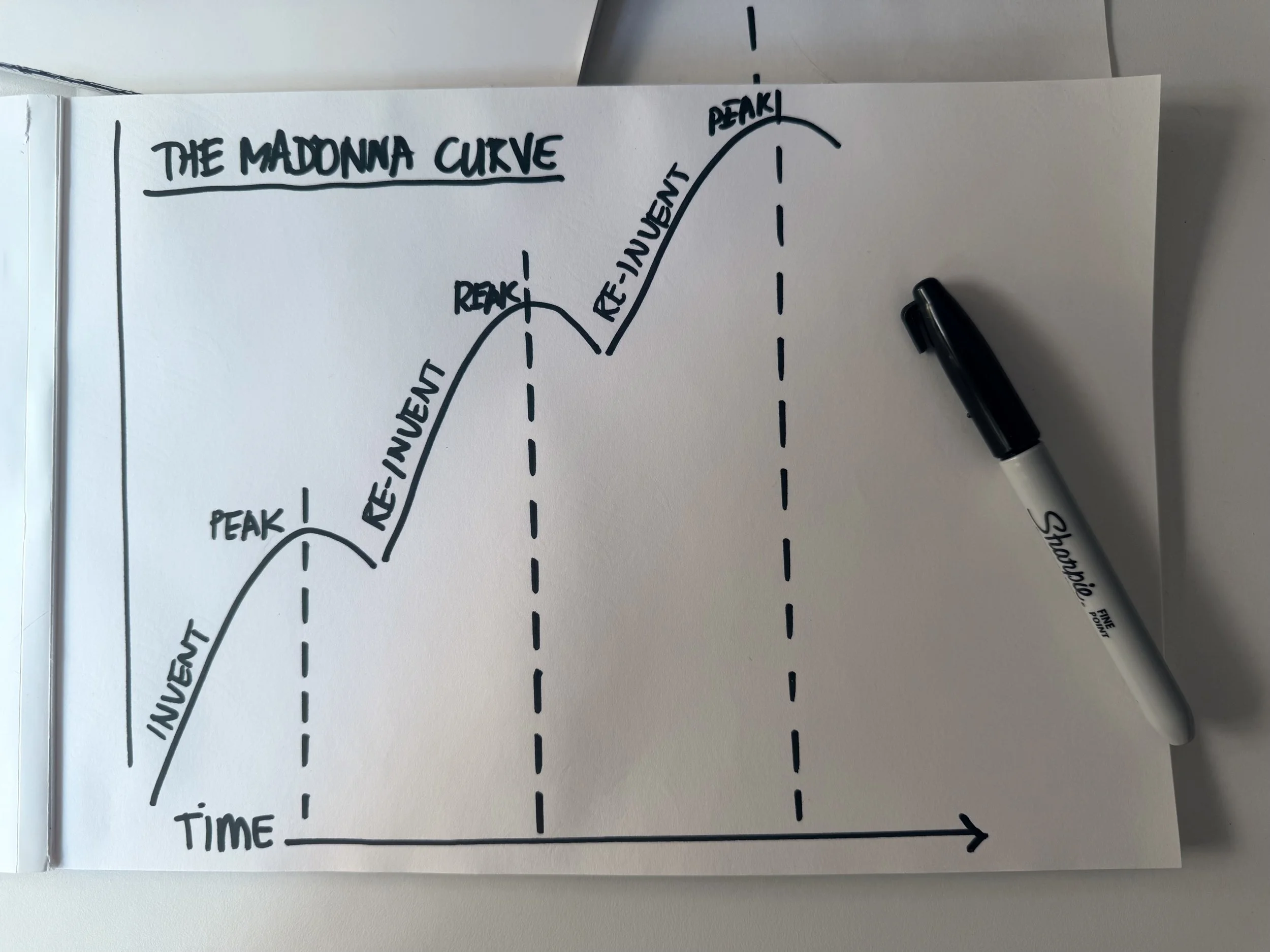
The Madonna Curve
Someone once said to me, “You’re like the Madonna Curve.”
I remember being slightly confused by it at first.
The idea was simple: Madonna would rise, reach a peak, and then just as something began to plateau, she would reinvent herself. Not once, but repeatedly.
At the time, it was meant as a compliment about adaptability.
But I’ve never really thought of it as reinvention.
I don’t experience my career as a series of reinventions.
I experience it as a series of moments where I stop, reflect, and ask whether I am still learning.
If the answer is no, something shifts.
Not dramatically. Not theatrically.
But directionally.
I begin to explore. I begin to question. I begin to look for new ways of thinking, new tools, new environments, new problems.
Sometimes that comes from within an organisation. Sometimes it comes from moving between organisations. Sometimes it comes from simply refusing to stay still in how I think.
I have learned that staying still for too long can quietly reduce your ability to see clearly.
Not because you become less capable.
But because you stop being stretched.
People often describe this as reinvention.
I think of it differently.
I think of it as staying responsive to change — in yourself, in your environment, and in the world around you.
Today, that might mean learning a new tool or platform. I often find myself going back to learn through what I call “YouTube University” — picking up new skills, ideas, perspectives, quickly and practically.
Because the reality is simple.
The world does not stay fixed long enough for any of us to remain unchanged within it.
So I don’t aim to reinvent myself.
I aim to stay in motion.
Uncle Andrew
A friend of mine lives in Rome. Her uncle, Andrew, now lives in a care home with Alzheimer’s.
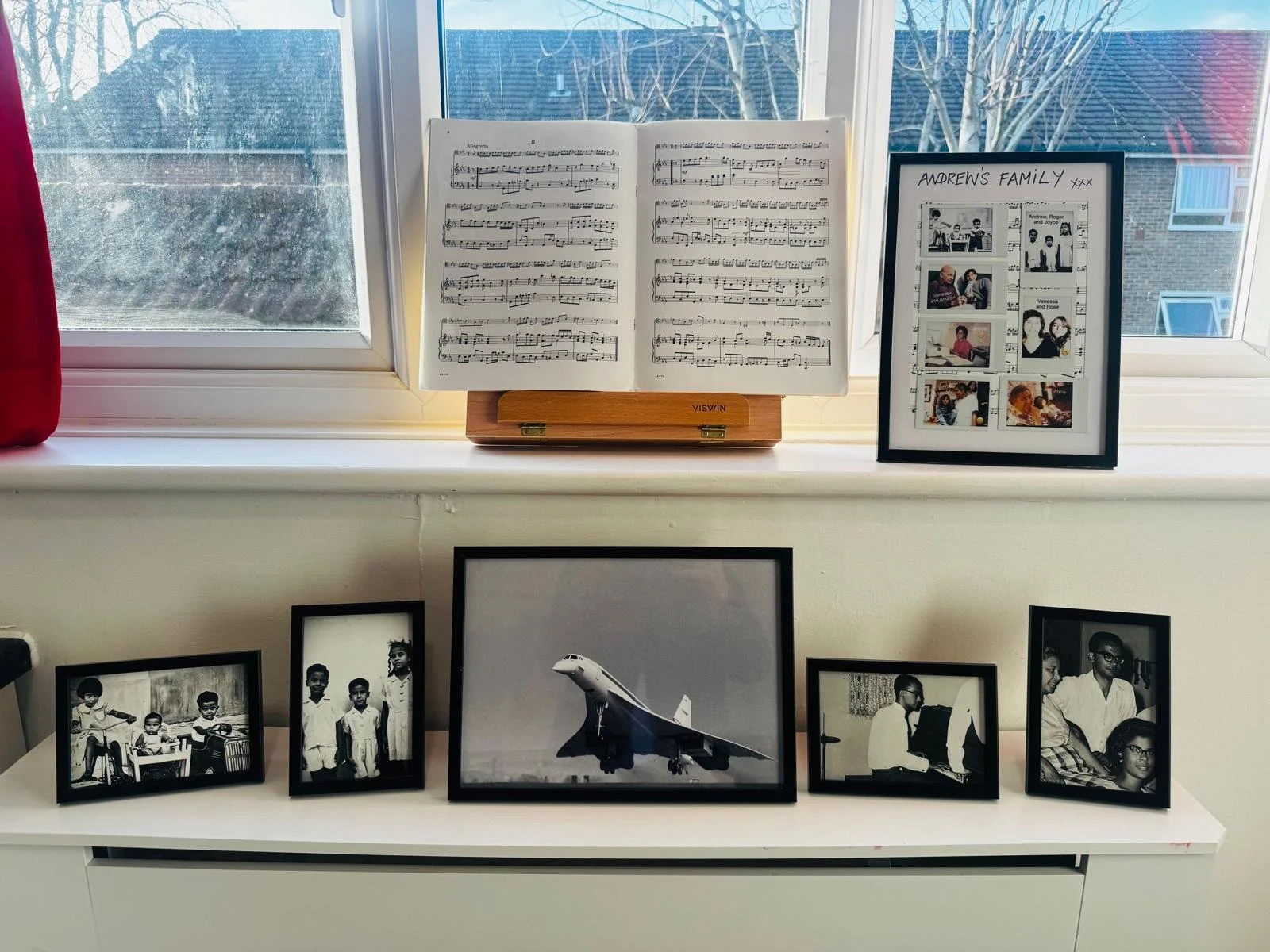
When I visited him, I found a simple room. There was a bed, a chair, and a shelf looking out onto a garden.
As I stood there, I found myself asking a question.
How could this room help him remember who he is?
Not the illness.
Not the care home.
The person.
The man who had lived a full and interesting life.
So I asked my friend to send me photographs of Andrew as a young man. Pictures of him with his brother and sister. Family photographs spanning different moments of his life.
I framed them.
Then I discovered that he had once been a wonderful pianist. So I bought an original score from a charity shop, opened it to a page as though he had just stepped away from the piano, and placed it on the shelf.
I learned that one of his happiest memories was flying on Concorde. So I bought a photograph from Ebay of Concorde and framed that too.
I printed photographs of his family today and wrote each person’s name beneath their picture. Not only could Andrew see the faces of the people who love him, but the nurses could remind him who they are.
The room began to change.
Not because it became more beautiful, but because it became more personal.
It became a place that quietly told the story of a life.
Together, my friend and I created something that helped her uncle remain connected to the people, places and passions that have shaped his life.
Sometimes we cannot solve the biggest problem.
We cannot restore someone’s memory.
We cannot change their diagnosis.
But we can still change their experience.
We can choose to notice what is missing.
We can choose to respond.
I think identity lives in small details.
A favourite piece of music.
A photograph.
A familiar face.
A handwritten name.
These things may seem insignificant to someone else.
But to the person living that life, they can be a reminder that they are still seen.
That they are still loved.
That they are still themselves.
Perhaps that is what Seeing the Unseen means to me.
Looking beyond the obvious problem and asking a different question.
What does this person need that nobody has noticed yet?
Seeing potential
When I was building a team at Babylon Health, I interviewed a young man called Fred.
He began the interview by saying something that most people would probably avoid.
“I’ve never studied design.”
“I’ve never worked in an organisation.”
“I’ve never done this before.”
He had no portfolio.
No experience.
No obvious reason why he should be sitting in front of me.
So I asked him what he had been doing.
He smiled and told me that he had represented Great Britain as a triathlete.
As we talked, I realised I wasn’t interested in what he didn’t know.
I was interested in who he was.
He was curious.
He was energetic.
He made people laugh.
He listened.
He wanted to learn.
He had resilience that couldn’t be taught.
So I offered him a role. Not as a designer, but as the person who would help our team work better together. I taught him new tools, he organised our projects, and before long he had become an essential part of the team.
We loved working together.
Then one morning he arrived at work looking worried.
He told me he was struggling to see when he cycled to work.
A few days later he came back with devastating news.
He was losing his sight.
The three of us, Fred, Gigi and I, stood together, said nothing but hugged and cried. I’ve never forgotten that moment.
He had been told that within a couple of years he would be blind.
Eventually our careers took us in different directions, and we lost touch.
Then, last winter, I was watching the Winter Paralympics.
There was Fred.
Competing in downhill skiing representing Great Britain.
I sat there smiling. I was so proud of him!
And I wasn’t surprised.
The determination, courage and optimism that carried him to that moment were exactly the qualities I had seen years earlier in a job interview.
His circumstances had changed.
His character had not.
That experience taught me something I have carried with me ever since.
When I build teams, I don’t look for the finished product.
I look for potential.
Skills can be learned.
Software changes.
Industries evolve.
But curiosity, resilience, generosity and the desire to learn are much harder to teach.
Those are the qualities that transform teams. Seeing something in someone before they can see it in themselves.

Where’s my app?
When I joined Babylon Health, everyone was frightened of the CEO.
He was known for making quick decisions. If something wasn’t good enough, people were shown the door.
One day, about four months after I joined, I bumped into him in the office.
He looked at me and said,
“Emma… where’s my app?”
I laughed nervously and replied, “I haven’t designed your app.”
He looked straight back at me.
“You’ve got ten days.”
That was the brief.
Ten days.
What I didn’t know at the time was that two highly respected design consultancies had already been asked to solve the same problem.
Together, they had cost the company hundreds of thousands of pounds.
Both had spent months running workshops, facilitating discussions and producing beautifully crafted presentations.
Both had returned with PowerPoint decks.
Both had failed.
Ali’s response was always the same.
“Where’s my app?”
The more I thought about that question, the more I realised he wasn’t asking for another presentation.
He wasn’t asking for another strategy document.
He wanted to experience the product his customers would experience.
So that’s exactly what we built.
Together with two designers on my team, Gigi and Hugh, we designed the experience itself.
Not every feature.
Not every screen.
Just enough to make the vision real.
We built a simple interactive prototype that people could hold in their hands and navigate as if it already existed.
When it was ready, I walked into Ali’s office.
I didn’t open a presentation.
I didn’t explain the process.
I simply handed him my phone and said,
“Here’s your app.”
He scrolled through it in silence.
Then he looked up and said,
“This is it.”
From that moment on, the prototype became the direction for the entire global organisation.
Everyone would build from it.
That experience taught me something I have carried with me ever since.
Sometimes the quickest way to create alignment isn’t to explain an idea.
It’s to make it tangible.
Ali had invested millions into building a company.
He didn’t want another presentation telling him what the product could become.
He wanted to hold it in his hand.
Once he could experience it for himself, the conversation changed completely.
People stopped debating the idea.
They started building it.
Margaret’s Seeds
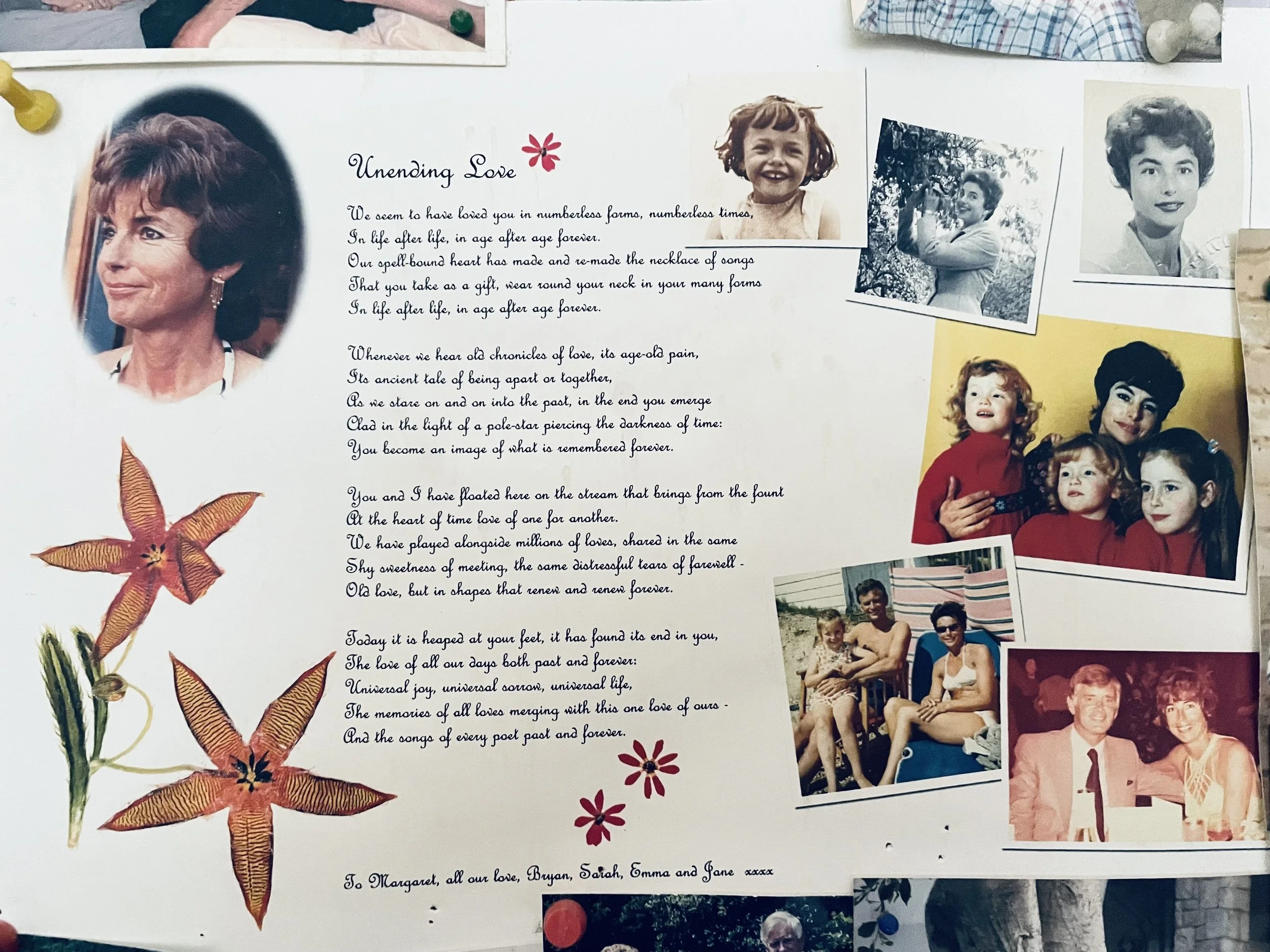
When my mum died twenty-six years ago, everything happened very quickly.
My sisters and I weren’t left with many of her belongings.
The only thing I had was a small Tupperware box that she used to keep her hairbrush in.
For years, that was all I had.
Then, after my father died, we began clearing his house.
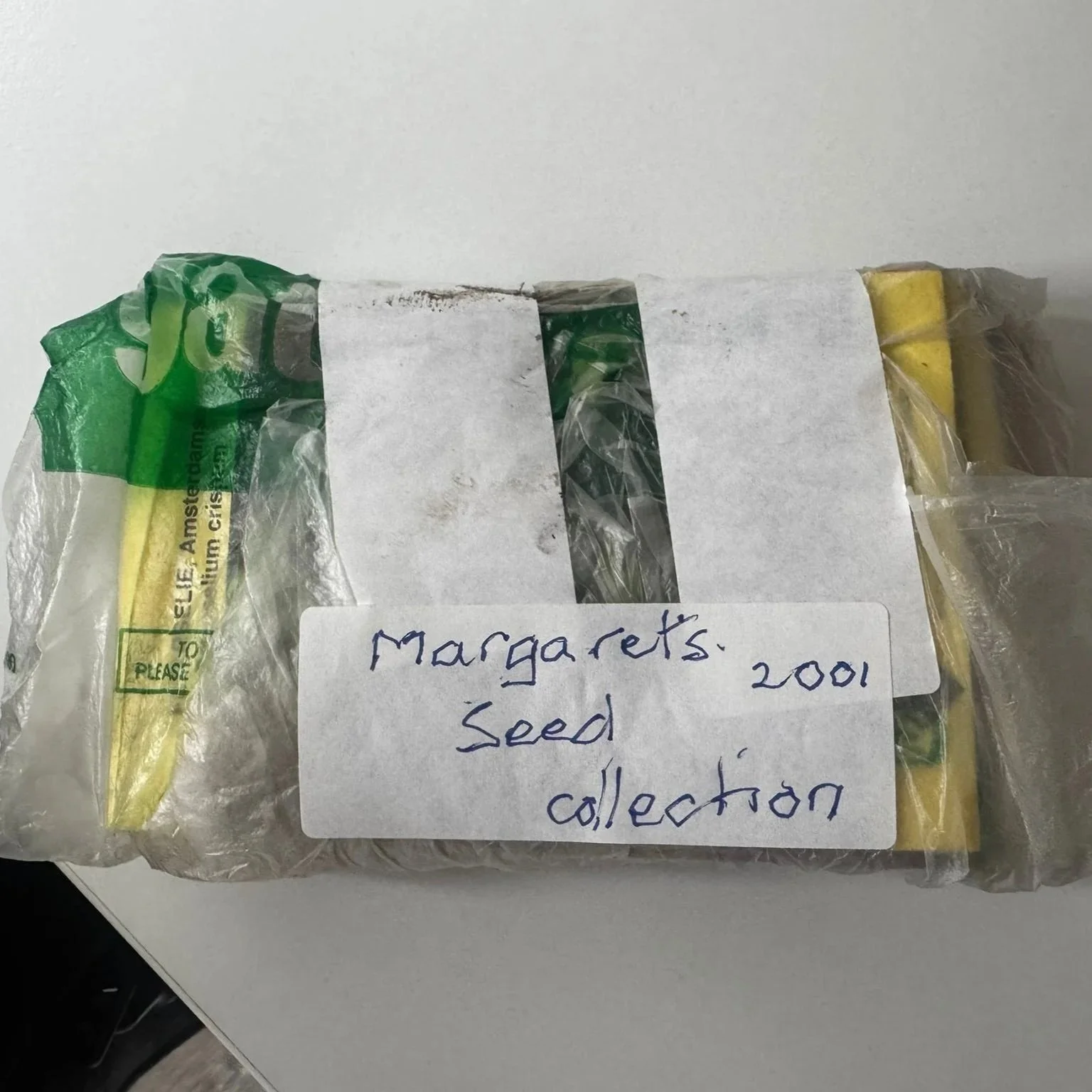
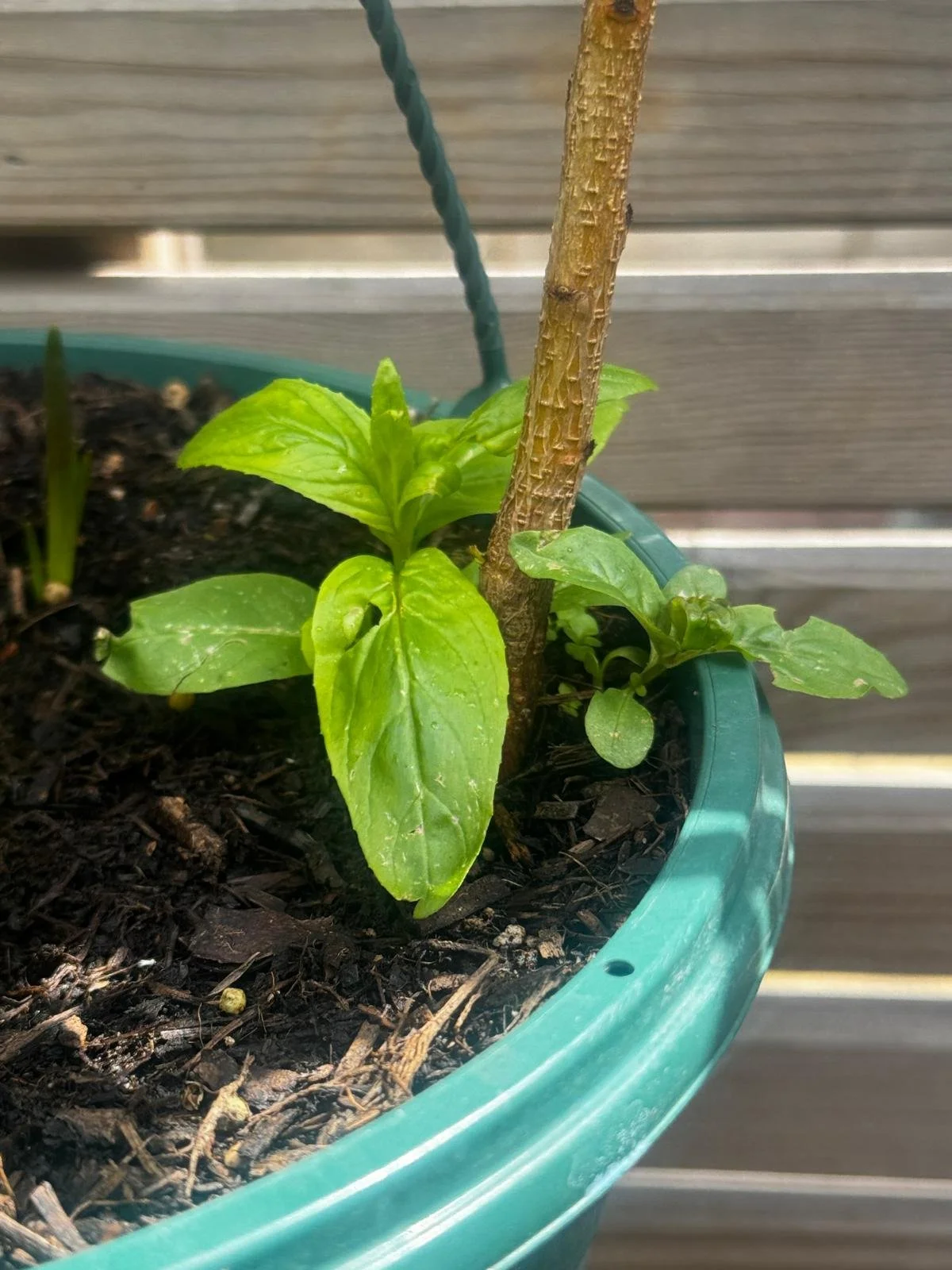
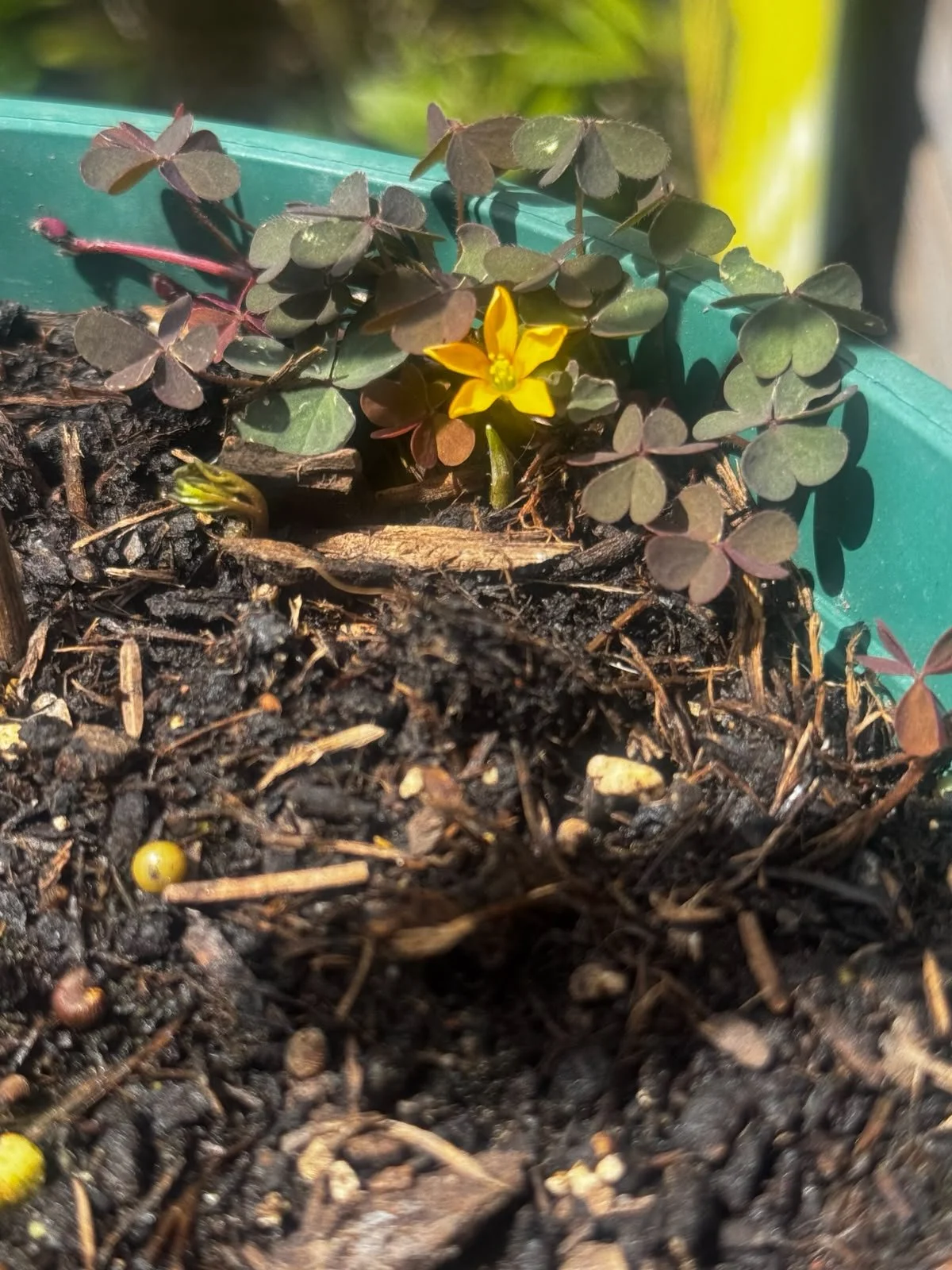
Tucked away amongst his things was a small plastic bag.
Written on the front, in his handwriting, were two simple words.
Margaret’s seeds.
I knew exactly what they were.
My mum loved gardening. Every weekend, she would sit with the newspaper, and sometimes there would be little packets of flower seeds tucked inside the colour supplement.
She had kept them all.
I picked up the phone and called my friend Nigel, who is an architect but also a passionate gardener.
“Come over,” I said.
“Let’s plant Margaret’s seeds.”
He arrived with compost, we filled a few pots, planted every seed, watered them, and waited.
A month later, he rang me.
“How are Margaret’s seeds doing?”
“Nothing,” I said.
“I’m watering them every day.”
“I’m talking to them every day.”
“They’re just not growing.”
Nigel laughed.
“I’ve just looked at the packets,” he said.
“They all say ‘Plant before 1984.’”
We both thought it hilarious.
The seeds were over forty years old.
We both persevered.
A few weeks later, tiny green shoots appeared.
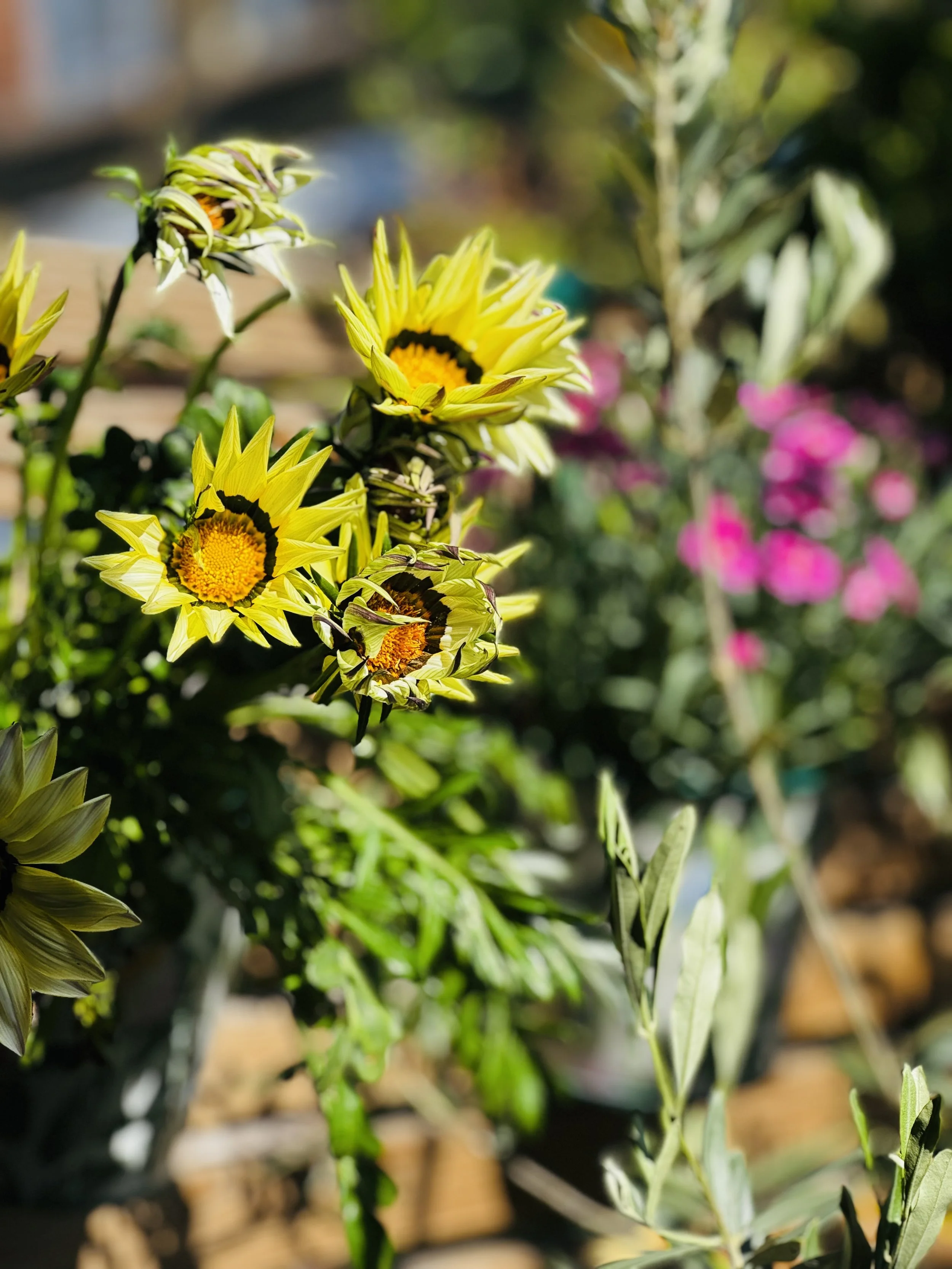
Then leaves.
Then flowers.
Today they’re blooming in my garden.
Sometimes I stand outside and smile.
These are my mum’s flowers.
People often ask me where my optimism comes from.
Perhaps it’s this.
I’ve never been very interested in whether something is supposed to work.
I’m much more interested in whether it’s worth trying.
If I’d stopped to think of the odds, I might never have planted those seeds.
Instead, I simply responded to what I had found.
And now, every summer, a small part of my mum will return.
Sometimes hope begins with something as simple as planting a seed.
let’s go and find things
Over the years, I have lost count of the number of people who have told me.
“I’m not creative.”
I’ve never believed them.
Not once.
One day, two friends from my children’s school called me in a panic.
The school was organising an art exhibition, and they felt completely overwhelmed.
“We’re not creative,” they said.
“Can you help us?”
So I invited them all over.
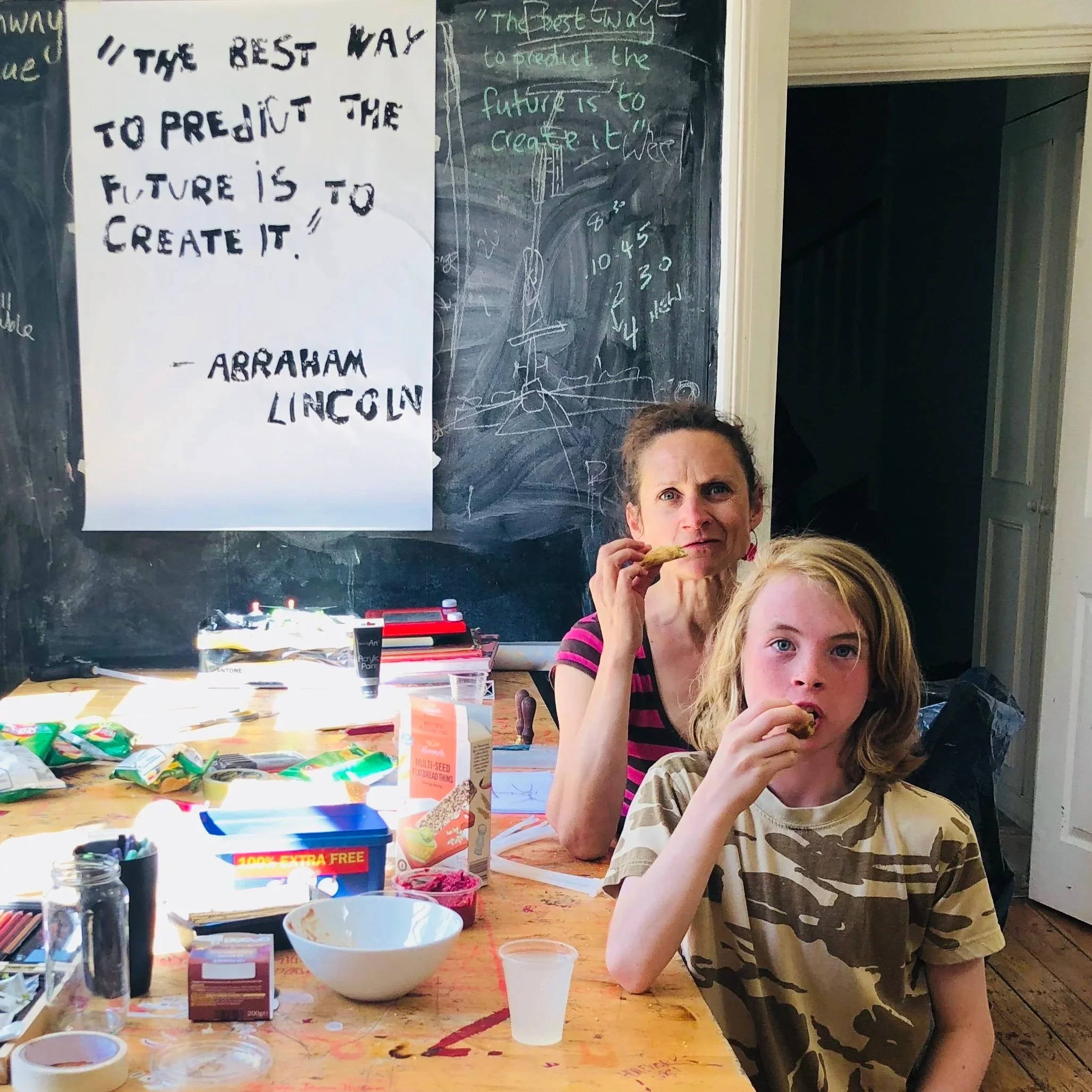
The mums brought food.
The kids arrived full of energy.
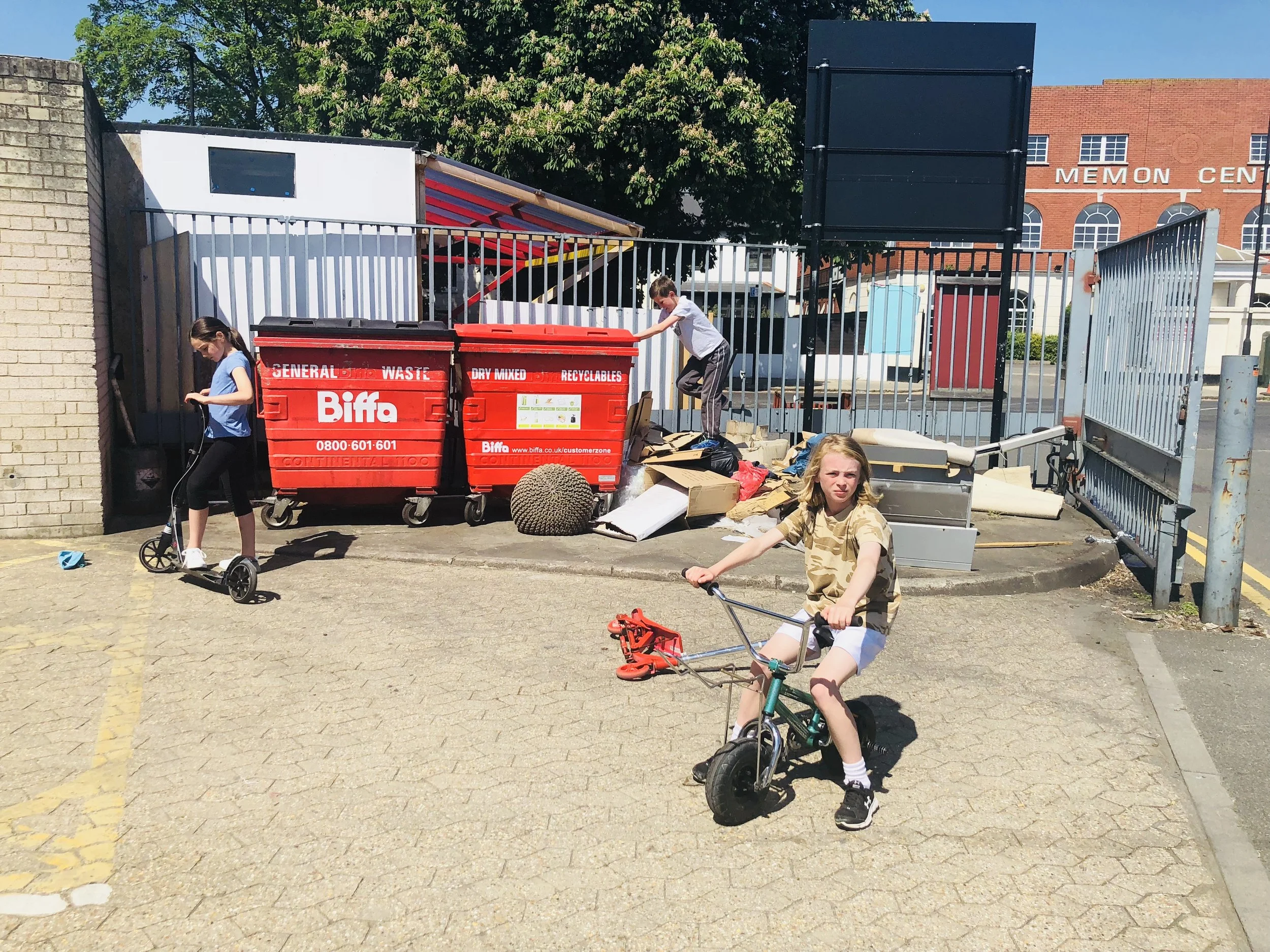
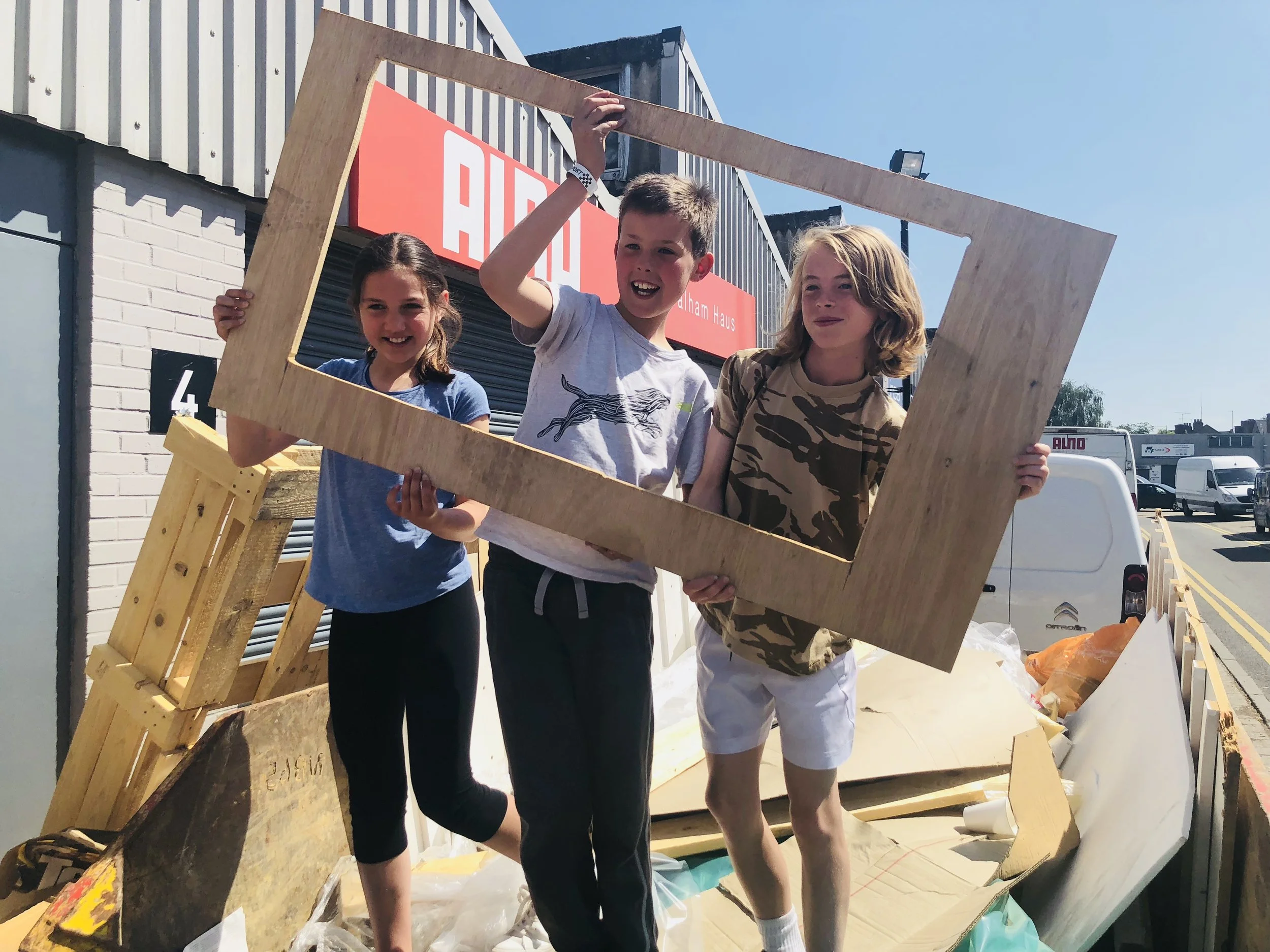
And instead of sitting around a table talking about art, I took everyone down the road.
I live on Weir Road in South London, where there is always something interesting happening. At the end of the road is an industrial estate full of workshops, discarded materials and unexpected treasures.
“Come on,” I said.
“Let’s go and find things.”
Before long, the kids were climbing into skips, collecting bits and pieces that other people had thrown away.
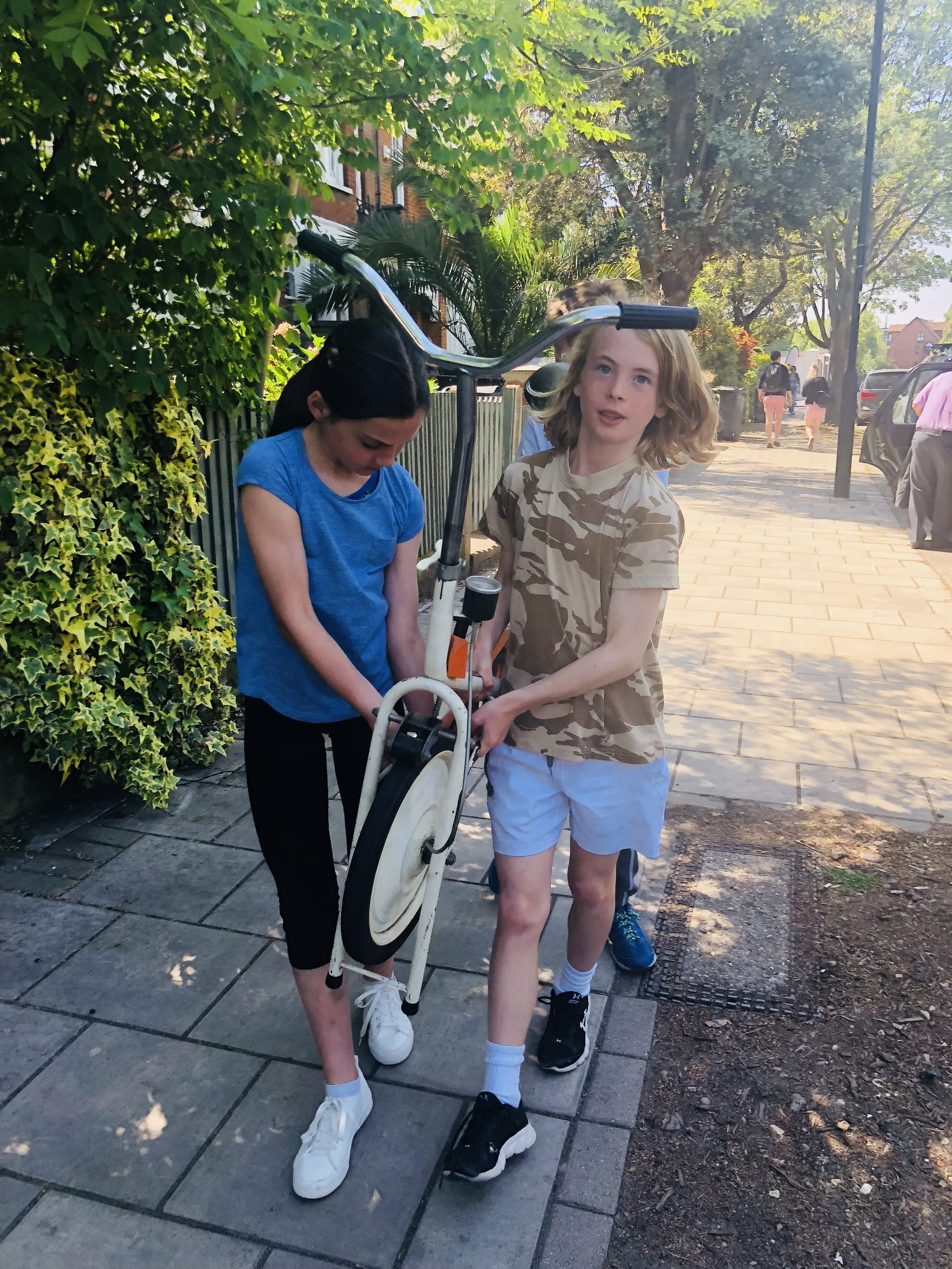
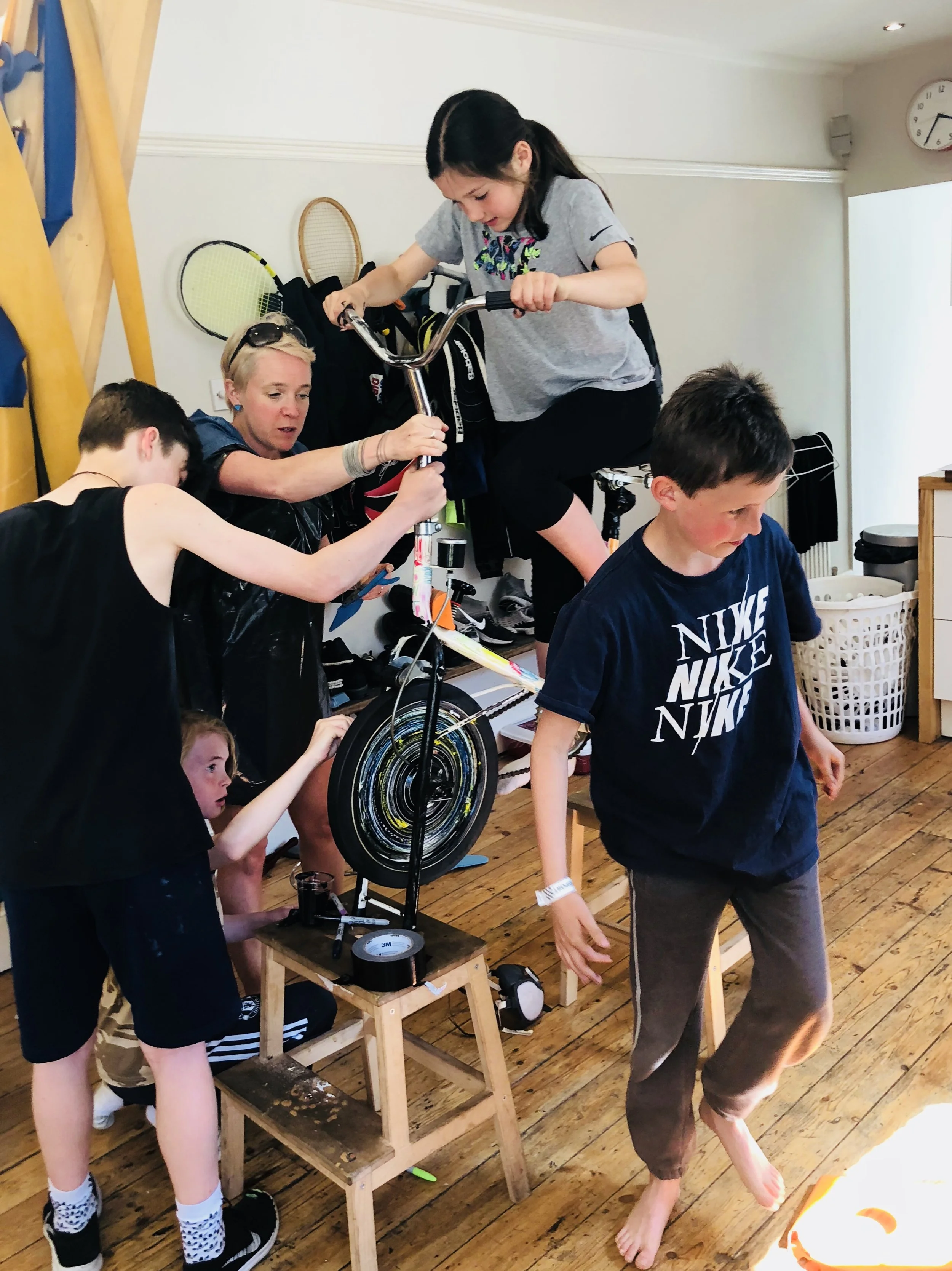
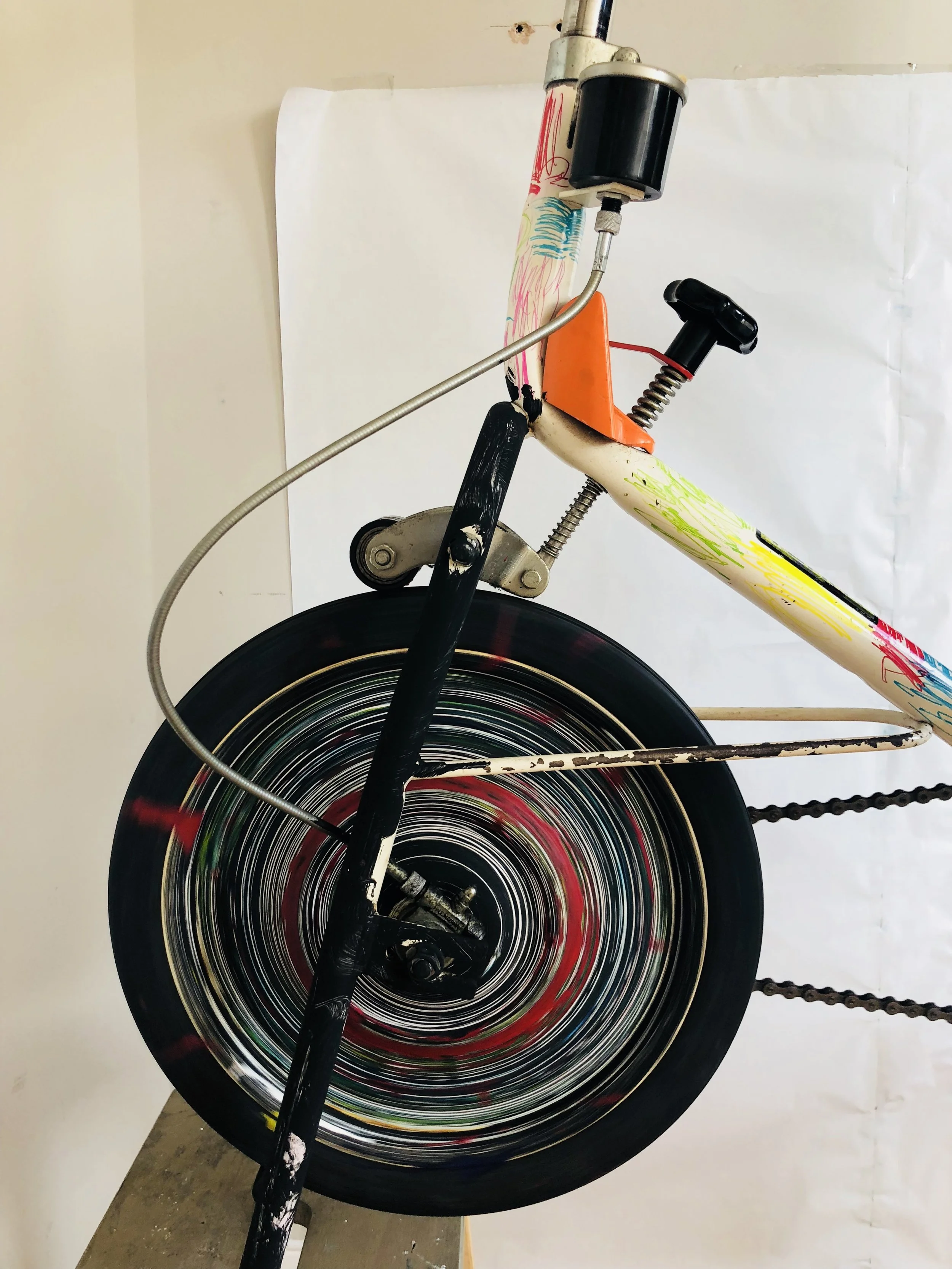
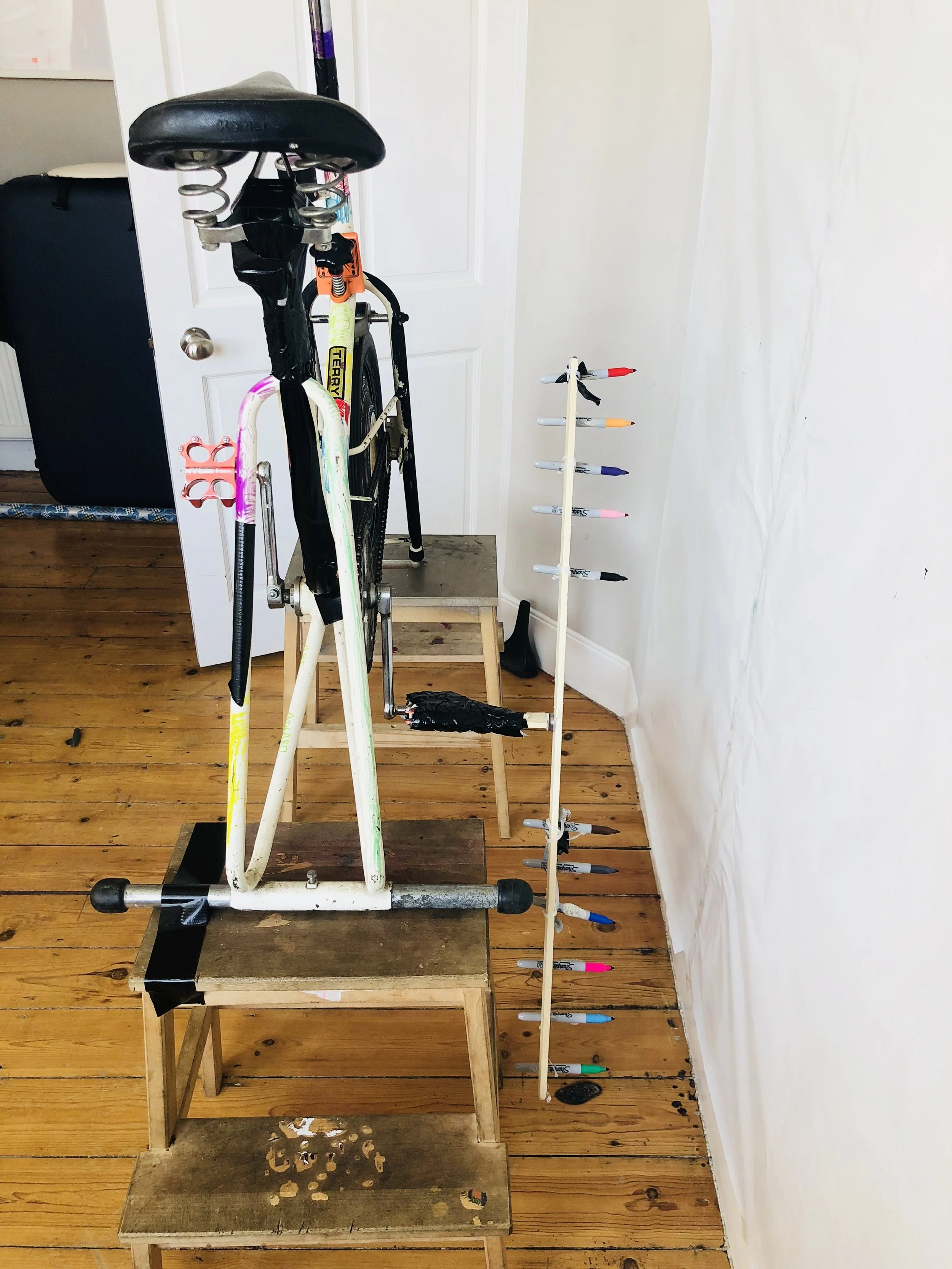
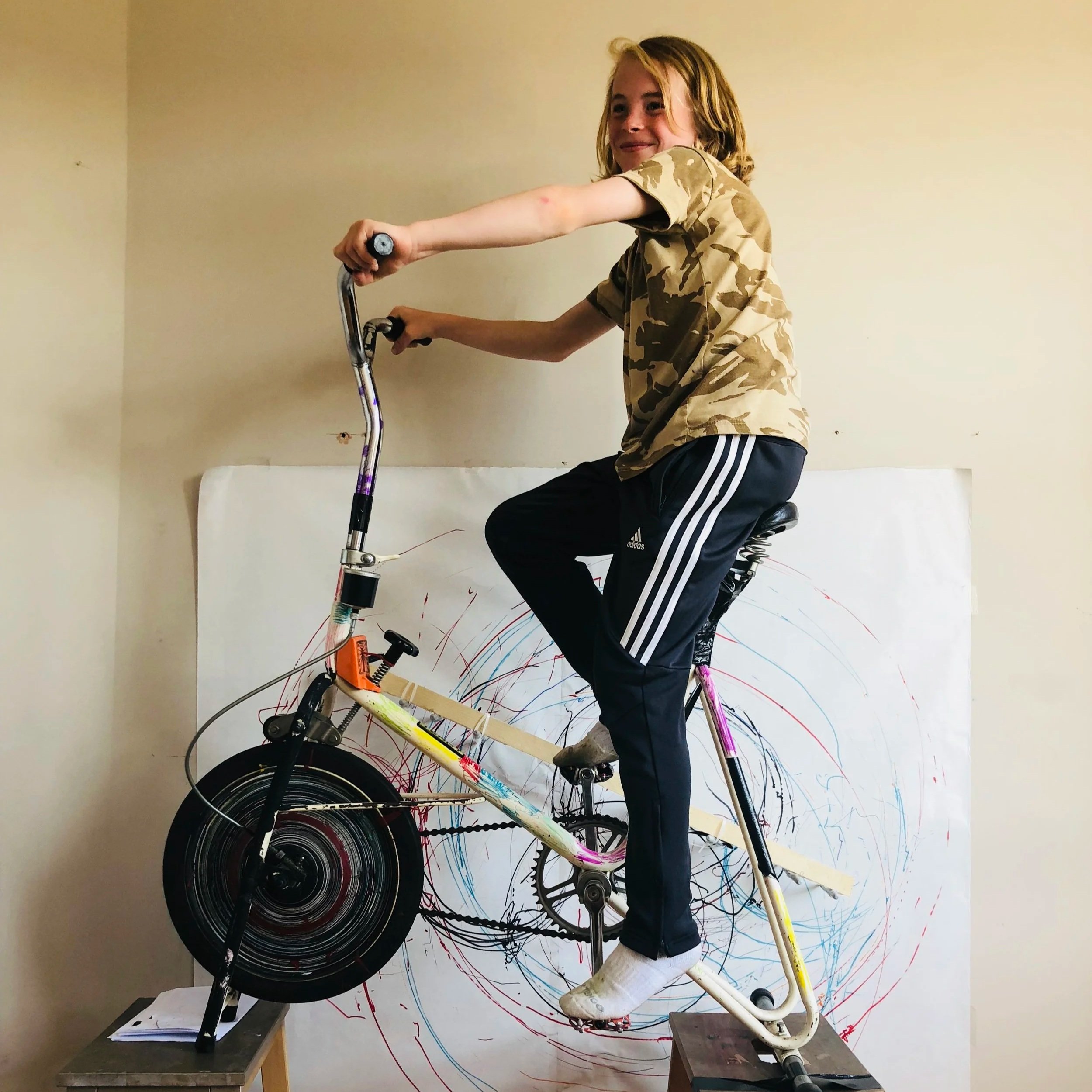
Amongst the discoveries was an old exercise bicycle.
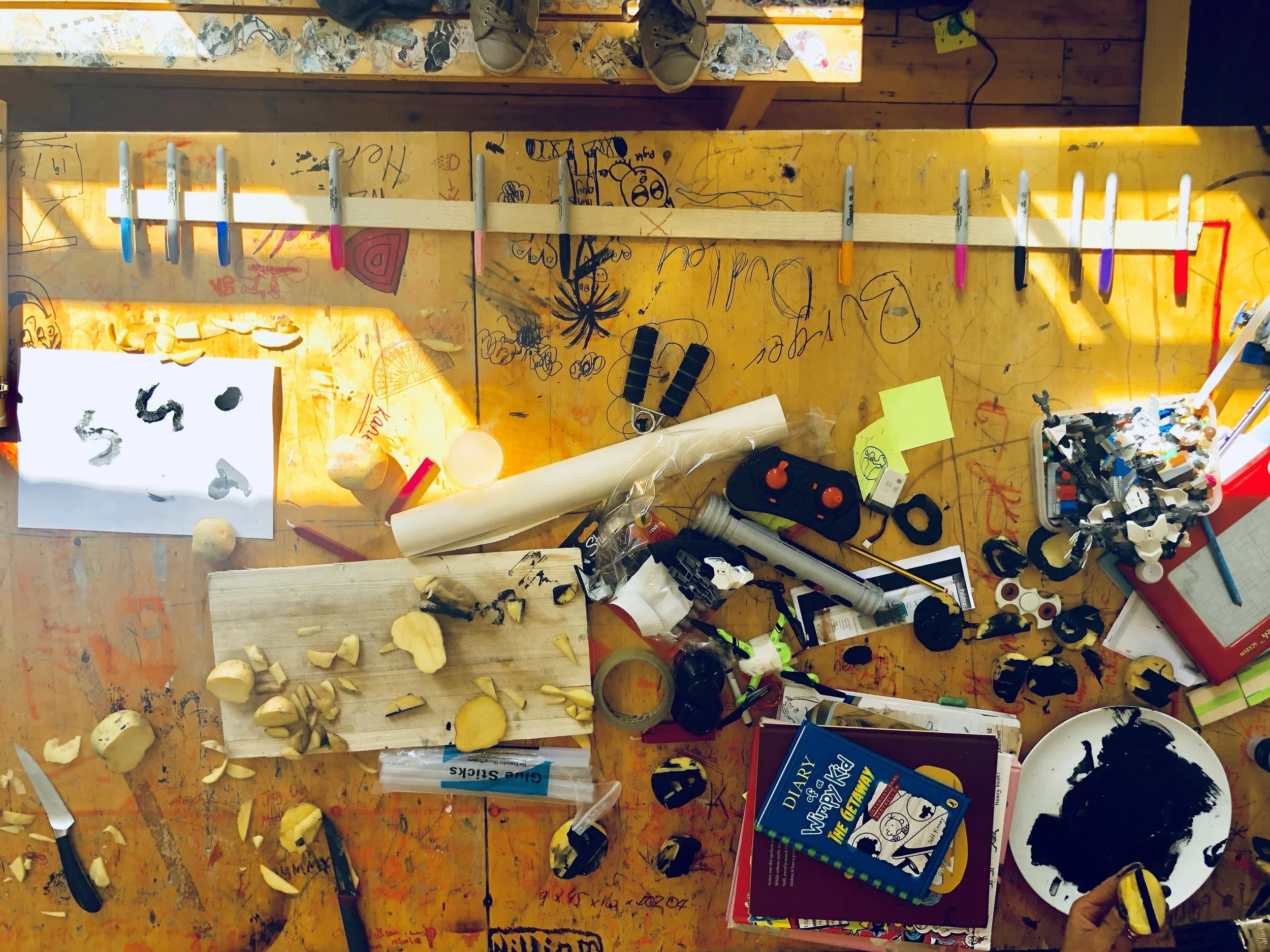
Back at home, we spread everything out in the kitchen.
We cut potatoes into printing blocks.
We painted.
We experimented.
We played.
We laughed.
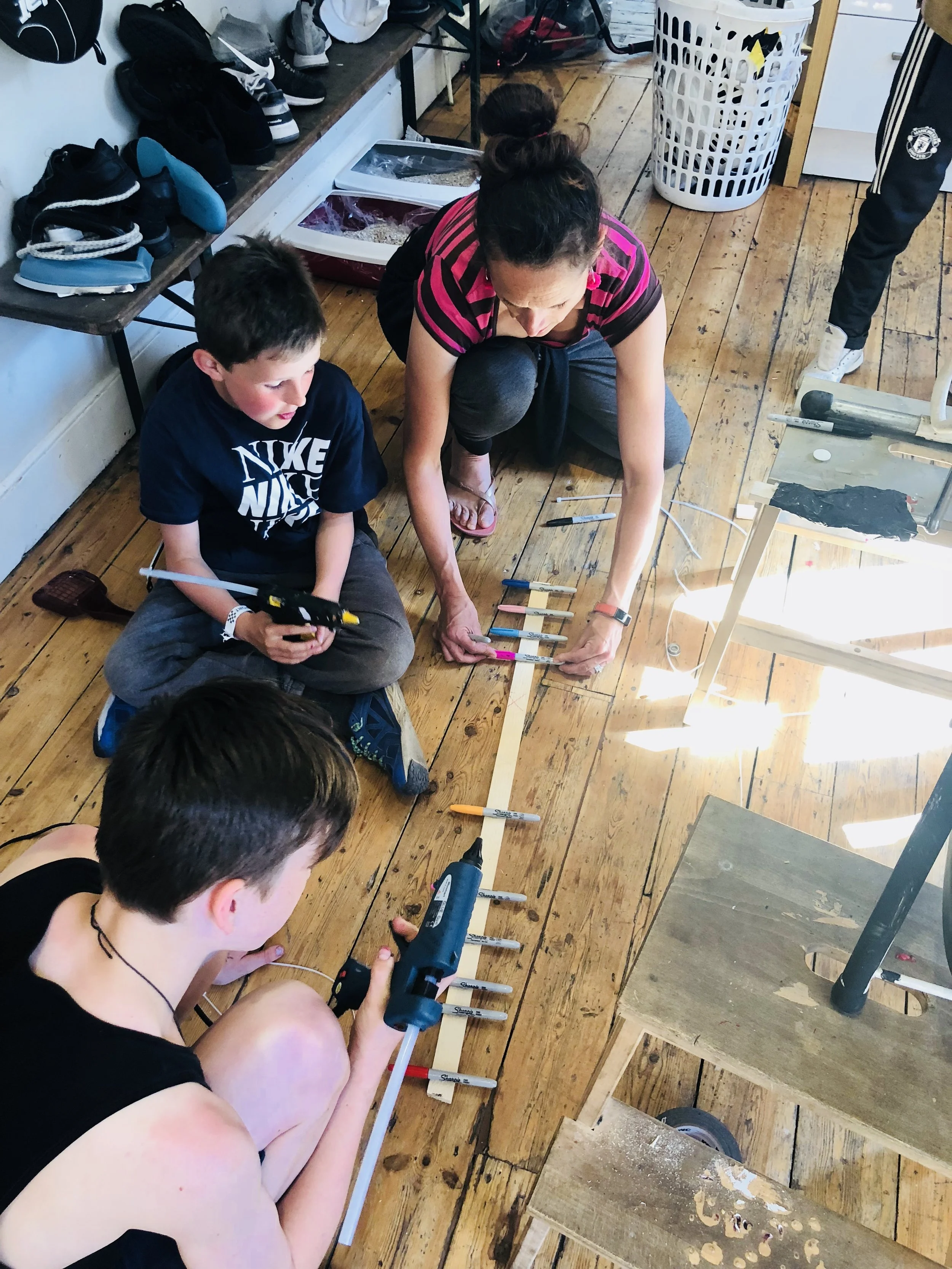
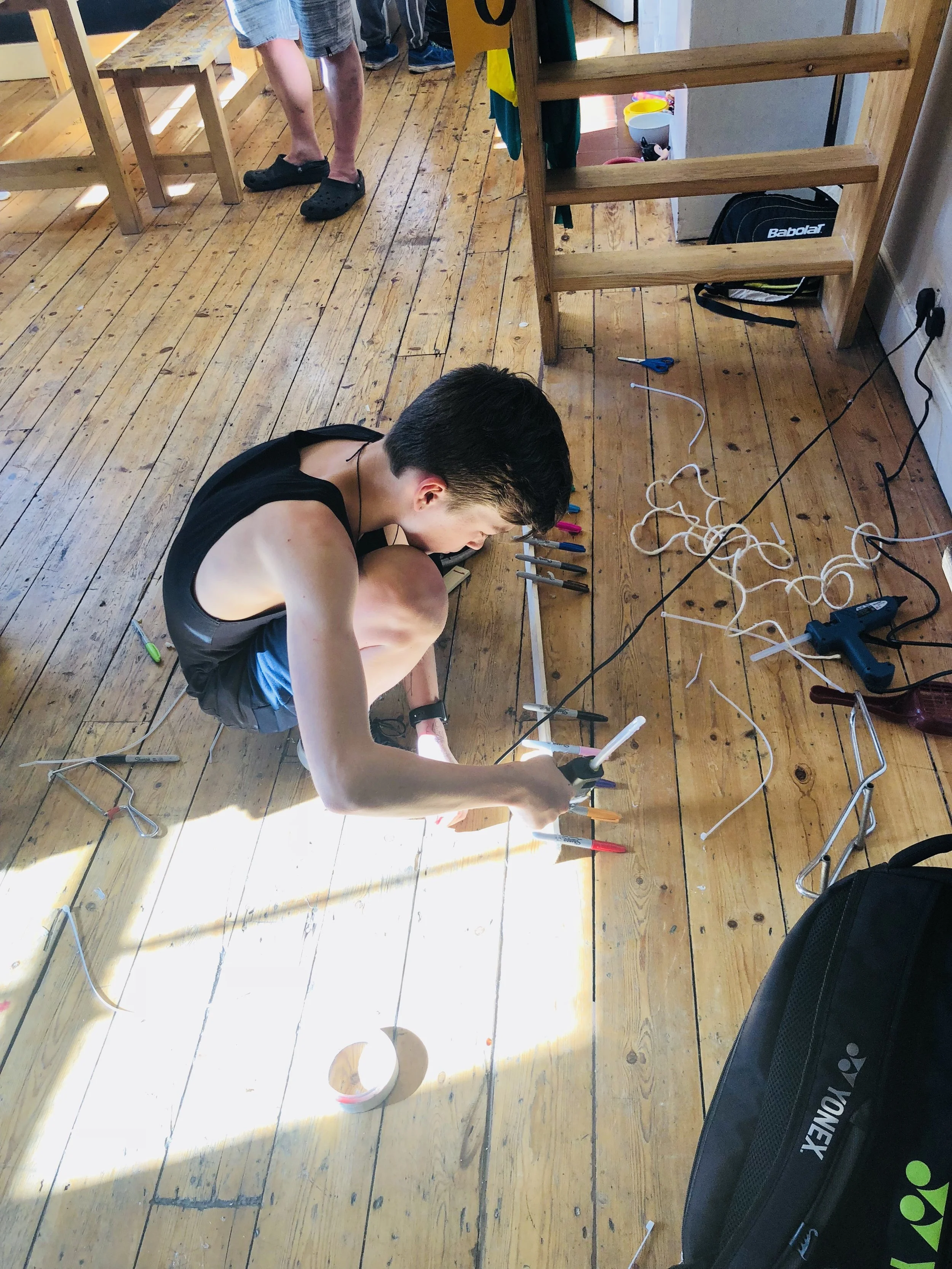
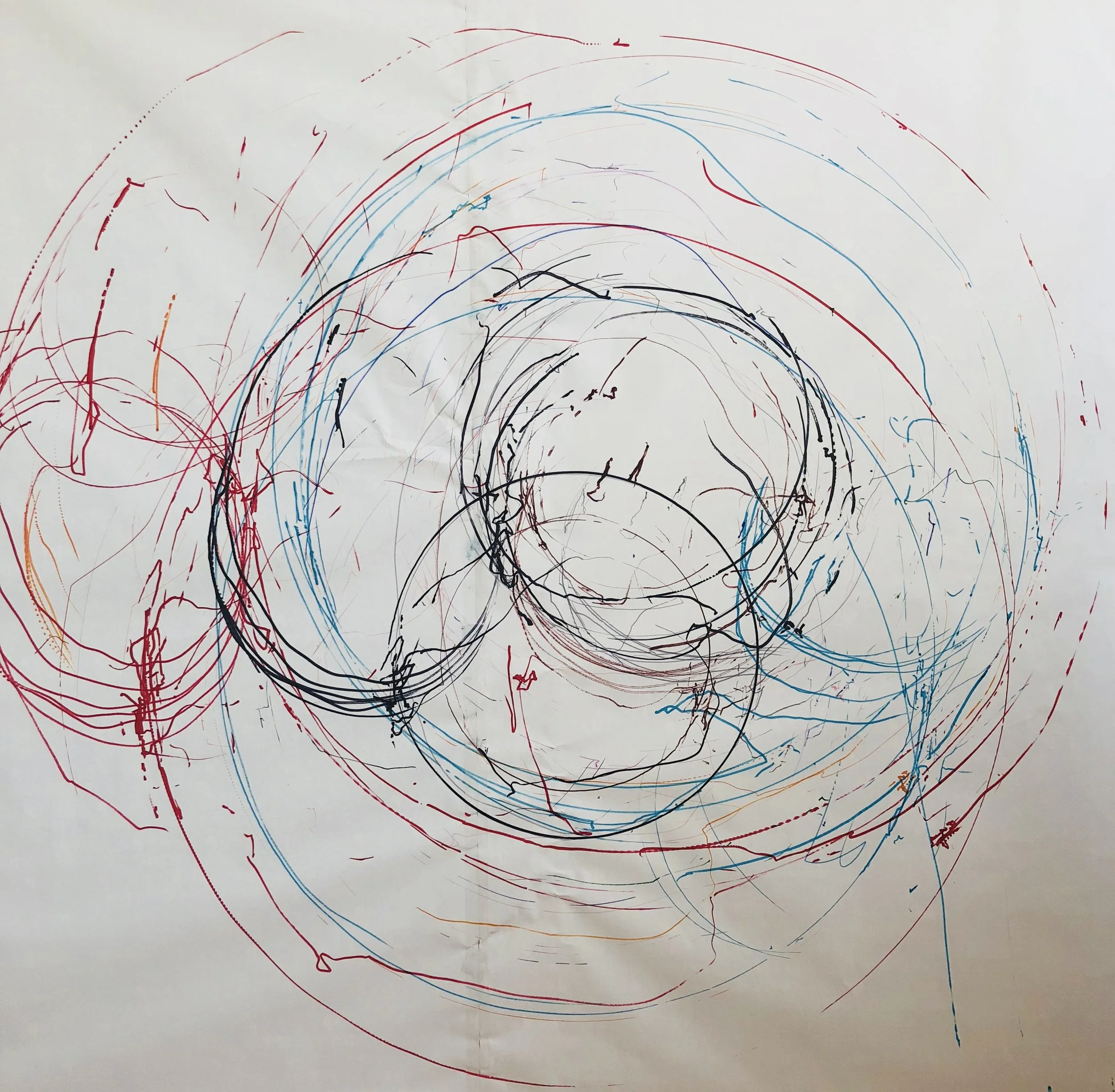
Then we attached pens to the exercise bike so that as the kids pedalled, the machine created enormous drawings across sheets of paper.
The whole thing was completely chaotic.
And completely wonderful.
By the end of the day, everyone had something to contribute to the exhibition.
But that wasn’t the most important thing.
The most important thing was that nobody was worrying about whether they were creative anymore.
They were too busy making things.
Creativity is not a talent reserved for a lucky few.
It is a condition.
When people feel safe enough to experiment, curious enough to explore, and free enough to make mistakes, creativity appears naturally.
Children understand this instinctively.
Adults often need reminding.
Sometimes all it takes is a few potatoes, some paint, an old bicycle and permission to play.
The creativity was there all along.
It just needed the right conditions to emerge.
The Postcard
Sometimes the smallest things change the direction of your life.
Mine arrived in the post.
After finishing my first degree, I knew I wanted to continue my studies at the Royal College of Art. But before that, I wanted to become better at making.
I didn’t want to be the kind of designer who only had ideas.
I wanted to understand materials.
I wanted to learn the craft.
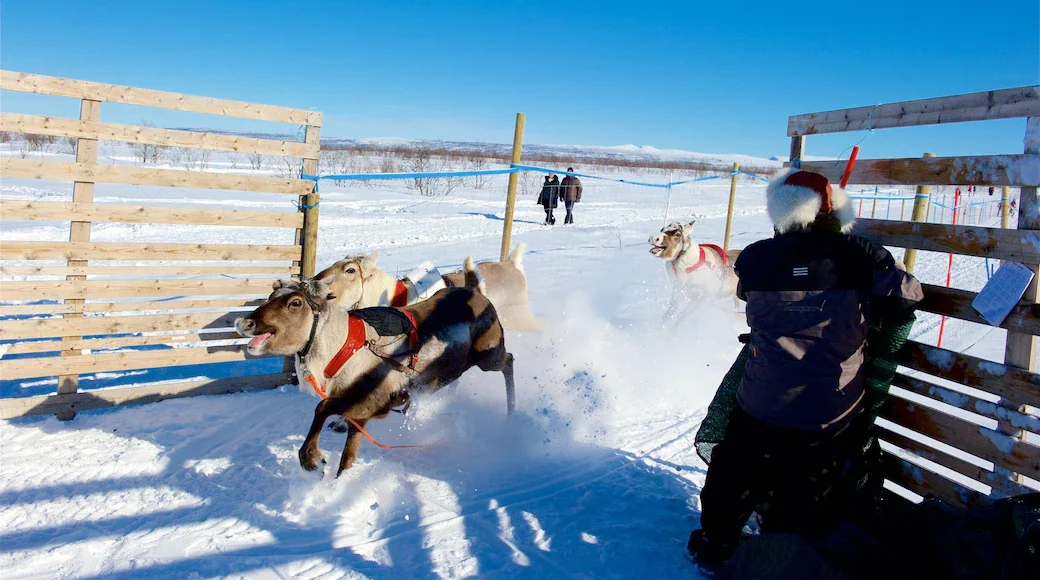
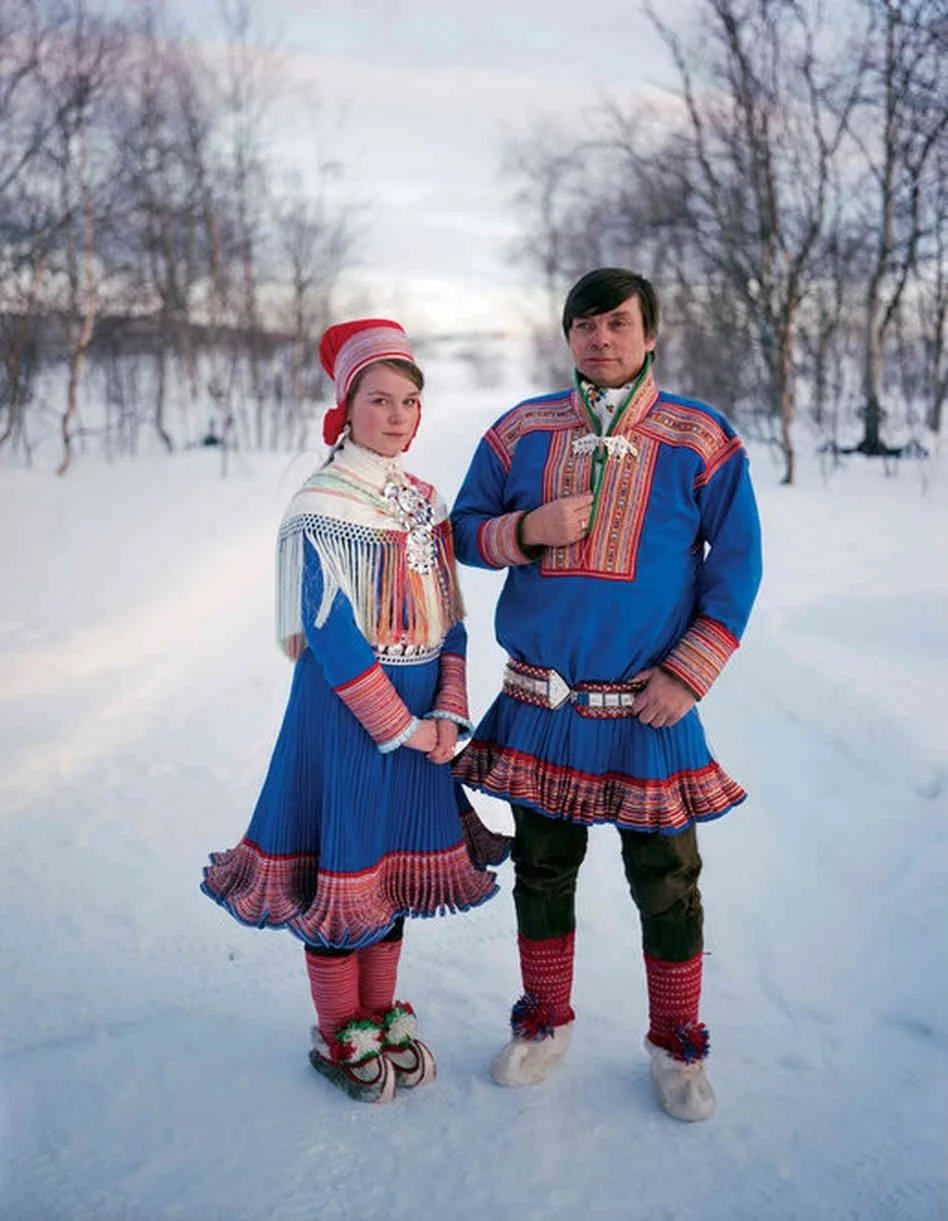
Finding work wasn’t easy, and while I was figuring out my next step, my uncle and aunt travelled to the very north of Norway on an Explore holiday. Along the way, they visited a tiny place called Kautokeino, home to the Sámi community and a remarkable workshop called Juhls’ Silver Gallery.
They sent my twin sister and me a postcard.
It simply said…
“Do you fancy a job? There’s one in Lapland.”
We looked at each other and thought…
Why not?
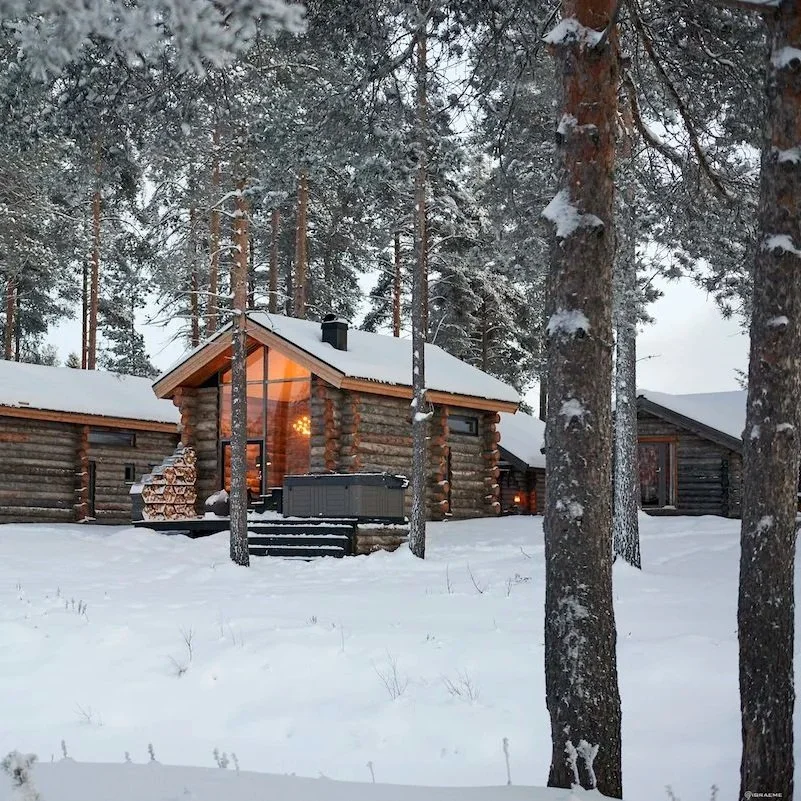
A few months later, we were living above the Arctic Circle.
We spent a year making traditional Sámi jewellery alongside goldsmiths from Norway, Finland, Sweden and Germany. We lived through twenty-four hours of daylight in the summer and temperatures of minus thirty-five in the winter.
It couldn’t have been further from London.
Or more different from the life we had known.
But it was exactly where I needed to be.
I learned how different craftspeople approached the same problem.
I learned patience.
Precision.
I understood the material.
I learned that mastery comes from making, not just imagining.
When I returned to London, I carried those lessons with me into the Royal College of Art, and later into every design role I’ve ever had.
Years later, I was interviewing for a role at Vodafone with a Norwegian creative director called Trond.
He told me that he had hundreds of CVs to look through.
Then he stopped at mine.
Not because of the companies.
Not because of the qualifications.
Because he had grown up living near Kautokeino.
He knew how remote it was.
He knew what that decision said about me.
He later told me, “I saw Lapland on your CV and thought, I have to meet this woman.”
That moment taught me something I have never forgotten.
People spend a lot of time trying to make themselves stand out.
But standing out is rarely something you aim for directly.
It happens when you follow your curiosity with enough conviction that your path naturally becomes different from everyone else’s.
I didn’t go to Lapland to build an interesting CV.
I went because I wanted to become better.
The interesting story came afterwards.
Looking back, the postcard wasn’t just an invitation to Norway.
It was an invitation to say yes.
To follow curiosity before certainty.
Sometimes a single postcard is enough to change the direction of a career.
Sometimes it’s enough to change the direction of a life.